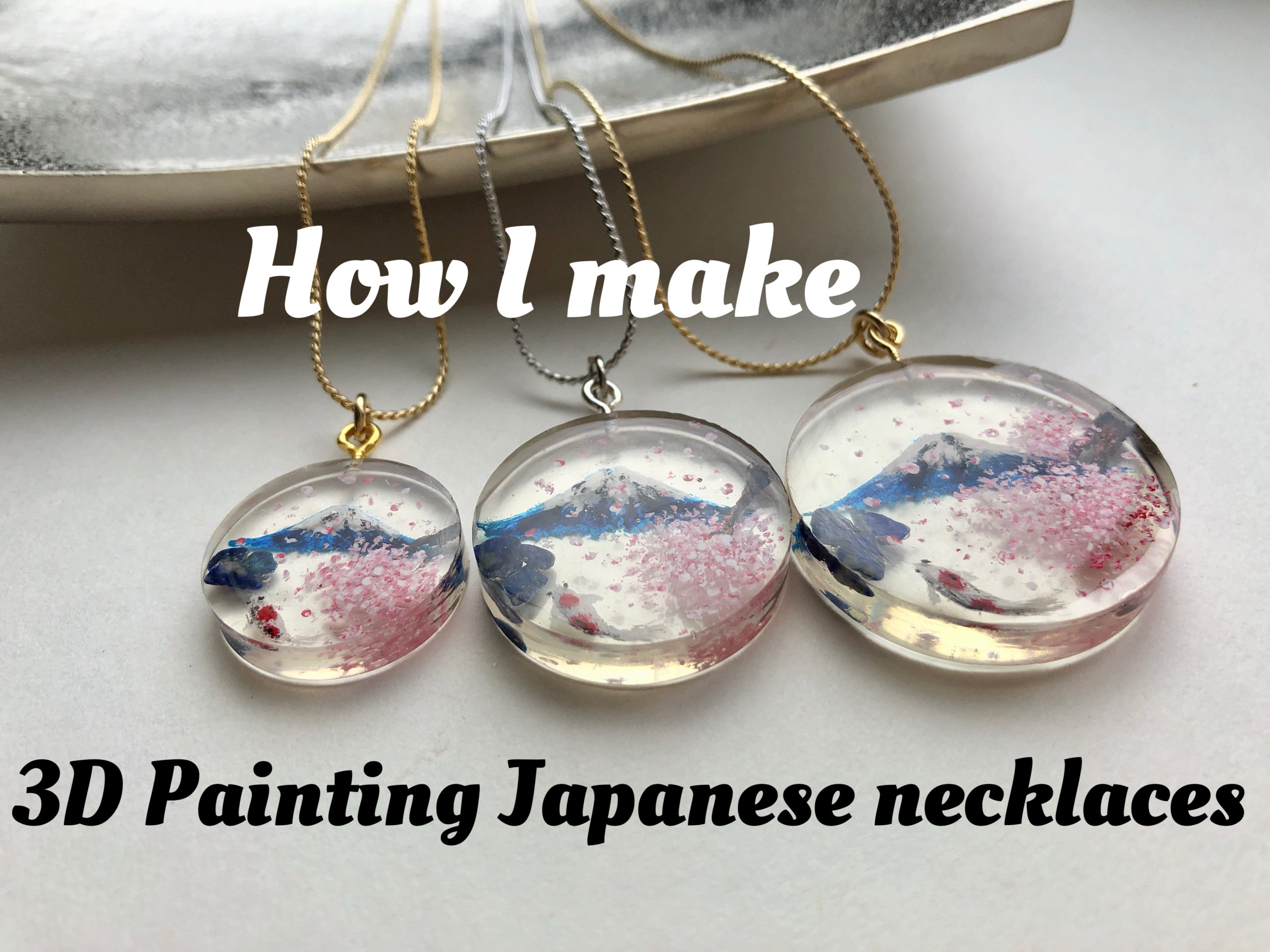
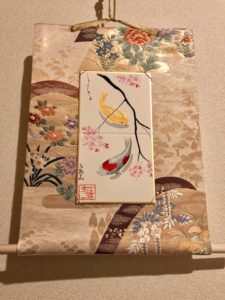
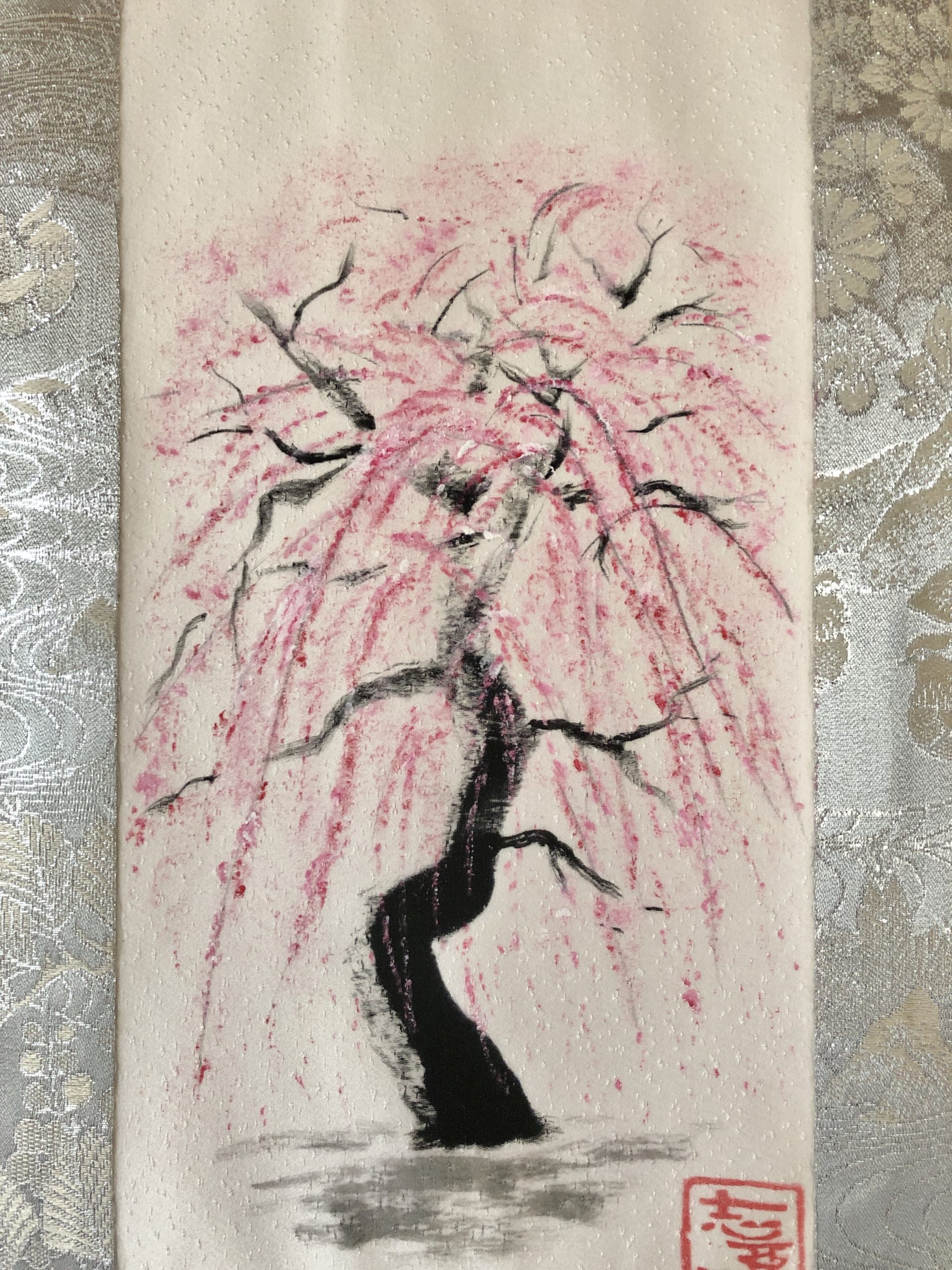
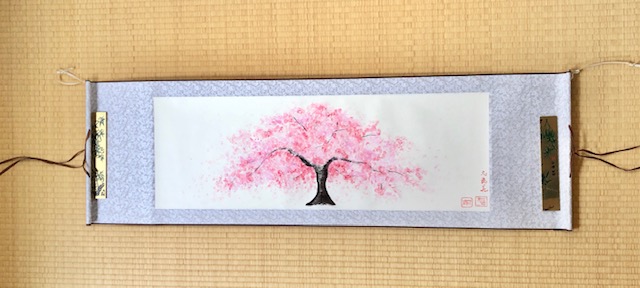
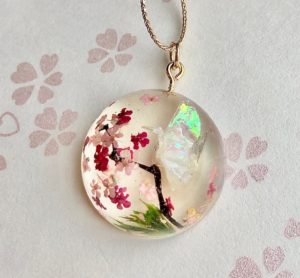
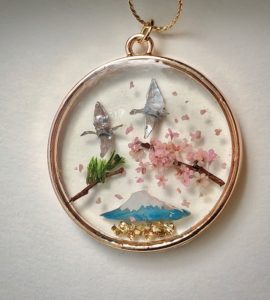
3D painting Japanese world art in jewelry

How to make 3D Japanese painting jewelry
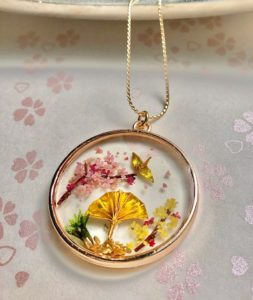
3D painting Japanese world art jewelry

I always love to express Japanese beauty and symbols in art, such as paintings and jewelry.

Making Japanese scenery in 3D paintings in accessories is one of my favorite ways of expressing them.

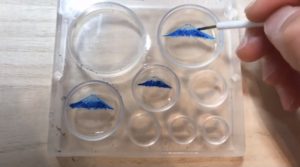
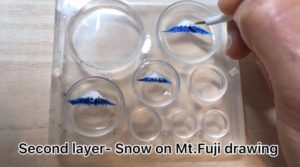
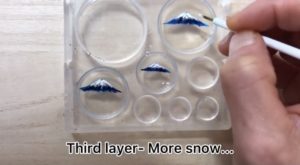
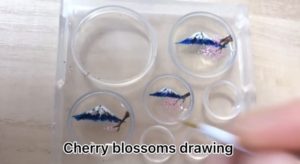
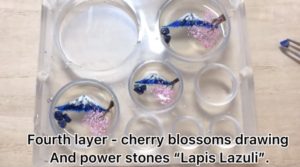
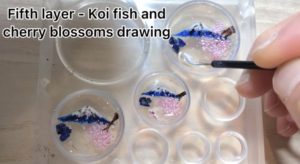
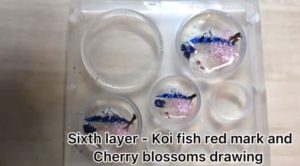
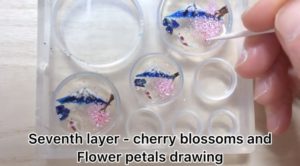
Using resin allows me to make 3D world, by applying paintings in different layers.

It takes time and energy, but the slow procedure of making 3D painting jewelry excites me all the time.

And when it’s done, my affection to these jewelries becomes the special one.

Drawing good luck Japanese symbols, such as Mt. Fuji, Sakura cherry blossoms and Koi fish, and adding power stones,   I can make these jewelry into special good luck items.

How to make 3D painting Japanese world jewelry

How to make 3D painting Japanese world jewelry

How to make 3D painting Japanese world jewelry

How to make 3D painting Japanese world jewelry

How to make 3D painting Japanese world jewelry

How to make 3D painting Japanese world jewelry

How to make 3D painting Japanese world jewelry

How to make 3D painting Japanese world jewelry

Japanese traditional painting art SUIBOKUGA 水墨画

Japanese traditional painting art SUIBOKUGO 水墨画

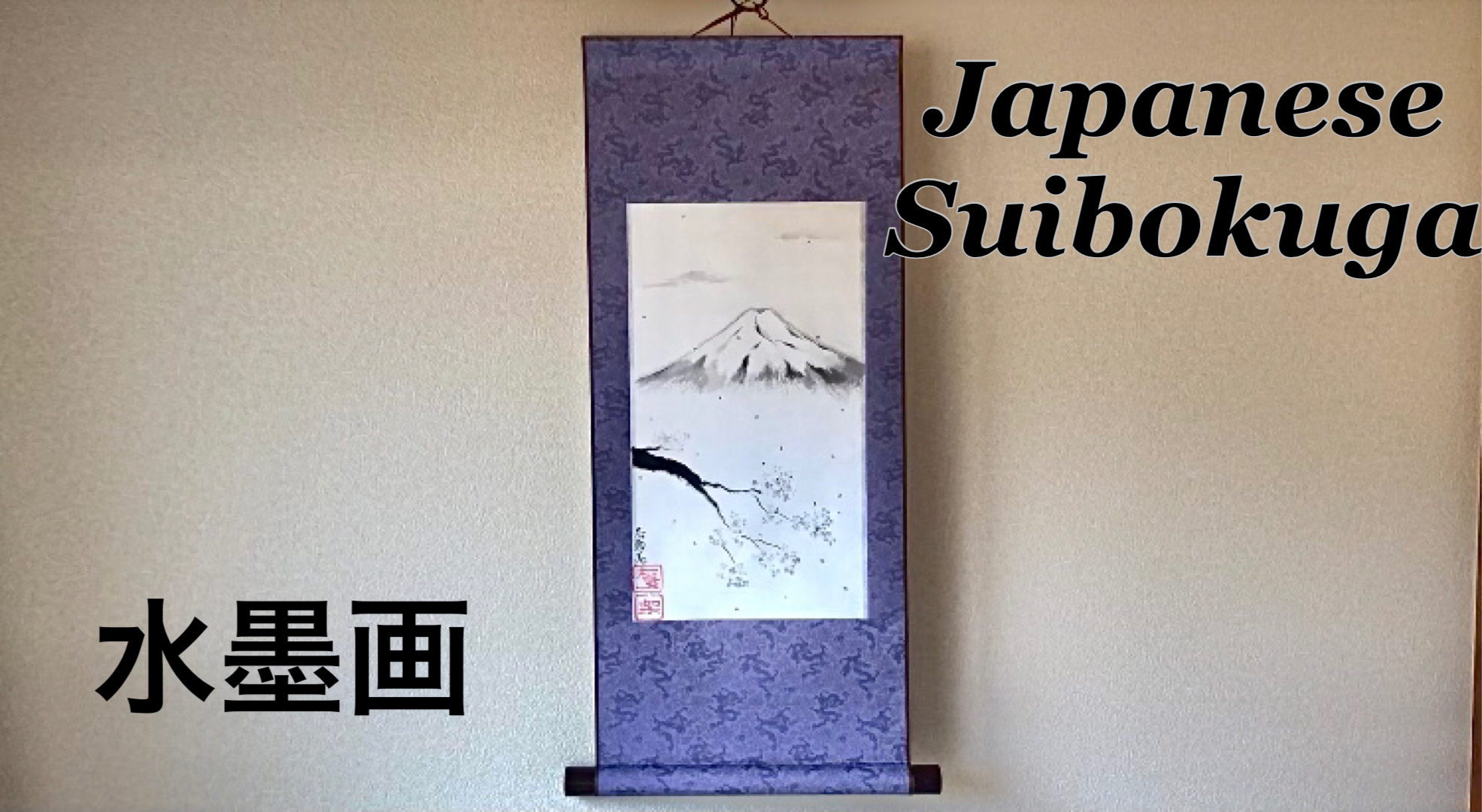
Suibokuga (水墨画)- Japanese traditional painting art

Suibokuga is sometimes called Zen Painting.

Sumie is painting with ink.

And Suibokuga is one of Sumie painting, with the gradation of dark black to light black.

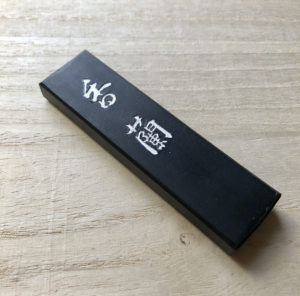
Main tool for Suibokuga, “Sumi ink” is made from mainly soot, animal glue, and perfume.

sumi ink 墨
sumi ink 墨

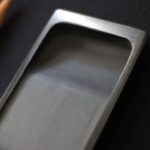
We add a little water into an inkstone (suzuri) and rub sumi ink, it becomes dark black color.

Ink stone SUZURI 硯
Ink stone SUZURI 硯
rub ink with ink stone

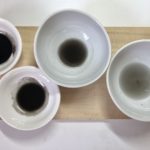
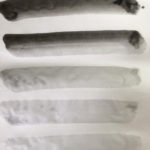
By mixing this black ink with water, we can create the gradation color of black to light grey.

mixing ink with water to make gradation color
gradation black color

In Japan, Suibokuga is not just about paintings drawn with only ink, but we include some colored paintings drawn with mainly ink and some pigments also.

Sumie: The way of painting with ink was already in Japan since Nara period (710 – 794).

And Suibokuga style was brought in Japan at around Kamakura period (1185 – 1333), then became very popular especially at around Muromachi period (1336 – 1573), as Suibokuga style paintings were deeply connected with ZEN temples.

Until 14C, the subjects of Suibokuga were humans called “Jinbutsu ga” (人物画) , and flowers and birds called “Kacho ga” (花鳥画).

In 15C, “Sansuiga”(山水画) , meaning “mountains and water paintings” became popular.

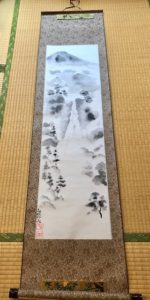
Subjects of this Sansuiga is  nature, such as mountains and water falls, rocks, trees etc.

I love to paint Japanese nature and symbols in Suibokuga.

Sakura cherry trees, bamboo tees, pine trees, Mt. Fuji, crane birds, and koi fish.

Sometimes tigers and Ryujin dragon god as well.

Tigers and Ryujin dragon god are also very popular subjects for Suibokuga.

I love to express Japanese beauty with the amazing gradation of ink with some colors.

That is my Suibokuga.

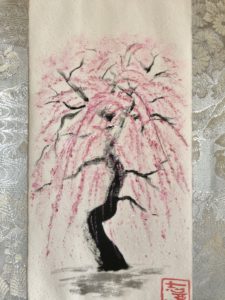
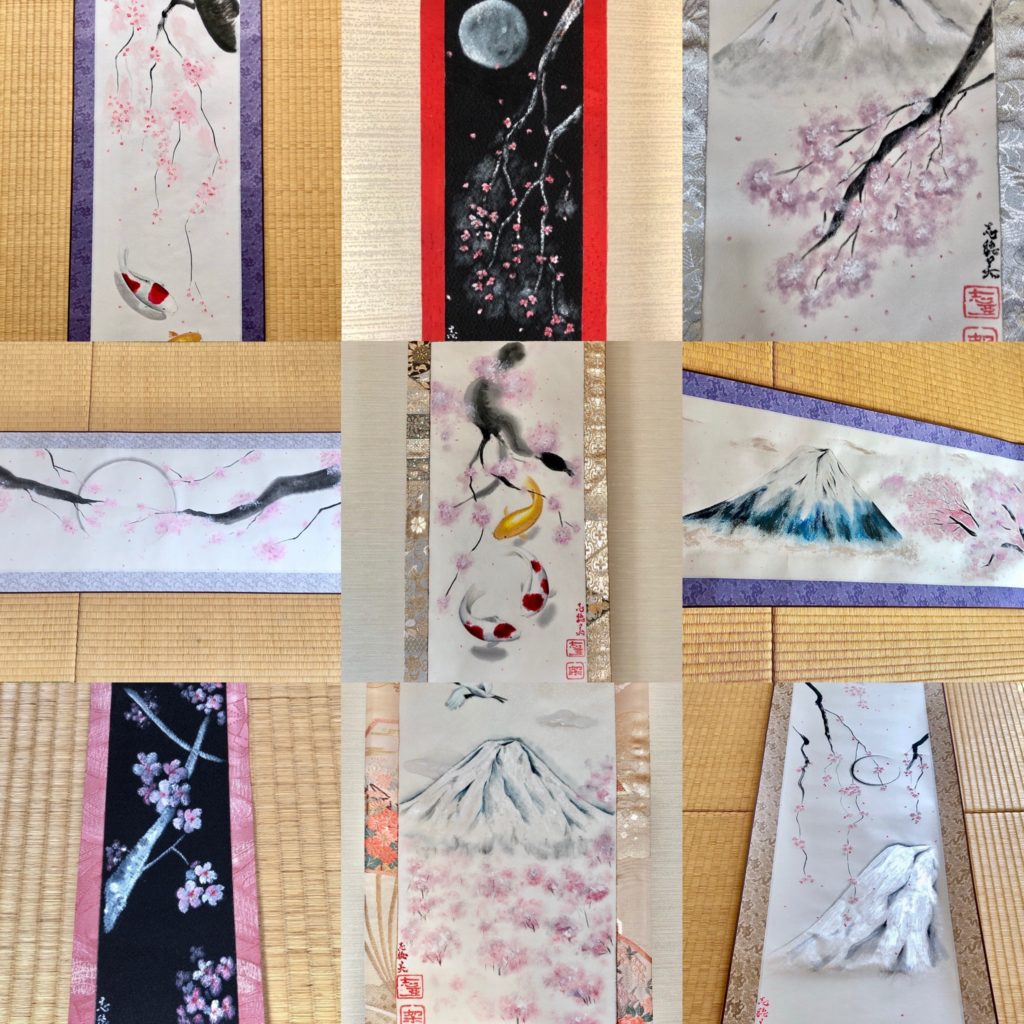
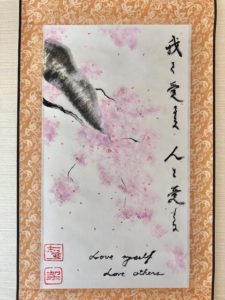
Sakura cherry blossoms painting art Kimono silk kakejiku
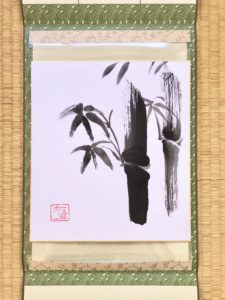
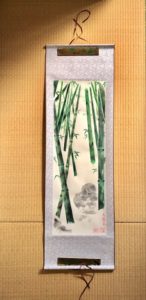
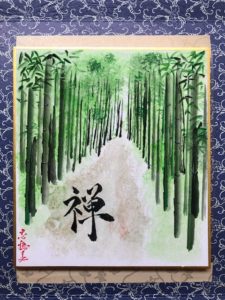
Japanese calligraphy art bamboo hanging scroll
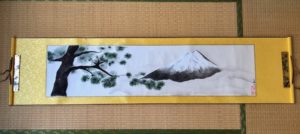
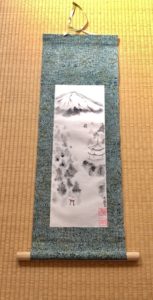
Extra-large Mt.Fuji and Japanese Pine tree hanging scroll, Impressive landscape ZEN style wall decor
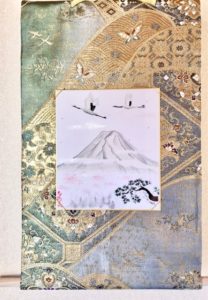
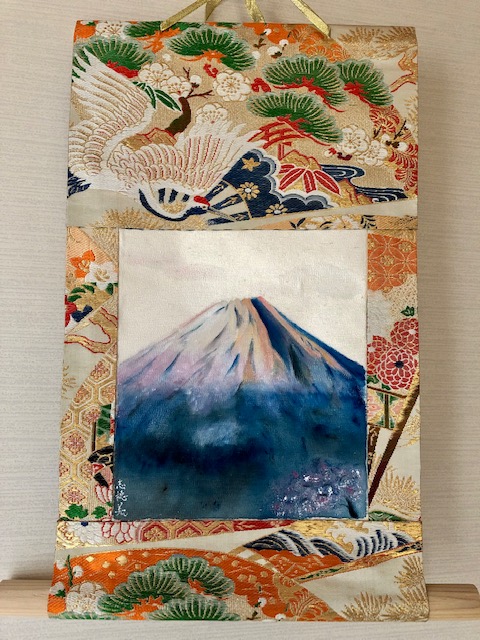
Gorgeous Kimono silk obi Japanese painting Mt. Fuji, crane birds, pine tree wall decor
Japanese painting calligraphy art Kakejiku style wall decoration
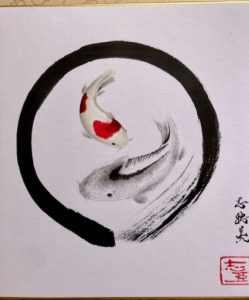
Japanese painting of Koi fish in ZEN circle, Enso
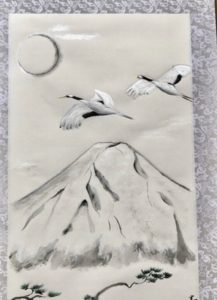
Japanese painting calligraphy art hanging scroll Kakejiku wall decor crane birds, Mt.Fuji, Japanese pine tree
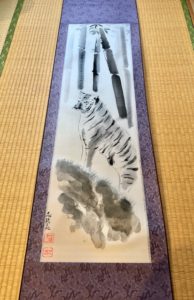
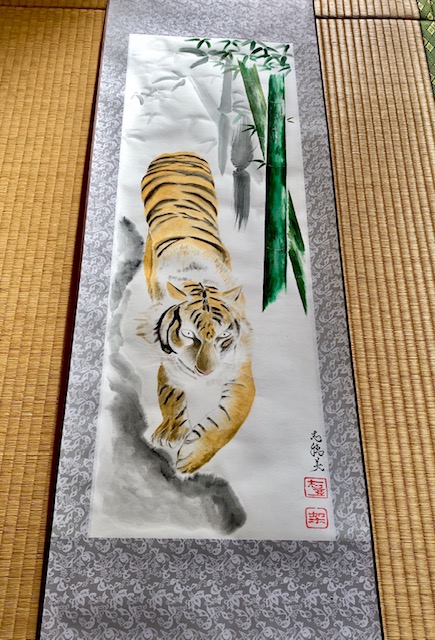
Japanese painting Tiger and bamboo ink art kakejiku
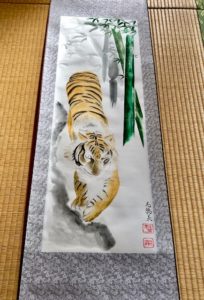
Unique tiger & bamboo Japanese painting Kakejiku hanging scroll
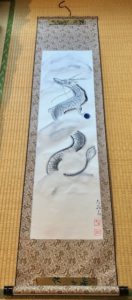
Extra long Drago Ryujin calligraphy art kakejiku hanging scroll

y

Japanese traditional Emakimono 絵巻物 scrolls and landscape scenery scroll

Making Emakimono style Japanese scenery painting art scroll
Emakimono style landscape Japanese scenery painting art scroll

Japanese EMAKIMONO style hanging scroll

First of all, what is EMAKIMONO??

Emakimono – “E” means “pictures”, “makimono” means “scroll” in Japanese.

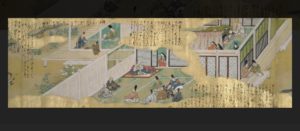
Emakimono is a Japanese traditional horizontal scroll which tells stories with pictures.

Japanese traditional Emakimono 絵巻物
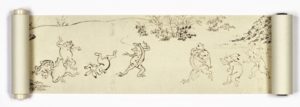
Old Emakimono
Old Emakimono

From right side, we unroll the scroll to the left, and illustrations tell you Japanese narrative.

So Emakimono usually is a few meters long, sometimes even 20 meters long!

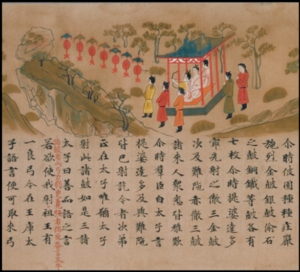
The oldest Emakimono that still exists is believed to made in Nara period, AD 710 to 794.

oldest EMAKIMONO
one of the oldest EMAKIMONO

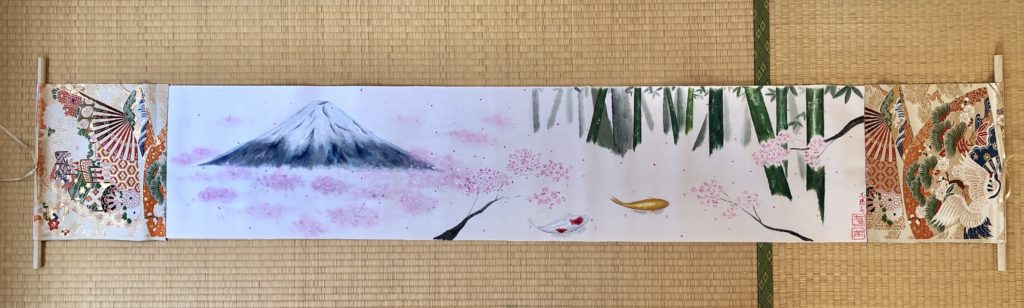
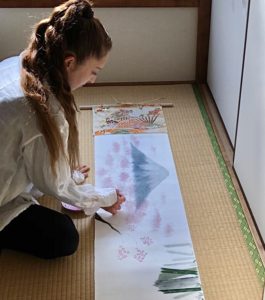
I made Emakimono style scroll with Japanese scenery painting.

Making Emakimono style Japanese scenery painting art scroll

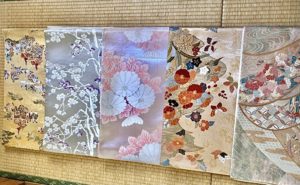
To make this unique scroll, I used Precious Kimono silk obi belt for both ends.

It is woven with silk and making gorgeous patterns.

precious Kimono silk obi belt

In the center painting area, I used white silk kimono fabric.

white silk kimono fabric

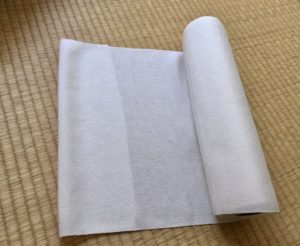
This white silk fabric is thin and soft, so I attached Special Japanese paper called “urauchi youshi”, on the back to make it stronger and harder.

This special paper has glue on one side and by ironing, I can attach this paper to the silk fabric.

I made this scroll with 2 meters long, so this can be hung on the wall in the rooms easily.

This Emakimono style horizontal scroll allows me to draw Japanese landscape scenery.

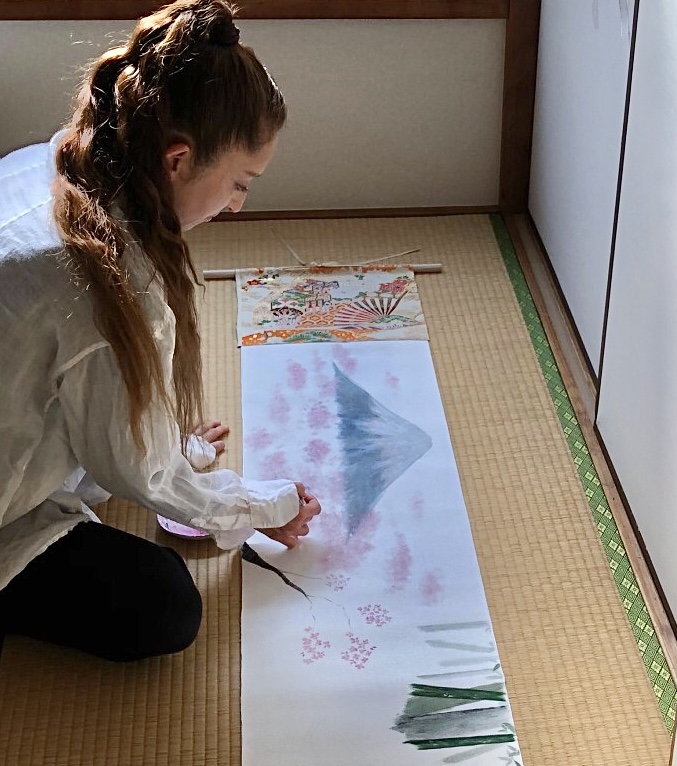
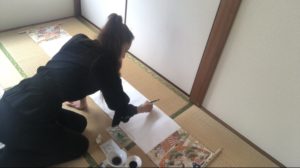
Painting landscape Japanese scenery

I really love to draw Japanese symbols, especially Mt. Fuji, Sakura cherry blossoms, Bamboo, and Koi fish.

Those symbols express Japanese beauty, and every time I draw them, I find myself being in love with them more and more.

In the past, I painted these symbols a lot on Usual Kakejiku hanging scrolls (Vertical scroll), but especially this horizontal scroll has enough space for me to draw all in here.

That’s what I wanted to make.

The reason why cherry trees were planted

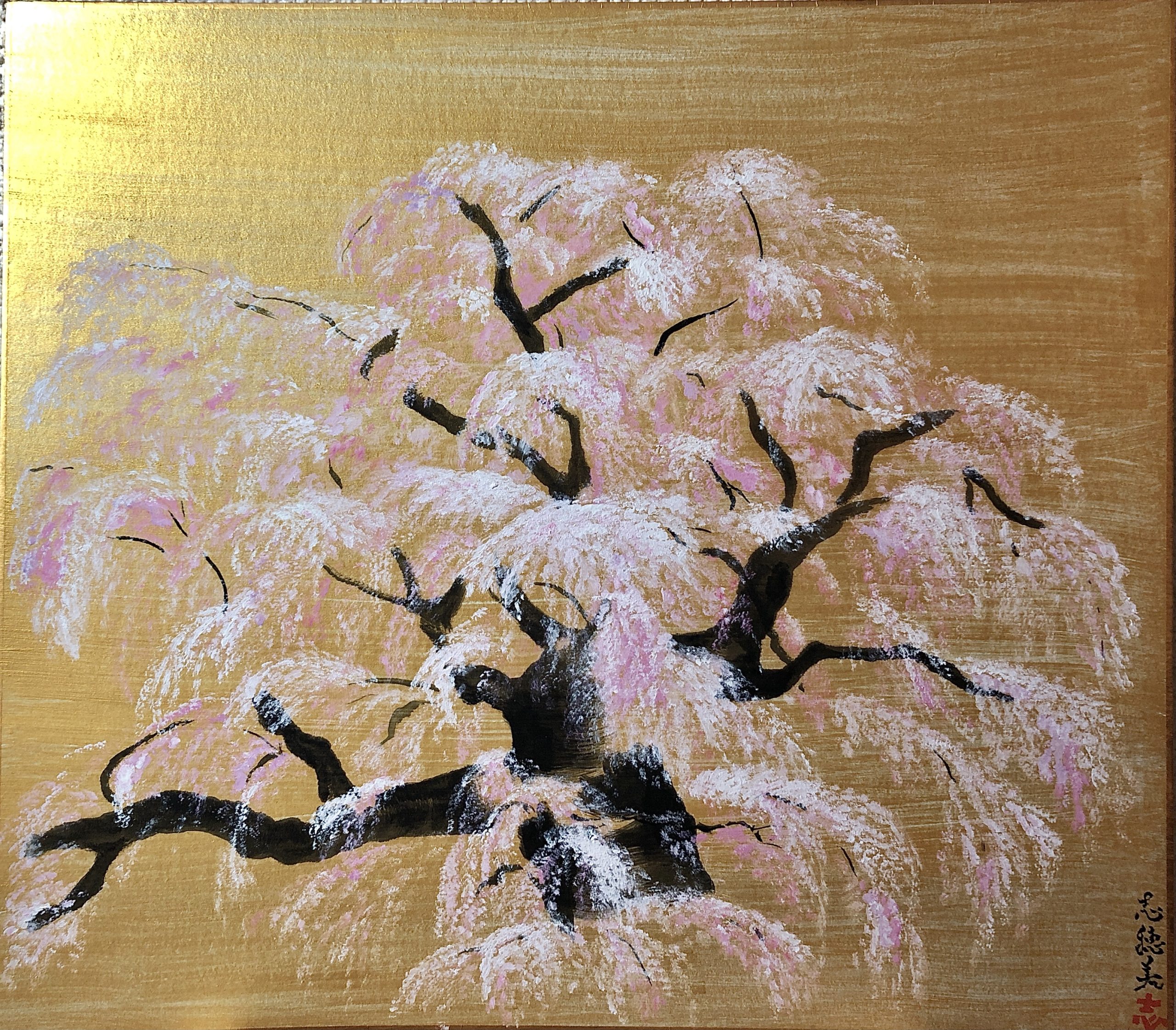
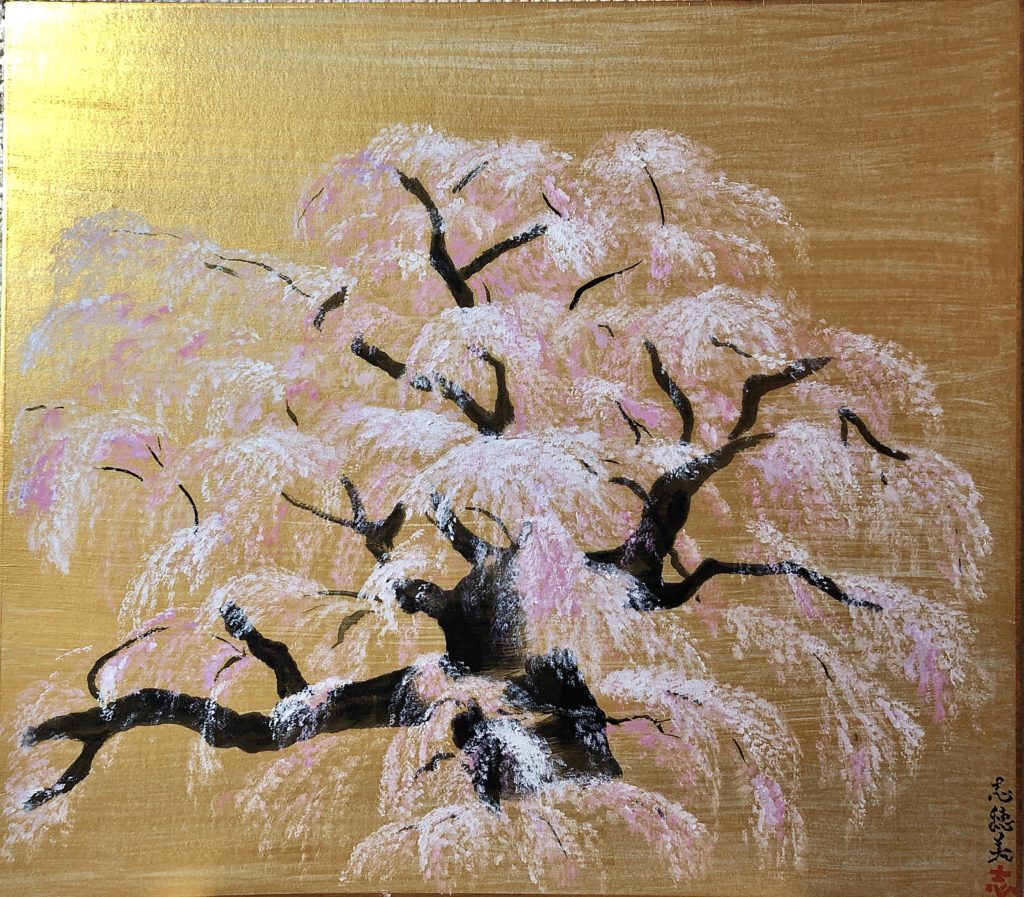
Japanese painting art Sakura cherry blossoms

The reason why cherry trees were planted.

Have you ever thought about the reason why cherry trees were planted?

In Japan, we can see so many cherry trees in everywhere.

Many of them are really old, few hundred years old.

An interesting point is, many cherry trees are planted by rivers.

This has a reasonable reason.

Ancient Japanese people planted cherry trees by rivers, so that many people would come and see the beautiful cherry blossoms.

They knew that many people visiting and walking there, would help make the soil harden, and help make the solid river bank.

So cherry trees were planted as a flood control measures.

Another interesting point is, that many cherry trees are in shrines and temples as well.

Shrines are Shintoism, and originally have deep relations with pine trees, but not with cherry trees.

However, people thought cherry blossoms’ gracefulness symbolizes the samurai spirit, and many shrines preferred to plant cherry trees as well.

Temples are Buddhism which has the deep relations with flowers.

They admired cherry blossoms as well as plum blossoms.

We cannot talk about Japanese history without the relations with temples.

Muromachi era, Sengoku era, around 13C to 16C, many temples already had cherry trees.

Famous Samurai and shogun enjoyed Sakura viewing “Ohanami” since then.

In Japan, people enjoy Sakura viewing “Ohanami” since ancient time, and this is a Japanese culture.

Many famous Sakura spots in Kyoto and Nara are in temples and shrines.

In Tokyo too, many famous Sakura spots are in temples and shrines, as well as by rivers, or near the water.

Ueno park, where many people visit for Sakura viewing, was once a temple.

Imperial palace is surrounded with moat.

Meguro river, Kanda river, Sumida river, Tamagawa river, Arakawa river, are all famous Sakura spots.


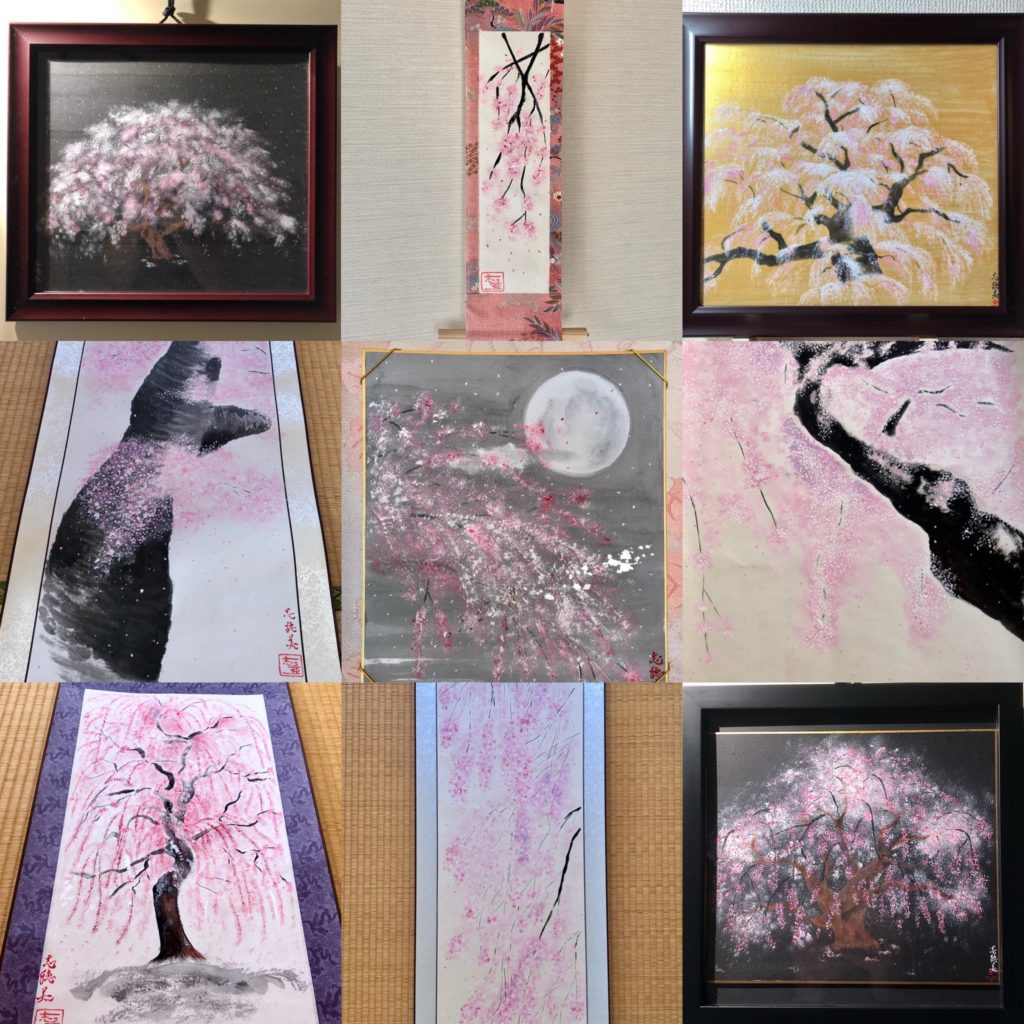
Our Japanese painting art Sakura cherry blossoms series
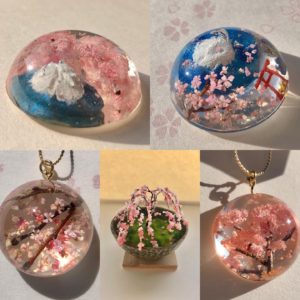
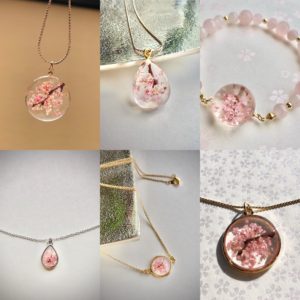
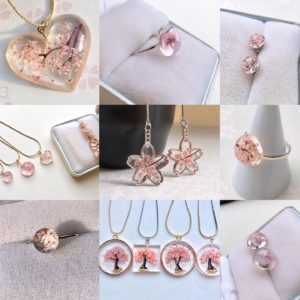
Our Sakura cherry blossoms jewelry series
Our Japanese painting art Sakura cherry blossoms series

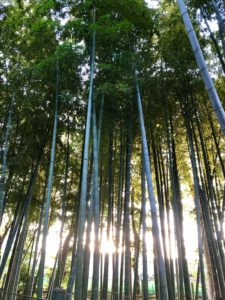
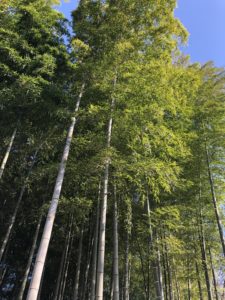
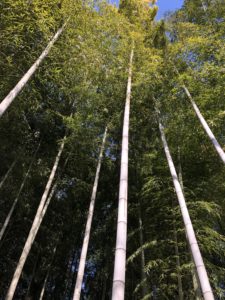
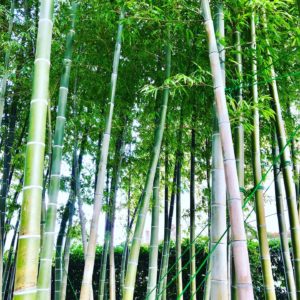
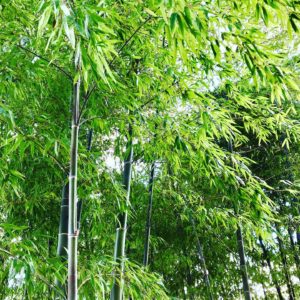
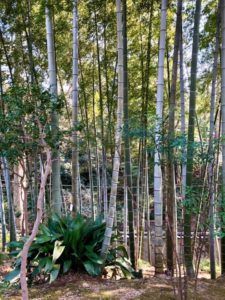
Bamboo forests in Tokyo – hidden bamboo forest spots

Tokyo bamboo forest Travel guide hidden spots

Finding small Kyoto in Tokyo – hidden Bamboo forest in Tokyo

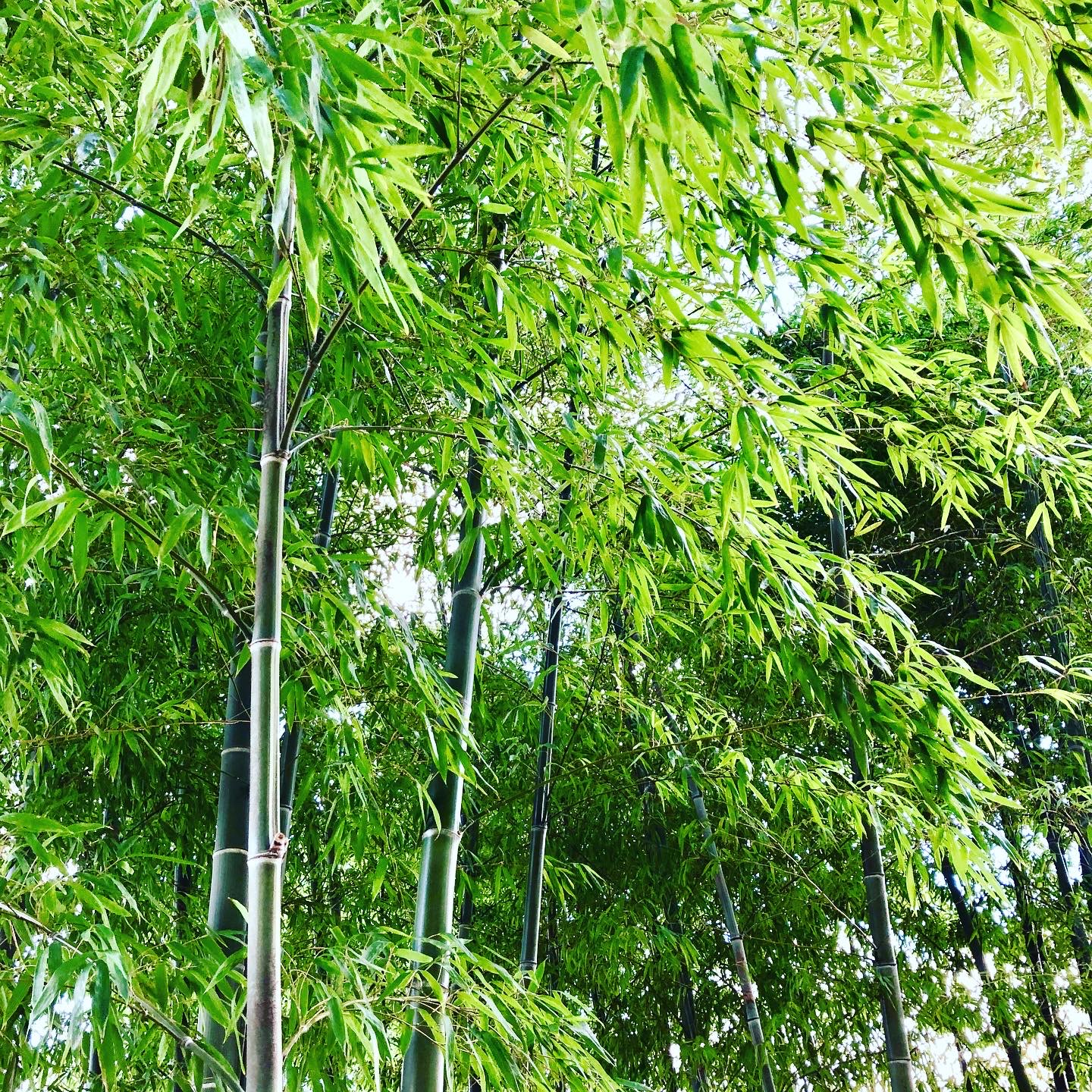
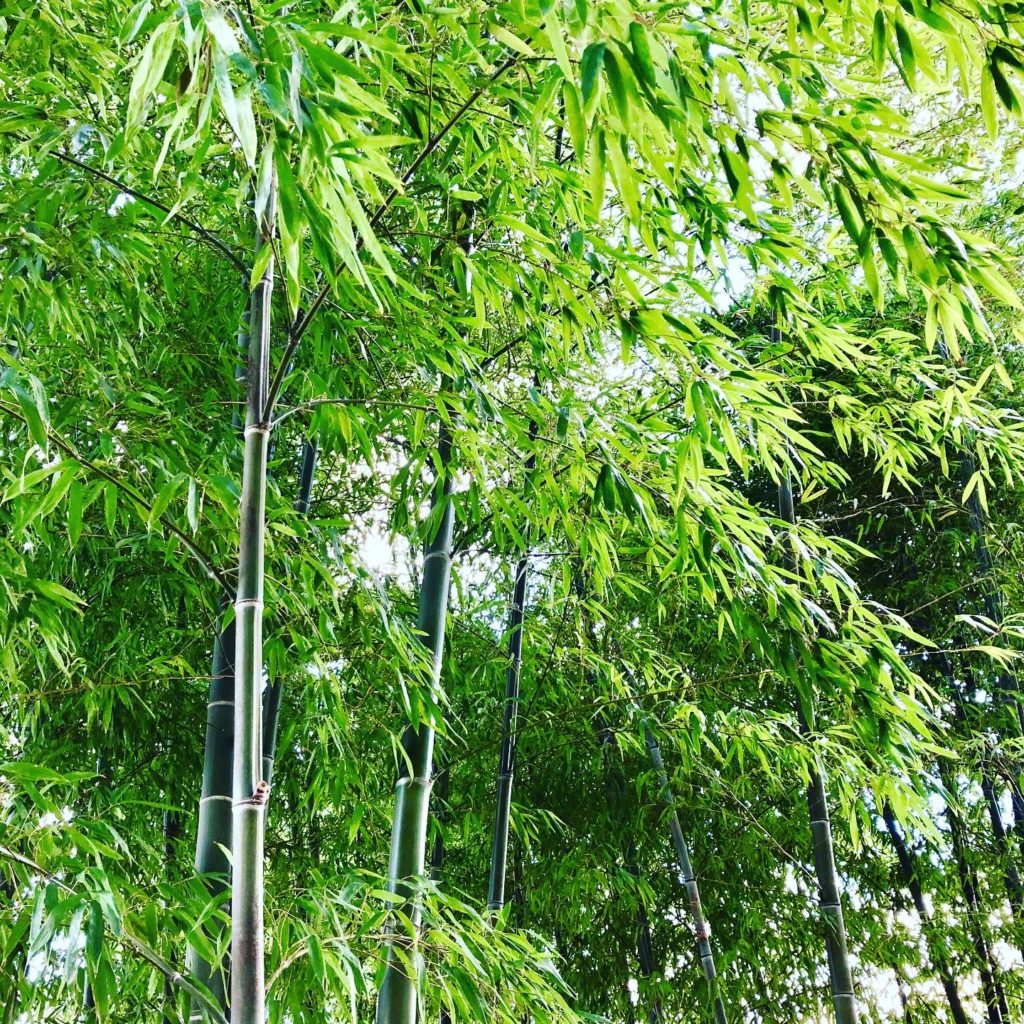
Bamboo trees symbolize Japanese ZEN culture.

When you are in Bamboo forest, you feel very calm and helps you meditate.

Many bamboo forests are in Kyoto, or secluded area.

But you can find bamboo forests in central Tokyo too.

We would like to share some hidden bamboo forests in Tokyo.

If you are living in Tokyo, or if you visit Tokyo, you can experience small Kyoto in these small bamboo forest.

It is a good cycling day trip as well.

First bamboo forest is “Suzume-no-Yado Ryokuchi park” in Himonya, Meguro ward.

Tokyo bamboo forest travel guide Suzume-no-yado Ryokuchi park
Tokyo Bamboo forest travel guide Suzume-no-yado Rhokuchi park

This park has many tall bamboo trees and traditional Japanese style house.

The traditional Japanese style house is open from 9:30 to 15:30.

But bamboo trees area is open for 24 hours.

Second bamboo forest is “Roka Koshun-en Gardens” in Setagaya ward.

Tokyo Bamboo forest guide Roka Koshu-en gardens
Tokyo Bamboo forest travel guide Roka Koshu-en Gardens

It is located near “Roka-Koen station” of Keio line.

It is about 40-50 minutes cycling from central Tokyo.

This park is free, but open hour is 9:00-16:30.

There are lots of tall bamboo trees, cherry trees and a memorial house of a famous Japanese writer, “Roka Tokutomi”.

You can go inside this memorial house, which has Japanese old style, and very interesting.

Third bamboo forest is “Senzoku Ike” in Ota ward.

Tokyo Bamboo forest travel guide Senzokuike Myofuku ji temple
Tokyo Bamboo forest travel guide Senzokuike Myofukuji temple
Tokyo bamboo forest Travel guide hidden spots
Tokyo bamboo forest hidden spots Travel guide Senzokuike Myofukuji temple 

It is located beside “Senzokuike station” of Tokyu Ikegami line.

There is a big pond with Koi fish, cherry trees and a shrine.

Beside this park, there is a temple called “Myofuku ji”.

This temple has small but beautiful bamboo trees.

Lastly, we want to talk about “Todoroki Keikoku” in Setagaya ward.

Tokyo Bamboo forest travel guide Todoroki Keikoku

This “Todoroki Keikoku” park is about 30-40 minutes bicycle ride from central Tokyo.

Or you can go there by train using “Oimachi line” to “Todoroki station”.

In there, you can enjoy nature here, with walking beside the river.

“Keikoku” means valley, and this is a unique small valley that you can experience in Tokyo.

This place has a temple and a Japanese garden area.

In the Japanese garden, there are some bamboo trees, plum blossoms and cherry blossoms.

Those places are bamboo forest spots that we discovered in Tokyo.

We hope you will add these spots to your “Tokyo explore list”!

Photos below are our Bamboo items.

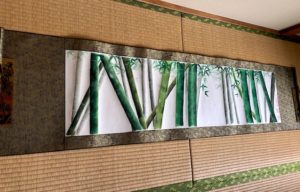
Extra large landscape bamboo forest Japanese painting art wall decoration
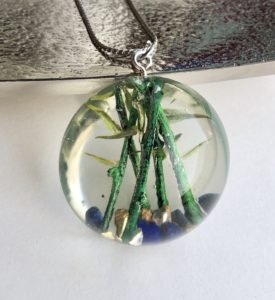
Extra large crystal glass 3D miniature bamboo forest necklace
Japanese painting calligraphy art hanging scroll Kakejiku wall decor bamboo
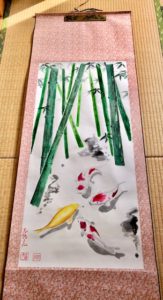
Japanese painting calligraphy art hanging scroll Kakejiku wall decor Koi fish and bamboo
Japanese painting calligraphy art hanging scroll Kakejiku wall decor Koi fish and Sakura
Kakejiku style Japanese bamboo painting small wall decoration
Japanese calligraphy art bamboo hanging scroll

Please visit our Etsy shop for those items and more.

Etsy.com- JapanCrossBridge

Japanese Kakejiku – good luck item

Unique tiger & bamboo Japanese painting Kakejiku hanging scroll

“Japanese Kakejiku (Kakemono)“ -good luck item


“Japanese Kakejiku (Kakemono)” is a hanging scroll used to display and exhibit paintings and calligraphy art.


Traditional Japanese rooms usually have a “Tokonoma”- a special space (alcove) to display “Kakejiku”.


Most traditional houses used to have at least one Kakejiku to hang in Tokonoma.


Kakejiku has been a well-known cultural item in Japan for long time.


There are a lot of themes for Kakejiku.


Especially paintings have good luck meanings are popular.


“Sunsui ga” – Nature/ Japanese scenery of mountains, river, water fall, trees, rocks

These nature items have important meanings based on ZEN, giving us a relaxing ideal ZEN world.


“Seasonal flowers/plants” – To enjoy four seasons even inside the house, we choose seasonal flowers/plants.


“Tiger” – Tiger is believed to protect against misfortune and brings a good luck.  Tiger’s eyes with glares are toward evil.


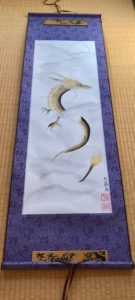
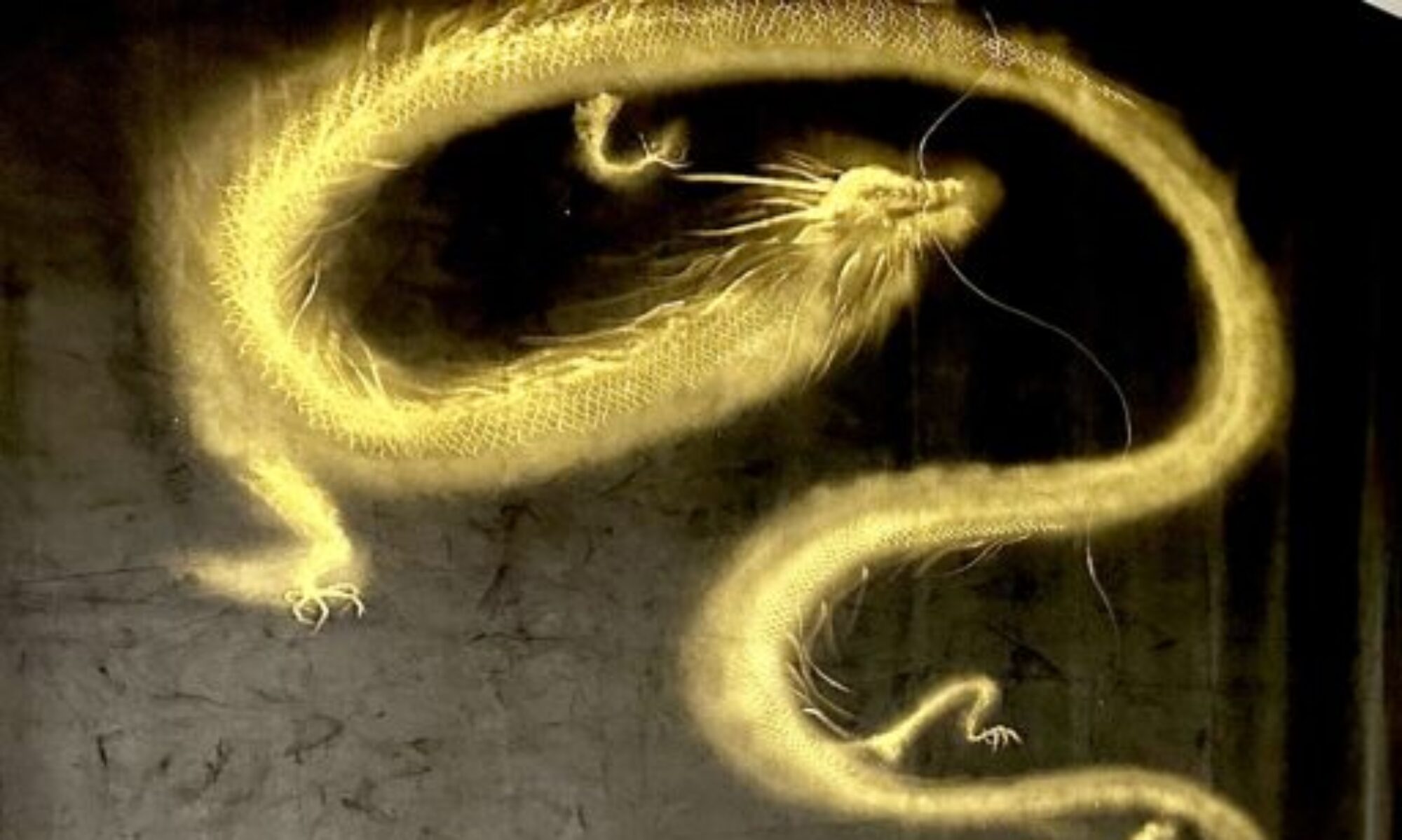
“Dragon Ryujin” – Dragon is called “Ryujin” and is a god in Japan. It is a symbol of promotion, and Dragon Ryujin going up to the sky has the positive and good luck power.


Mt. Fuji – the highest symbolic mountain in Japan, and being registered as a world heritage.

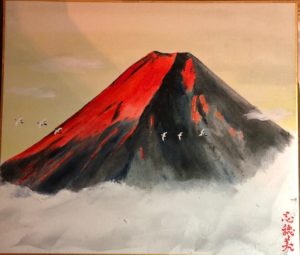
Mt. Fuji is well known as a sacred mountain.  Especially red color Mt. Fuji in the red sunrise is believed to have the strong good luck power.


There are more themes for Kakejiku, and all have special meanings.


By hanging these good luck Kakejiku, the house and the people living there are protected against evil.

Japanese painting calligraphy art hanging scroll Kakejiku wall decor
Unique Dragon Ryujin Japanese painting Kakejiku hanging scroll
Japanese painting Tiger and bamboo ink art kakejiku

Extra long Drago Ryujin calligraphy art kakejiku hanging scroll

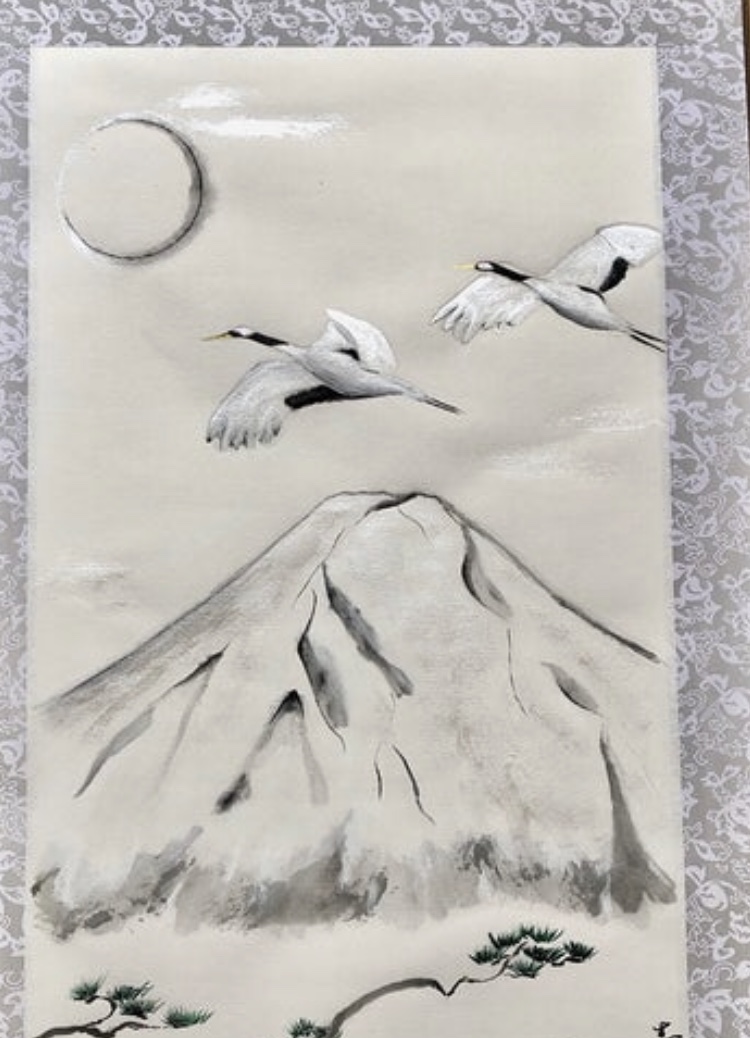
Red Mt. Fuji with crane birds calligraphy art


Japanese cultural icon Mt. Fuji

Japanese painting hanging scroll Mt. Fuji Kakejiku art

Japanese painting hanging scroll Mt. Fuji Kakejiku art
Gorgeous kimono silk obi belt Japanese painting hanging scroll Mt. Fuji Kakejiku art

Japanese cultural icon – Mt. Fuji

If you have an interest in Japan, you must have heard this name “Mt. Fuji”.

Mt. Fuji is the highest mountain in Japan.

It’s 3,776.24m (12,389ft), located on Honshu.

Mt. Fuji is an active volcano, last erupted over 300 years ago.

The reason Mt. Fuji is very famous as cultural icon is because of its beautiful shape as well.

It stands on the flat wide area “Kanto plain” with symmetrical cone, and snow-capped on its top with the contrast of white and blue.

Because of its unique shape and height, it is very easy to be seen from even far away.

On a clear day in winter time, Mt. Fuji can be seen from greater Tokyo.

Even a glance of Mt. Fuji makes many Japanese people very happy.

I think that is because Mt. Fuji has been believed to be a symbol of god from its serene appearance.

Looking at Mt. Fuji is a very lucky thing.

Since long time ago, Japanese people loved Mt. Fuji, and Mt. Fuji has been depicted in art and photography.

We find Mt. Fuji in many Japanese paintings, Kakejiku hanging scrolls, ink paintings ”Sumie”, etc.

I love to paint Mt. Fuji as well.

Mt. Fuji has different attractions in different seasons and time.

This simple, yet perfect cone-shaped mountain never stops attracting many people.

Japanese painting calligraphy art hanging scroll Kakejiku wall decor -landscape Mt. Fuji, crane birds, Sakura

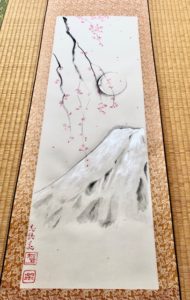
Japanese painting ZEN Mt. Fuji in full moon and Sakura hanging scroll Kakejiku wall decoration

Japanese painting calligraphy art hanging scroll Kakejiku wall decor crane bird, Mt. Fuji, Sakura

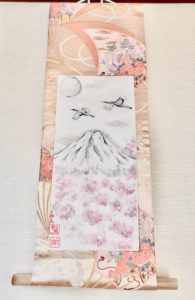
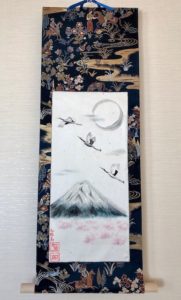
Gorgeous Kimono silk obi belt Japanese painting Mt.Fuji, Sakura cherry blossoms & crane birds hanging scroll

Extra-large Mt.Fuji and Japanese Pine tree hanging scroll, Impressive landscape ZEN style wall decor

Precious Kimono silk obi belt Japanese painting Mt.Fuji & crane birds in full moon Sakura night hanging scroll


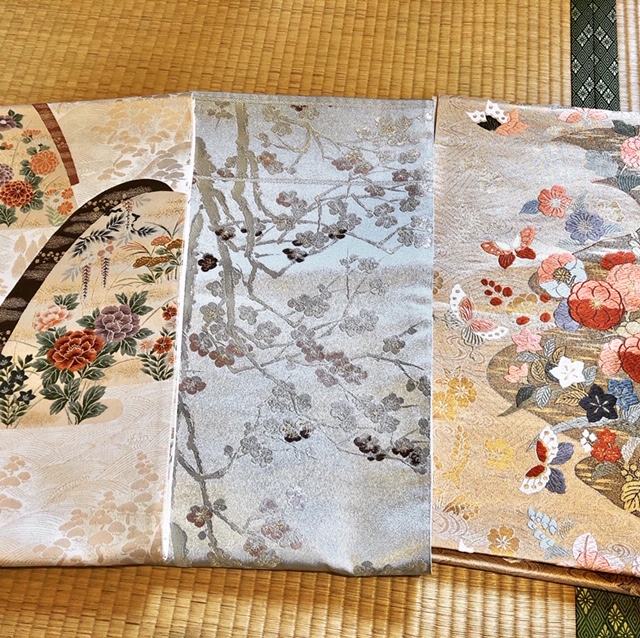
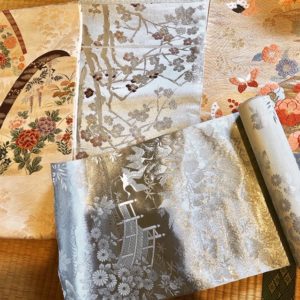
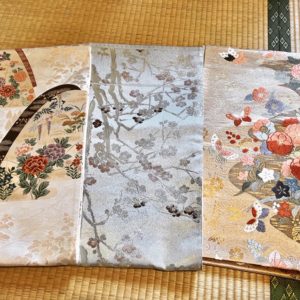
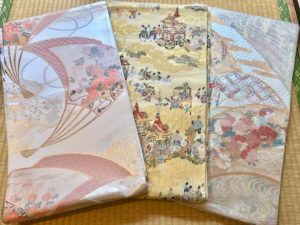
Japanese precious Kimono Obi belt

Gorgeous Kimono Obi belts

Japanese precious Kimono Obi belts

Kimono is Japanese traditional fashion and culture.

All Japanese people used to wear Kimono every day long time ago, and Kimono was our clothes.

But we wear Kimono only occasionally now, especially on special occasions such as weddings, new years, come of age day cerebration, or tea ceremony.

And Kimono we wear on those special occasions are really gorgeous.

Depends on the seasons, Kimono fabric can be silk, cotton, or wool.

Kimono Obi Belt is inevitable to wear Kimono.

Obi belts are quite wide and stands out in the center of our body, so it is very important.

There are different kinds of Obi belts, called Nagoya-Obi, Fukuro-Obi, Han Haba- Obi.

Han-Haba Obi is used for daily Kimono or Yukata (summer cotton Kimono), and casual.

Nagoya-Obi also can be used for daily Kimono, or Japanese cultural practice such as tea ceremony or flower arrangement.

Fukuro-Obi is the most gorgeous belt and is for weddings or cerebrations.

When you look at Fukuro-Obi, you will see how gorgeous, shiny it is and the pattern is an amazing art.

When you touch Fukuro-Obi, you can feel that Fukuro-Obi is really precious.

Fukuro-Obi can cost a fortune, sometimes over one million yen.

Fukuro Obi is woven with shiny gold, silver thread, silk thread by artisans.

This is totally Japanese amazing culture.

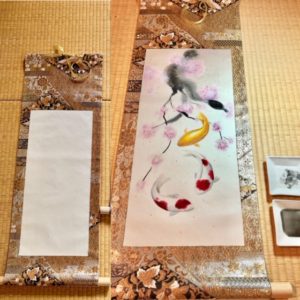
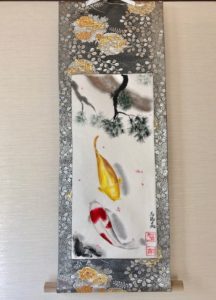
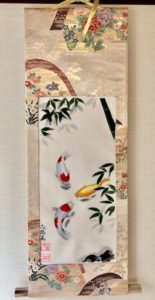
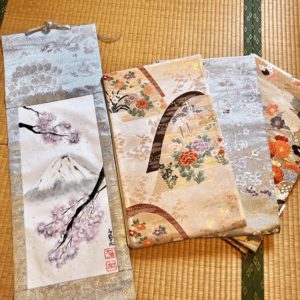
When this precious Kimono Obi belt turns into hanging scroll, it starts another new life.

We are honored to be able to make gorgeous hanging scrolls with them.

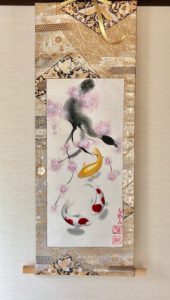
Gorgeous Kimono Obi belt Japanese painting Kakejiku hanging  scroll Koi fish and Sakura
Gorgeous Kimono Obi belt Japanese painting Kakejiku hanging scroll Koi fish and Sakura

Gorgeous Kimono Obi belts

Gorgeous Kimono Obi belt Japanese painting Kakejiku hanging scroll Koi fish and pine tree

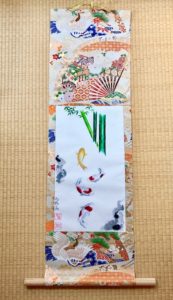
Gorgeous Kimono Obi belt Japanese painting Kakejiku hanging scroll Koi fish and Bamboo

Gorgeous Kimono Obi belts

Gorgeous Kimono Obi belt Japanese painting Kakejiku hanging scroll

Gorgeous Kimono Obi belt Japanese painting Kakejiku hanging scroll Mt. Fuji and Sakura cherry blossom

Gorgeous Kimono Obi belt Japanese painting Kakejiku hanging scroll Koi fish and bamboo

Gorgeous Kimono Obi belt Japanese painting Kakejiku hanging scroll Koi fish and Sakura cherry blossoms

Sakura cherry blossom – Japanese beauty and sensitivity

Sakura cherry blossoms painting art Kimono silk kakejiku

Japanese painting calligraphy art hanging scroll Kakejiku wall decor landscape Sakura cherry tree

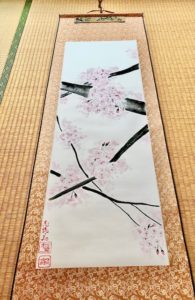
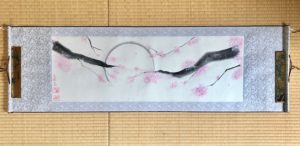
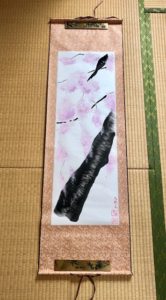
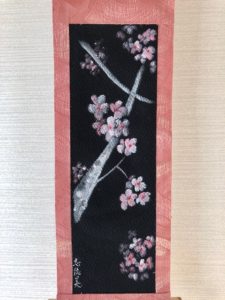
I am obsessed with Sakura cherry blossoms.

Sakura is Japanese symbol.

We admire Sakura cherry blossoms in many ways.

Sakura is connected to our Japanese culture deeply.

Since ancient time, Japanese people enjoyed watching Sakura, called “Ohanami” (meaning “watch flowers”)

Spring time, under Sakura trees were full of people, sitting and having picnic.

This “Ohanami” habit is still very popular in Japan.

We see “Sakura forecast” (when cherry blossom start to bloom) on the TV news.

When Sakura starts to bloom, people start going out to have picnic under the Sakura trees.

This is our major Spring event.

We also eat Sakura flowers and leaves.

Pickled Sakura flowers and leaves are used for sweets or tea.

Tea leaf container or other tools are made using Sakura trees.

We have music about Sakura, called “SAKURA”, and all Japanese should know this song.

We have color called “SAKURA color”, which is light sensitive pink.

Sakura is used as Japanese symbol in many situations.

Sakura is very familiar flower for Japanese people.

Sakura cherry blossom time is very short, about one week.

When it starts blooming, it goes very quick to be full bloom, and as soon as it becomes full bloom, leaves start to come out and flowers start falling.

So the short period in full bloom and the beauty of Sakura flowers are often likened to the fragility of human life.

That is why cherry blossoms are symbol of beauty and transience.

I love Sakura, and cherry blossom time makes me excited.

Painting Sakura makes me happy and this is a good meditation for me.

That is why I keep painting Sakura.

Japanese painting calligraphy art hanging scroll Kakejiku wall decor ZEN style SHIDARE Sakura

Japanese painting calligraphy art hanging scroll Kakejiku wall decor ZEN style Sakura cherry blossom art

Japanese painting calligraphy art hanging scroll Kakejiku wall decor landscape Sakura cherry blossom in full moon night

Japanese painting calligraphy art hanging scroll Kakejiku wall decor Sakura cherry tree in full bloom

Japanese painting calligraphy art hanging scroll Kakejiku wall decor Kimono style YOZAKURA night cherry blossom

Japanese painting calligraphy art hanging scroll Kakejiku wall decor Sakura cherry blossom

Crane bird – Japanese healthy long life good luck symbol

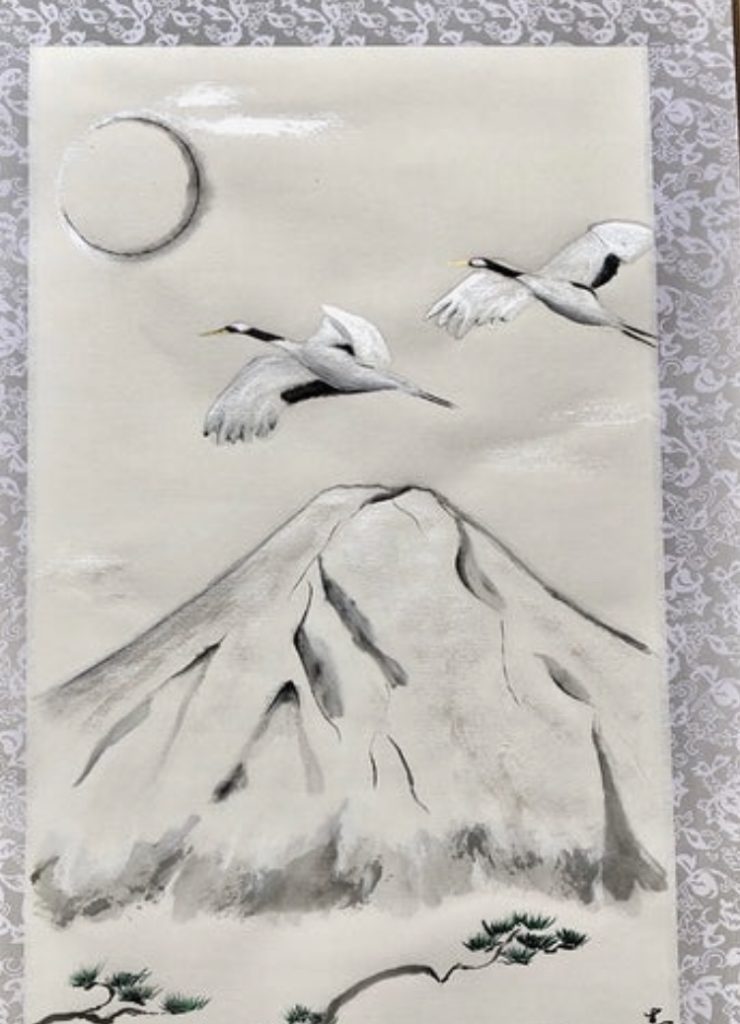
Japanese painting calligraphy art hanging scroll Kakejiku wall decor crane birds, Mt.Fuji, Japanese pine tree

Japanese painting calligraphy art hanging scroll Kakejiku wall decor crane birds, Mt.Fuji, Japanese pine tree

Crane bird - Japanese healthy long life symbol

Crane birds are beautiful big white birds with a little bit of black color on wings and necks.

Even though we don’t get to see them often, crane birds are very familiar for many of Japanese people.

Crane birds are often used as a symbol of good luck and healthy long life.

Especially at the cerebration occasions, we see crane bird pictures and decorations.

On new year day, we use items with crane bird pictures, such as kimono, special black box for special new year food called “osechi”, new year cards called “nengajo”.

We turn on TV on a new year day, we see many CMs using crane birds fling toward Mt. Fuji.

On wedding, brides wear special wedding kimono with beautiful crane bird embroidery.

Crane birds are often be seen with Mt. Fuji on these occasions, as Mt. Fuji is also another good luck symbol.

It is funny that I have never seen actual crane birds, but they have been very familiar birds to me since I was small.

They are beautiful and my favorite birds.

Japanese special good luck necklace -crane bird ORIZURU, Sensu, Sakura, pinetree

Japanese painting calligraphy art hanging scroll Kakejiku wall decor -landscape Mt. Fuji, crane birds, Sakura

Japanese painting calligraphy art hanging scroll Kakejiku wall decor crane bird, Mt. Fuji, Sakura

Crystal dome Japanese good luck crane bird ORIZURU, Sakura cherry blossom, pine tree necklace

Japanese style good luck necklace - crane birds ORIZURU, Mt.Fuji, Sakura cherry blossom, pine tree
Japanese style good luck necklace – crane birds ORIZURU, Mt.Fuji, Sakura cherry blossom, pine tree