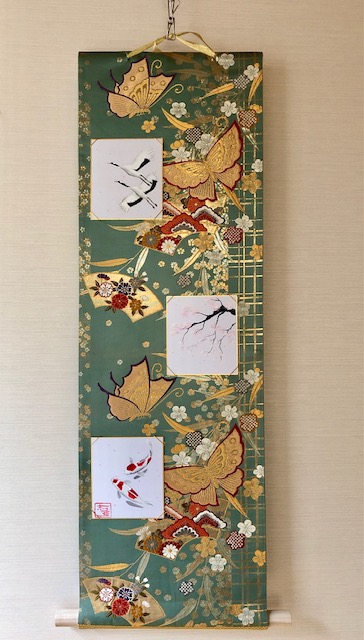
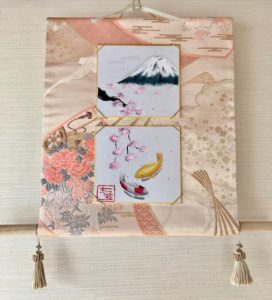
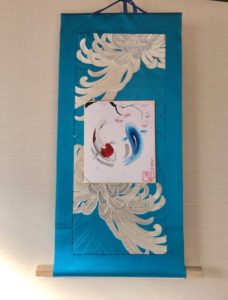
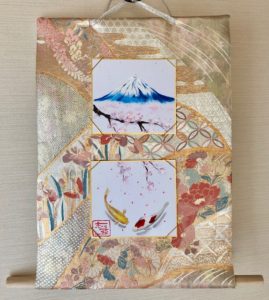
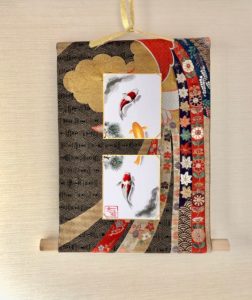
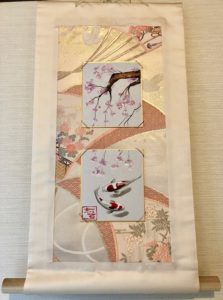
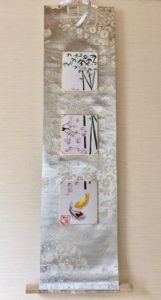
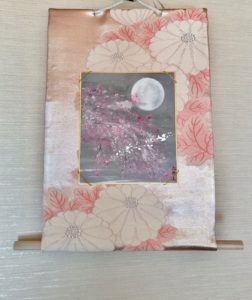
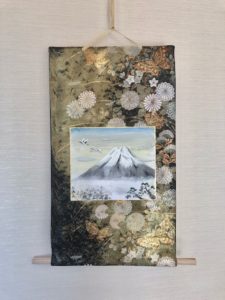
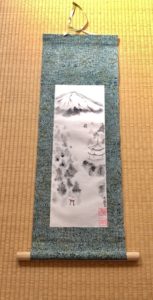
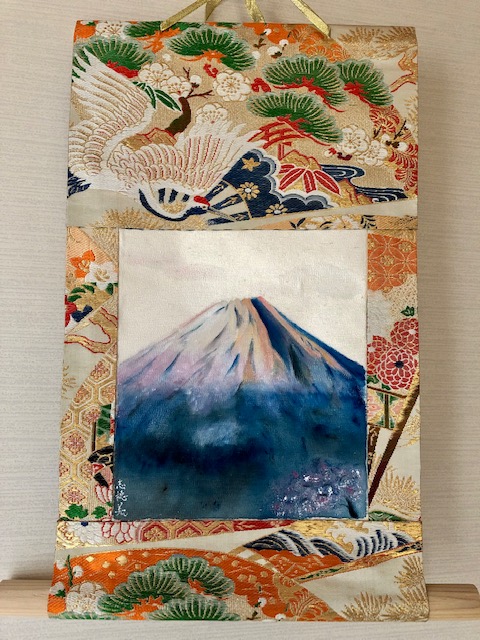
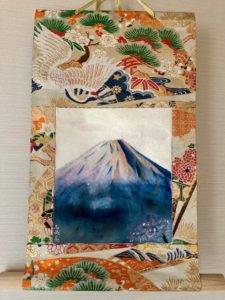
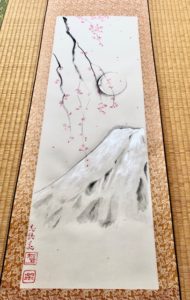
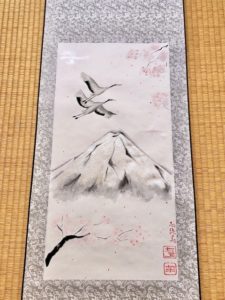
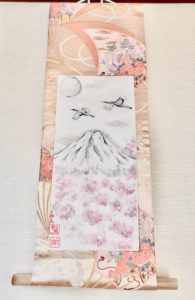
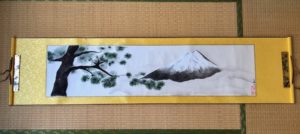
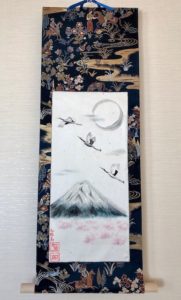
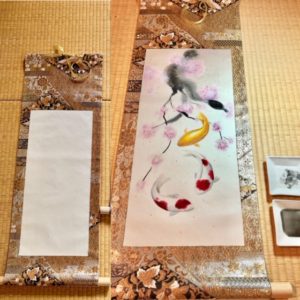
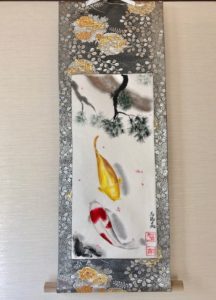
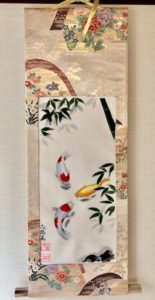
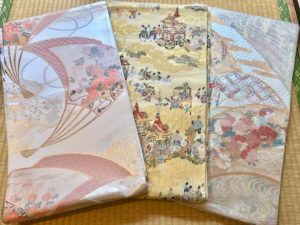
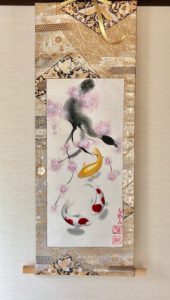
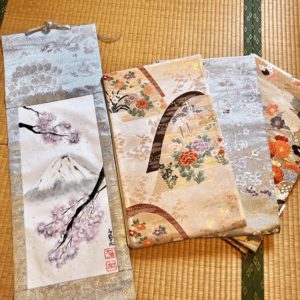
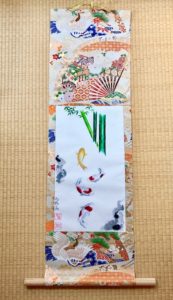
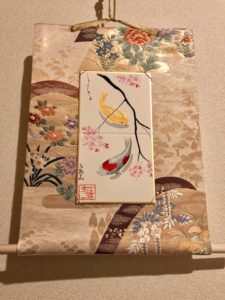
Fukuro obi Kakejiku style Japanese painting art Crane bird, Sakura, Koi fishFukuro obi Kakejiku style wall decor Mt.FUji Sakura KoiFukuro obi Kakejiku style wall decor blue koi and nishiki goi with Sakura
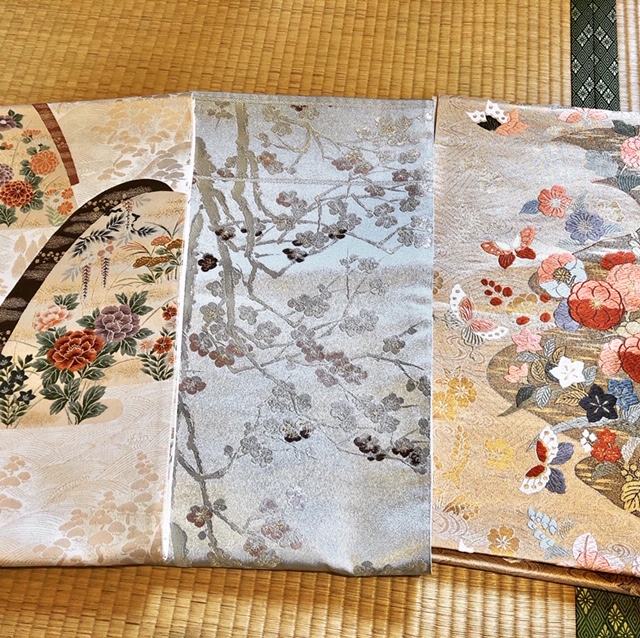
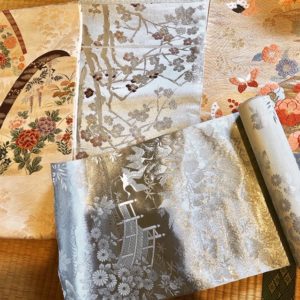
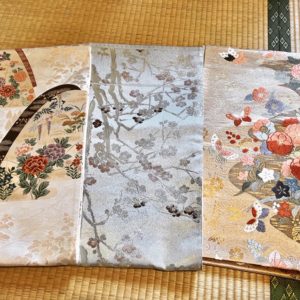
Fukuro Obi belts are precious obi belts for Japanese Kimono.
They are usually made with silk, having Japanese patterns.
Shiny silk threads create beautiful and gorgeous looks.
These obi belts can become gorgeous decorations by themselves.
Kakejiku style wall decorations using these Fukuro obi are made to enjoy their own beauty.
Small Japanese paintings are not the main stars here.
Gorgeous Fukuro obi belts are the main stars.
This Kakejiku style wall decorations have their uniqueness- with the combination of Fukuro obi and Japanese painting.
Fukuro obi Kakejiku style wall decor Mt.FUji, Sakura, KoiFukuro obi belt Kakejiku style wall decor Koi fish and pine treeFukuro obi belt Kakejiku style wall decor Sakura and KoiFukuro obi belt Kakejiku style wall decor Koi Sakura bambooFukuro obi belt Kakejiku style wall decor YOZAKURA sakura in full moon nightFukuro obi belt Kakejiku style wall decor Mt.Fuji, crane bird, pine tree
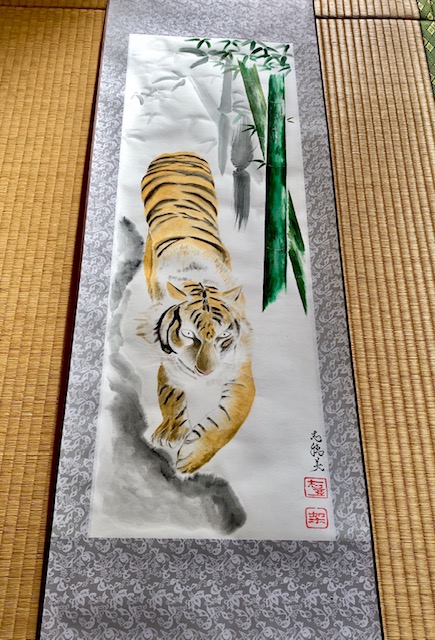
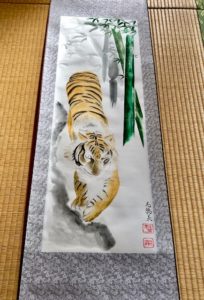
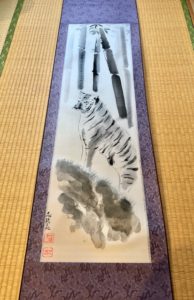
Unique tiger & bamboo Japanese painting Kakejiku hanging scroll
“Japanese Kakejiku (Kakemono)“ -good luck item
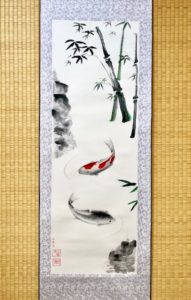
“Japanese Kakejiku (Kakemono)” is a hanging scroll used to display and exhibit paintings and calligraphy art.
Traditional Japanese rooms usually have a “Tokonoma”- a special space (alcove) to display “Kakejiku”.
Most traditional houses used to have at least one Kakejiku to hang in Tokonoma.
Kakejiku has been a well-known cultural item in Japan for long time.
There are a lot of themes for Kakejiku.
Especially paintings have good luck meanings are popular.
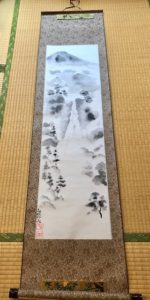
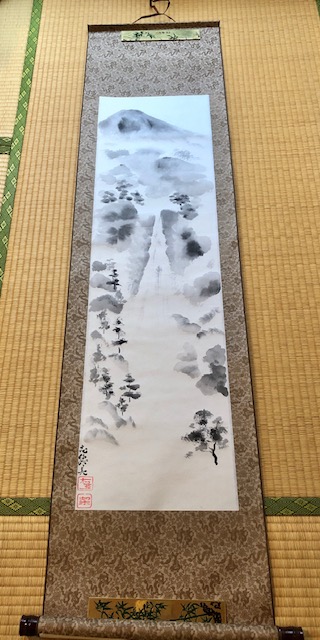
“Sunsui ga” – Nature/ Japanese scenery of mountains, river, water fall, trees, rocks
These nature items have important meanings based on ZEN, giving us a relaxing ideal ZEN world.
“Seasonal flowers/plants” – To enjoy four seasons even inside the house, we choose seasonal flowers/plants.
“Tiger” – Tiger is believed to protect against misfortune and brings a good luck. Tiger’s eyes with glares are toward evil.
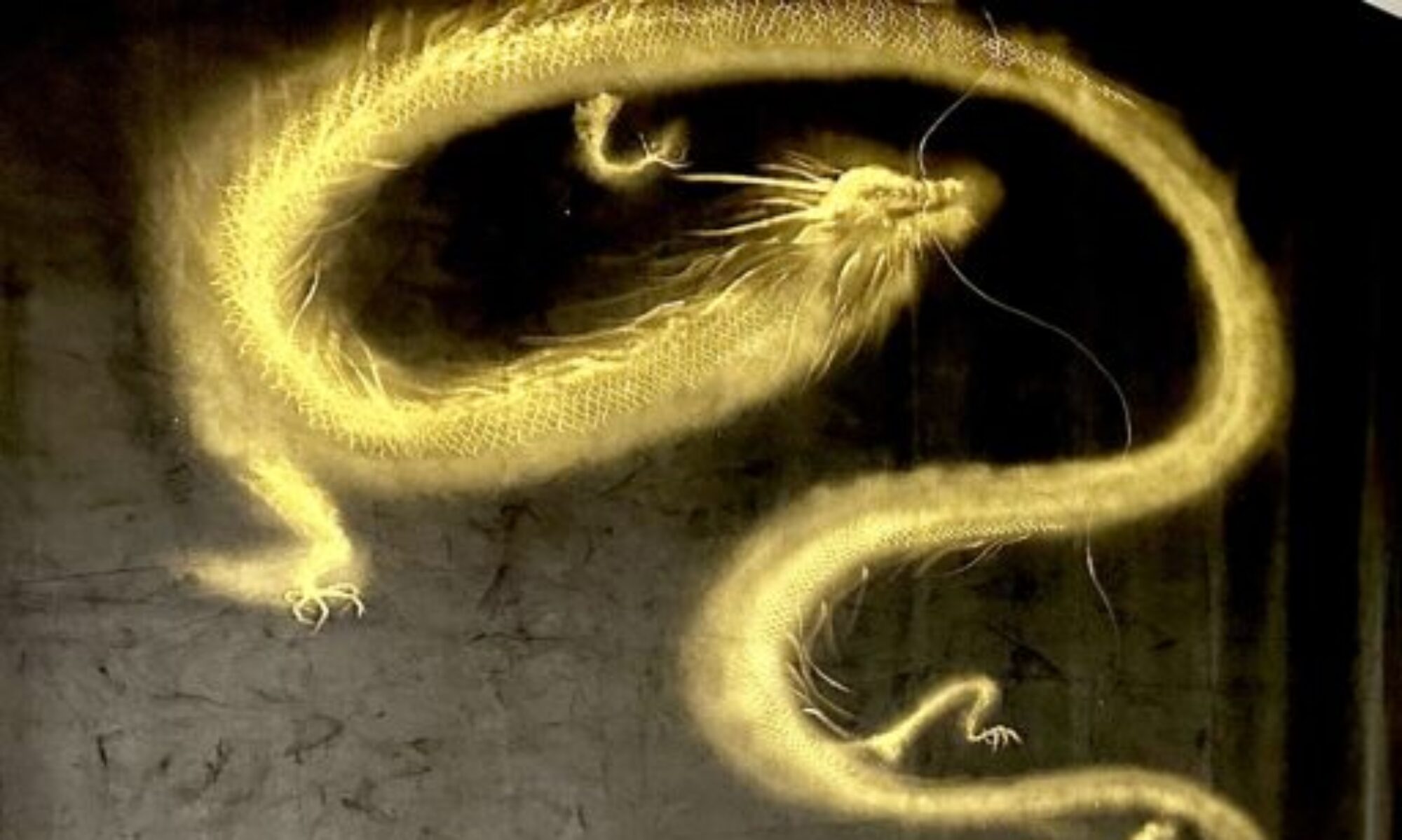
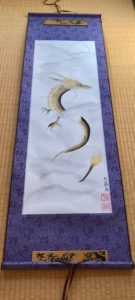
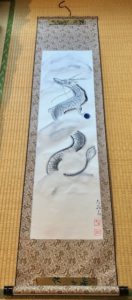
“Dragon Ryujin” – Dragon is called “Ryujin” and is a god in Japan. It is a symbol of promotion, and Dragon Ryujin going up to the sky has the positive and good luck power.
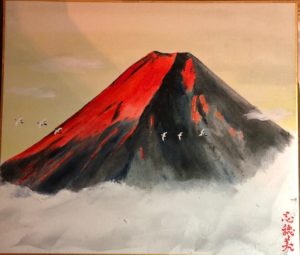
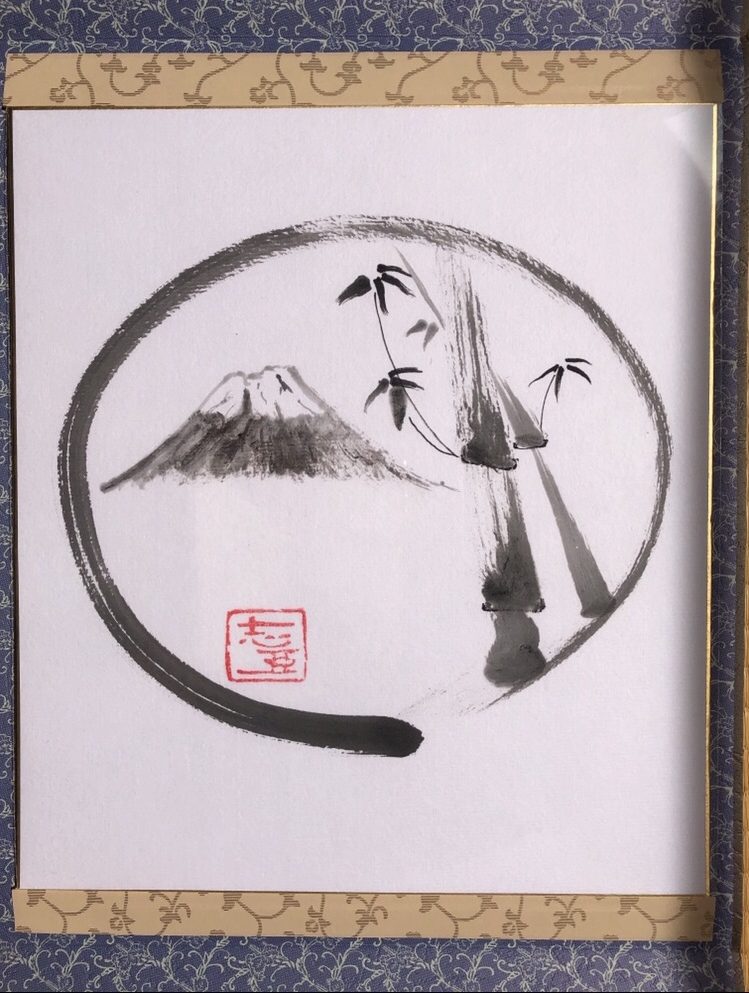
Mt. Fuji – the highest symbolic mountain in Japan, and being registered as a world heritage.
Mt. Fuji is well known as a sacred mountain. Especially red color Mt. Fuji in the red sunrise is believed to have the strong good luck power.
There are more themes for Kakejiku, and all have special meanings.
By hanging these good luck Kakejiku, the house and the people living there are protected against evil.
Japanese painting calligraphy art hanging scroll Kakejiku wall decorJapanese painting calligraphy art hanging scroll Kakejiku wall decorUnique Dragon Ryujin Japanese painting Kakejiku hanging scrollJapanese painting Tiger and bamboo ink art kakejiku
Extra long Drago Ryujin calligraphy art kakejiku hanging scroll Red Mt. Fuji with crane birds calligraphy art
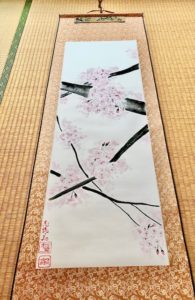
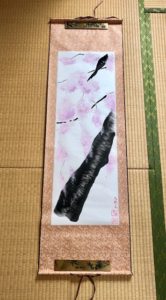
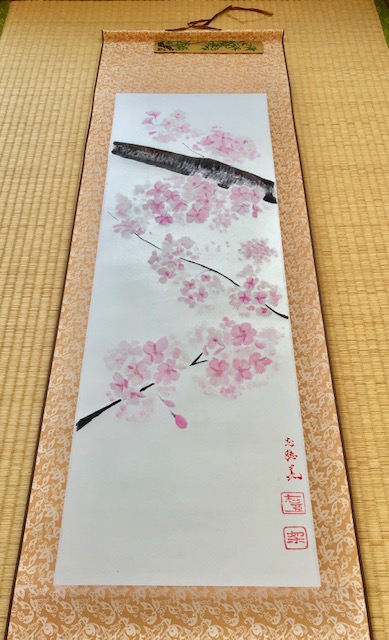
Japanese painting calligraphy art hanging scroll Kakejiku wall decor landscape Sakura cherry tree
I am obsessed with Sakura cherry blossoms.
Sakura is Japanese symbol.
We admire Sakura cherry blossoms in many ways.
Sakura is connected to our Japanese culture deeply.
Since ancient time, Japanese people enjoyed watching Sakura, called “Ohanami” (meaning “watch flowers”)
Spring time, under Sakura trees were full of people, sitting and having picnic.
This “Ohanami” habit is still very popular in Japan.
We see “Sakura forecast” (when cherry blossom start to bloom) on the TV news.
When Sakura starts to bloom, people start going out to have picnic under the Sakura trees.
This is our major Spring event.
We also eat Sakura flowers and leaves.
Pickled Sakura flowers and leaves are used for sweets or tea.
Tea leaf container or other tools are made using Sakura trees.
We have music about Sakura, called “SAKURA”, and all Japanese should know this song.
We have color called “SAKURA color”, which is light sensitive pink.
Sakura is used as Japanese symbol in many situations.
Sakura is very familiar flower for Japanese people.
Sakura cherry blossom time is very short, about one week.
When it starts blooming, it goes very quick to be full bloom, and as soon as it becomes full bloom, leaves start to come out and flowers start falling.
So the short period in full bloom and the beauty of Sakura flowers are often likened to the fragility of human life.
That is why cherry blossoms are symbol of beauty and transience.
I love Sakura, and cherry blossom time makes me excited.
Painting Sakura makes me happy and this is a good meditation for me.
That is why I keep painting Sakura.
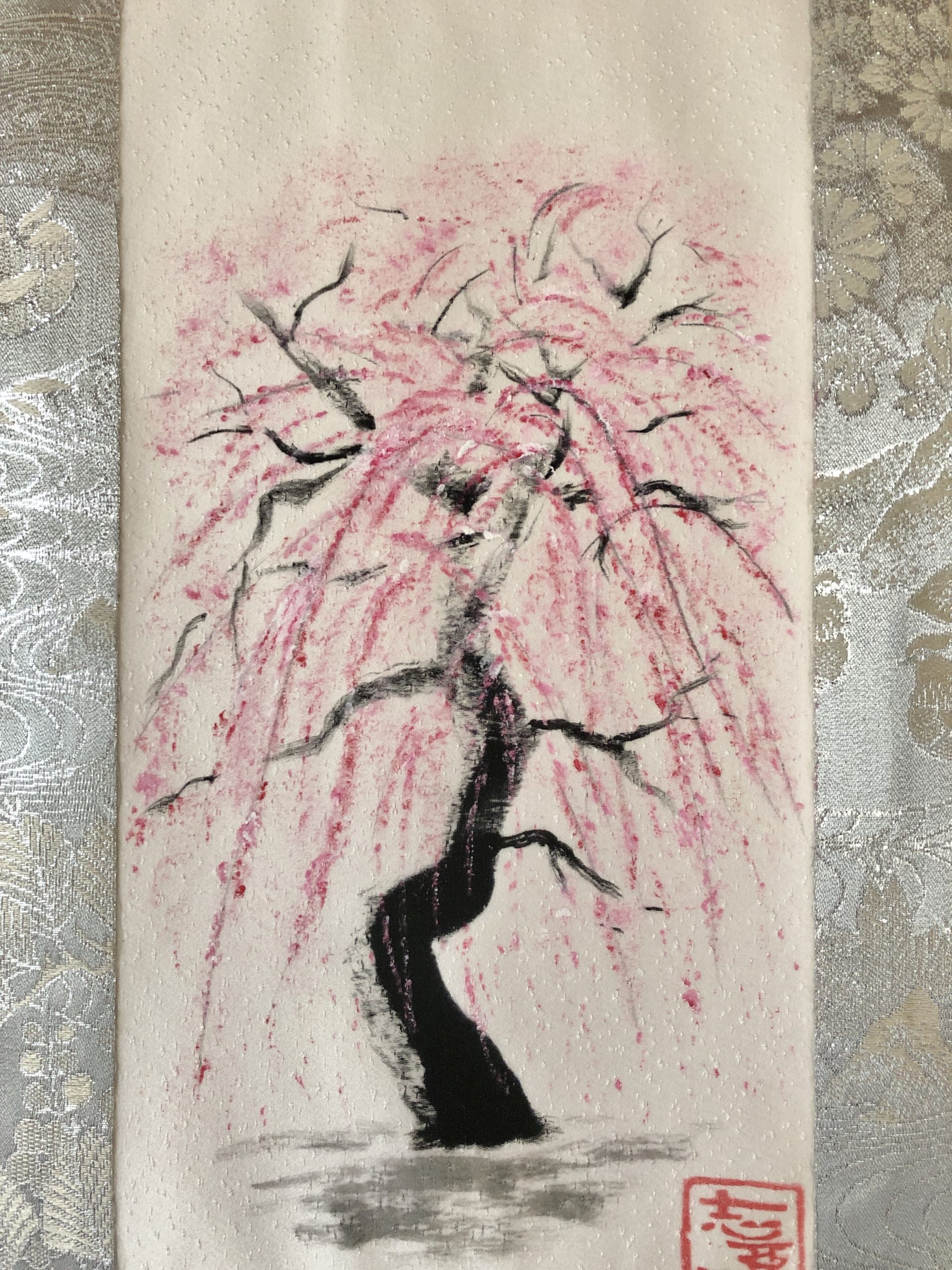
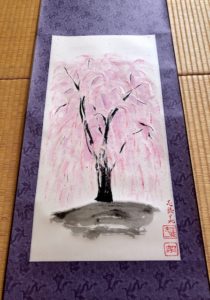
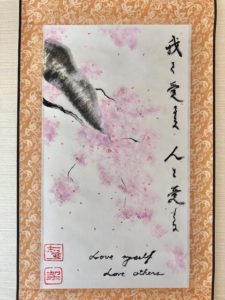
Japanese painting calligraphy art hanging scroll Kakejiku wall decor ZEN style SHIDARE Sakura
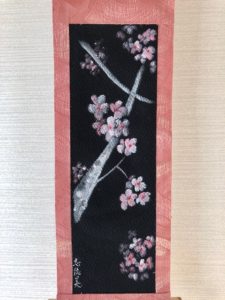
Japanese painting calligraphy art hanging scroll Kakejiku wall decor ZEN style Sakura cherry blossom art
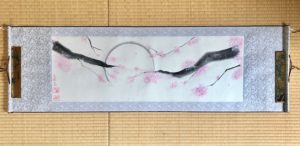
Japanese painting calligraphy art hanging scroll Kakejiku wall decor landscape Sakura cherry blossom in full moon night
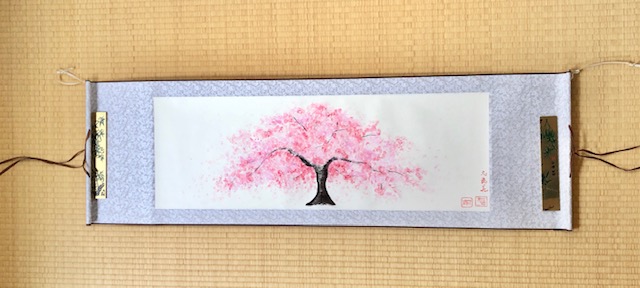
Japanese painting calligraphy art hanging scroll Kakejiku wall decor Sakura cherry tree in full bloom
Japanese painting calligraphy art hanging scroll Kakejiku wall decor Kimono style YOZAKURA night cherry blossom
Japanese painting calligraphy art hanging scroll Kakejiku wall decor Sakura cherry blossom
Japanese ZEN style Sakura cherry blossom painting wall decor
I was making calligraphy artworks for a while, and soon after, I started using color in my paintings.
I love the simplicity of Ink art, just black and white and its gradation color.
However, Sakura cherry blossoms should also look great with Sakura pink color, and I began using Japanese pigment and whitewash, as well as watercolor.
Using color expanded my painting world.
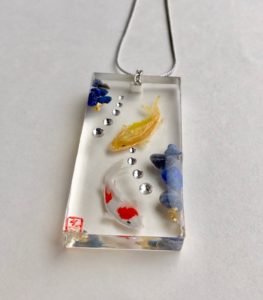
I can even paint in jewelry, using acrylic paint.
I can also create imaginary things in my painting world.
I knew I liked making jewelry, as I like miniature things and like to make small things.
But I realized I love painting so much as well.
My creation is now from 3D painting jewelry to Japanese painting mixed with calligraphy art.
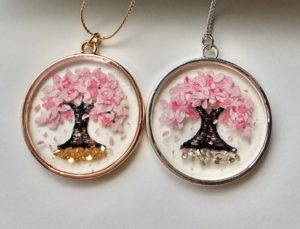
3D painting ZEN style Sakura cherry blossoms necklace
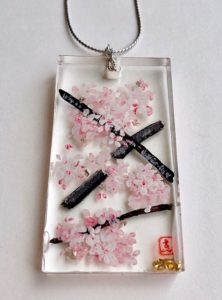
3D painting Sakura cherry blossom necklace
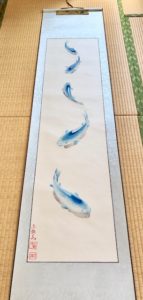
3D ZEN style painting blue koi fish large hanging scroll
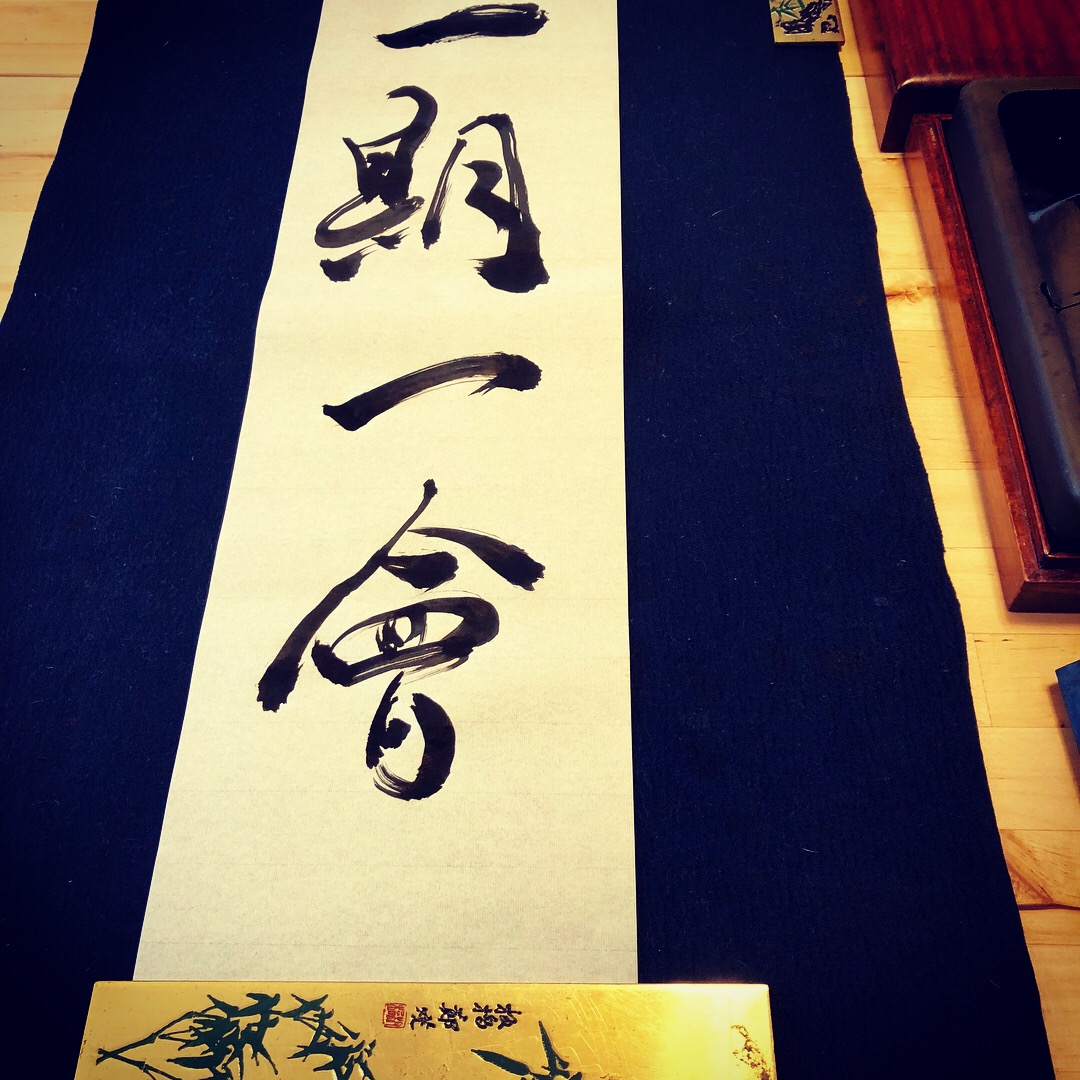
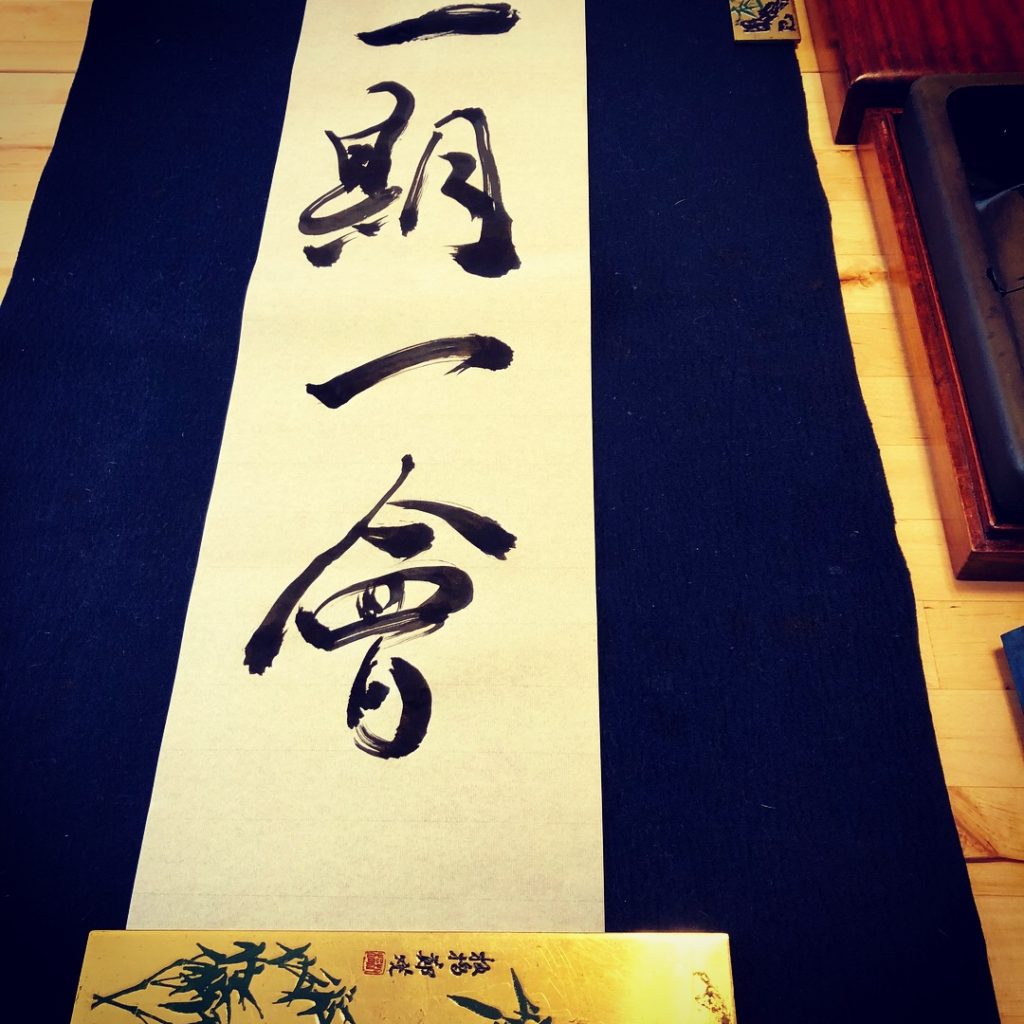
Japanese calligraphy Ichigo Ichie One in a lifetime meeting 一期一会
After receiving calligraphy tools from our grandparents, I started doing calligraphy again.
Soon after, I realized doing calligraphy is a good meditation.
Calligraphy is one of the main Japanese culture, and related to our history.
In our Japanese history, calligraphy is always in our life, same as ZEN (禅), Buddhism, temples, and tea ceremony.
Tranquility, simplicity, mindfulness, humbleness, are very important elements in these Japanese culture.
Also purifying tools and taking care of each item, how you treat these tools are also an inevitable part of its culture.
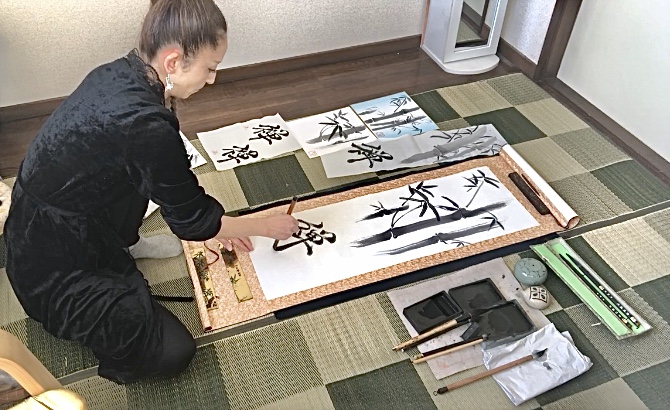
When we do calligraphy, we need to pay attention to our posture.
(We used to sit on our knees on tatami mat room with our back straight, but relaxing our shoulders)
It is important to hold the calligraphy brush with three fingers properly.
Relaxing our arm, making our wrist flexible, and focus on our breathing.
We need to write in one-stroke, and we are not allowed to go back and fix the line again.
So First stroke is the last stroke.
That is why how much we soak our brush into black ink, how fast we write, how strong we put our brush onto paper, are all very important.
For example, I am not satisfied with one line, as it was not black enough and the color was little too thin, so I might want to go back and color on top with more ink.
However, if I do that, it will appear as a mark even after it gets dry, and it doesn’t look nice.
That means, we have to picture and simulate the writing in our mind, before we actually write on the white paper.
And once I start writing, there is no stopping, no going back, nor fixing.
First trial is the real performance.
This is “一期一会”(Ichigo-Ichie) “Once-in-a-lifetime-meeting”.
This one moment never repeat, everything we experience in every second, every minute is only one time.
So we have to treasure this one moment.
However if I think too much, probably I hold my brush too tight, that doesn’t give me a good result either.
So when we do calligraphy, we need to breathe deeply, empty our mind, listen to the sound of outside wind or birds(not car noise), relax our mind, and start writing.
This is the same procedure as meditation.
Of course, opening our eyes and keep writing our calligraphy is not exactly the same as meditation.
But while doing calligraphy, I find myself very calm.
Japanese culture is very sensitive.
We want to keep this sensitivity and beauty in our everyday life.
calligraphy art painting
We have learned calligraphy since we were small kids. This is not unusual, as all kids learn calligraphy at elementary school.
Calligraphy is a part of our culture. Calligraphy comes from China, same as Chinese characters “Kanji(漢字). Now we have not just “Kanji(漢字)”, but “Katakana(カタカナ)” and “Hiragana(平仮名)”.
And learning calligraphy is to learn Japanese words and meaning.
Our history is a little bit different and a little more.
Our grandfather who lived next door, was a master of Calligrapher and both our grandfather and grandmother were calligraphy teachers. They used to have calligraphy class at home and so many kids came to learn calligraphy on weekends.
We, of course, used to go to the next door every weekend, and learned calligraphy from our grandparents.
When we grew up, we stopped writing calligraphy and almost forgot about calligraphy for long time.
And this calligraphy came back into my life all of sudden 2 years ago.
We received many calligraphy tools from our grandparents.
They are almost 100 years old, and cannot do calligraphy anymore, and decided to give up all the tools they used for long long time.
Very valuable calligraphy brushes, special paperweight, inkstones, came to our house.
When I smelled the calligraphy ink, I had nostalgic feeling and remembered 40 years ago.
I started enjoying calligraphy again.
Calligraphy became a part of my life again.
This is the great way to express Japanese culture.
That was the beginning of our calligraphy art.
And I start realizing Japanese beauty from calligraphy.