The reason why cherry trees were planted

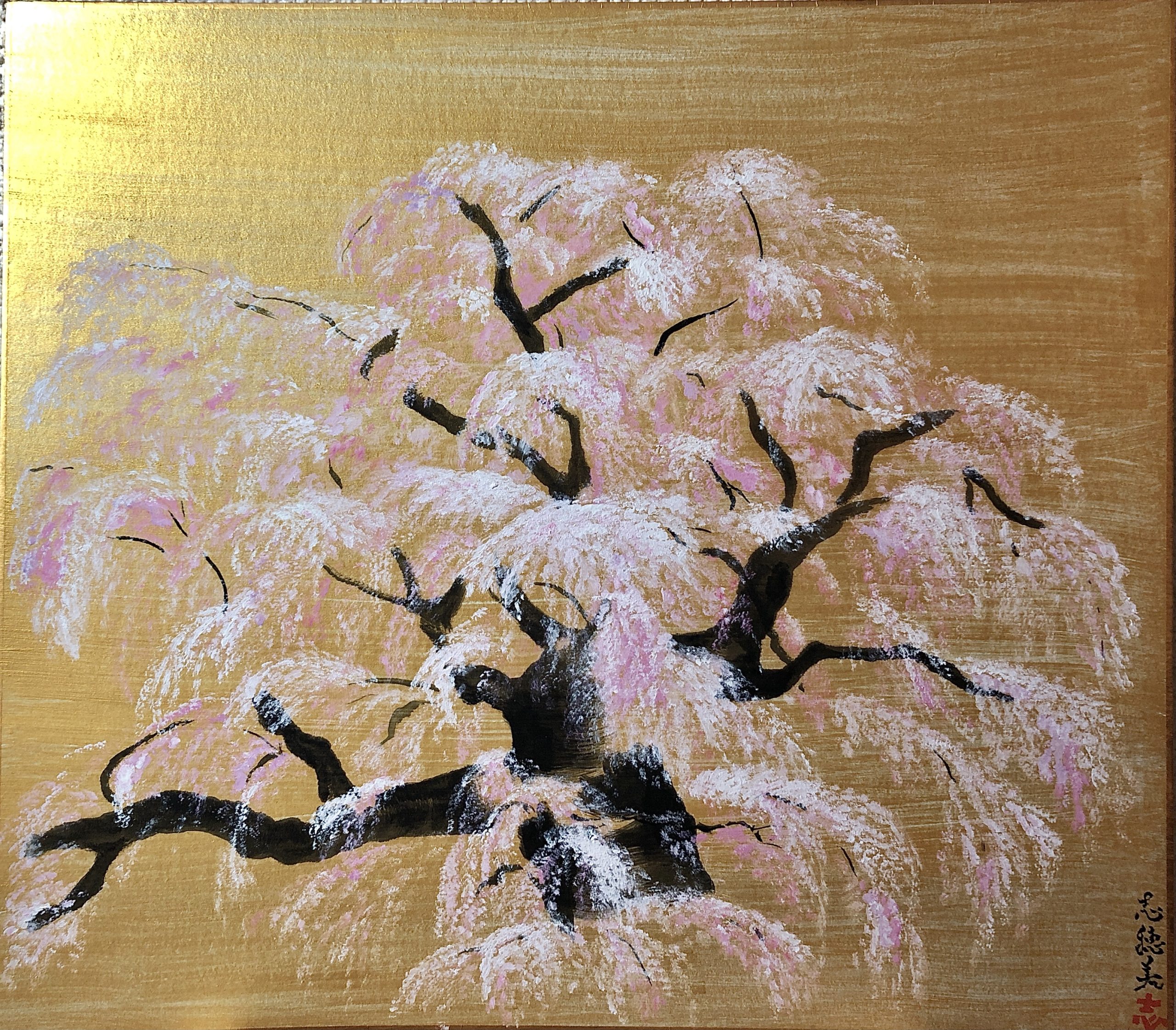
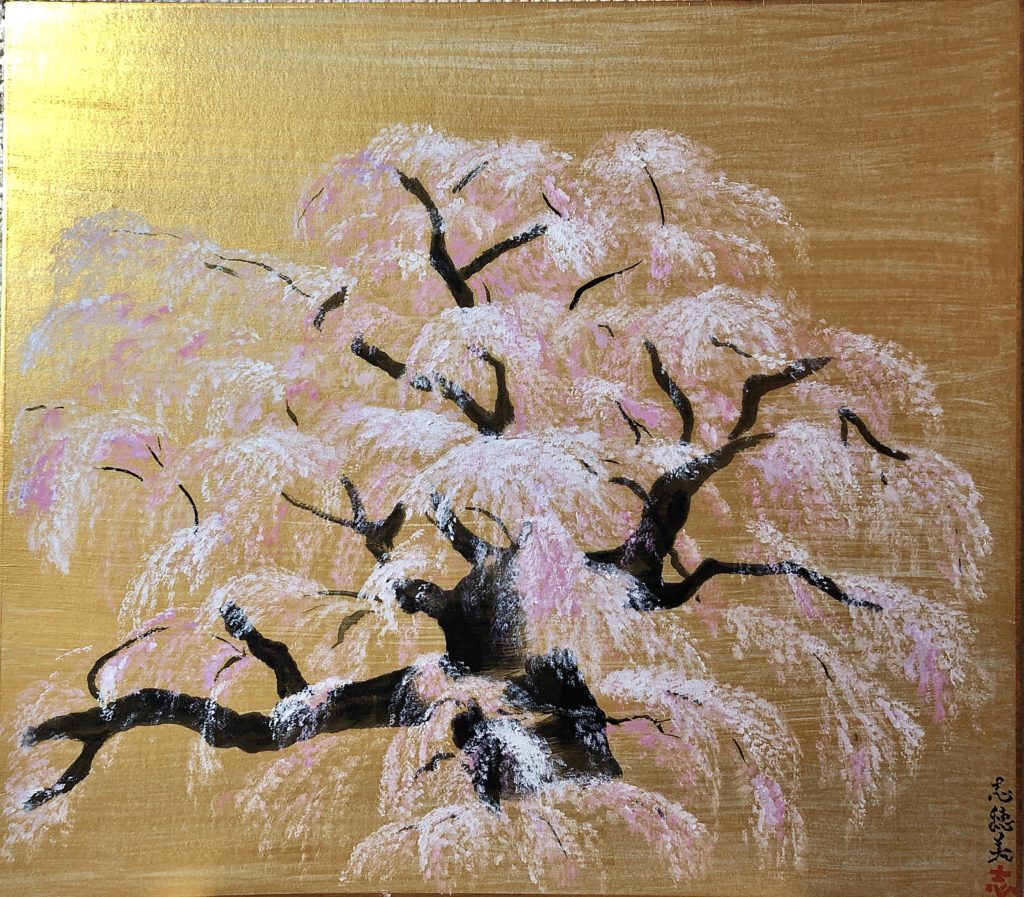
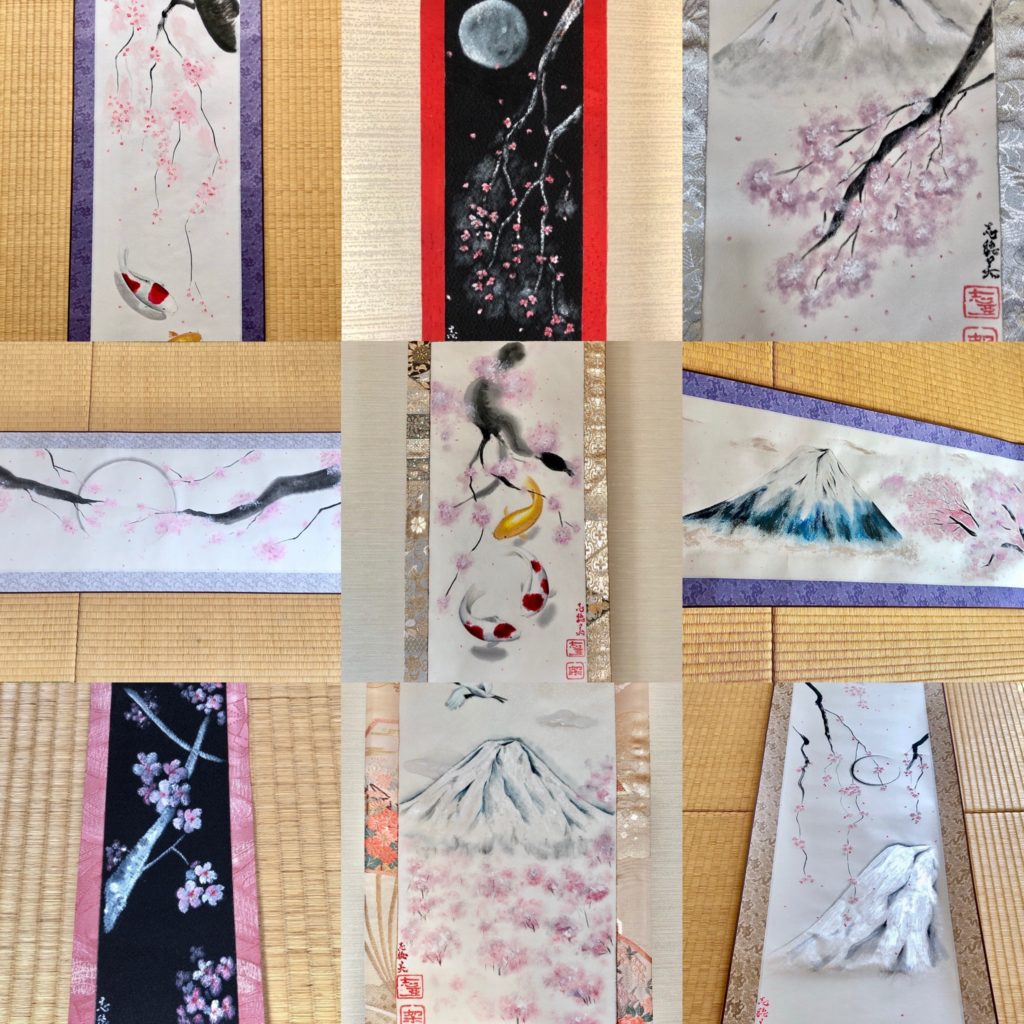
Japanese painting art Sakura cherry blossoms

Japanese painting art Sakura cherry blossoms

The reason why cherry trees were planted.

Have you ever thought about the reason why cherry trees were planted?

In Japan, we can see so many cherry trees in everywhere.

Many of them are really old, few hundred years old.

An interesting point is, many cherry trees are planted by rivers.

This has a reasonable reason.

Ancient Japanese people planted cherry trees by rivers, so that many people would come and see the beautiful cherry blossoms.

They knew that many people visiting and walking there, would help make the soil harden, and help make the solid river bank.

So cherry trees were planted as a flood control measures.

Another interesting point is, that many cherry trees are in shrines and temples as well.

Shrines are Shintoism, and originally have deep relations with pine trees, but not with cherry trees.

However, people thought cherry blossoms’ gracefulness symbolizes the samurai spirit, and many shrines preferred to plant cherry trees as well.

Temples are Buddhism which has the deep relations with flowers.

They admired cherry blossoms as well as plum blossoms.

We cannot talk about Japanese history without the relations with temples.

Muromachi era, Sengoku era, around 13C to 16C, many temples already had cherry trees.

Famous Samurai and shogun enjoyed Sakura viewing “Ohanami” since then.

In Japan, people enjoy Sakura viewing “Ohanami” since ancient time, and this is a Japanese culture.

Many famous Sakura spots in Kyoto and Nara are in temples and shrines.

In Tokyo too, many famous Sakura spots are in temples and shrines, as well as by rivers, or near the water.

Ueno park, where many people visit for Sakura viewing, was once a temple.

Imperial palace is surrounded with moat.

Meguro river, Kanda river, Sumida river, Tamagawa river, Arakawa river, are all famous Sakura spots.
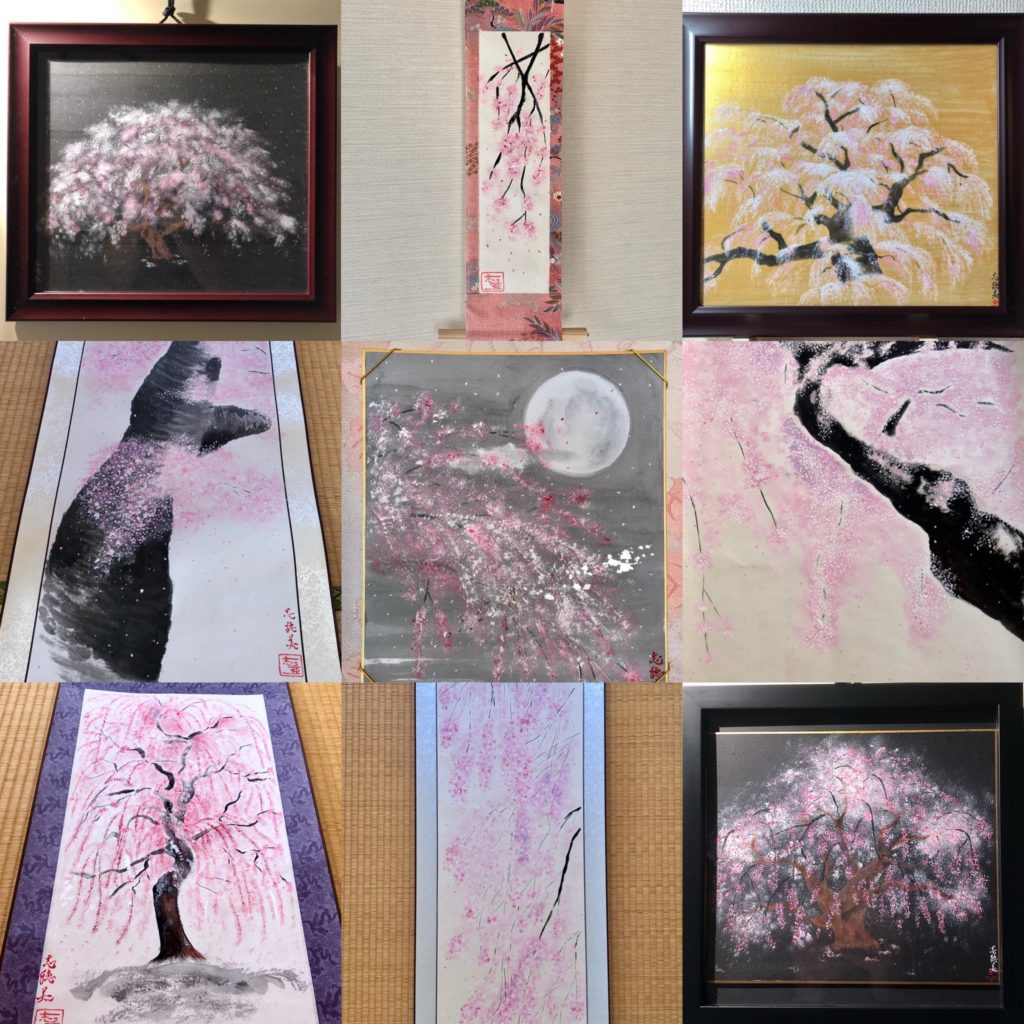
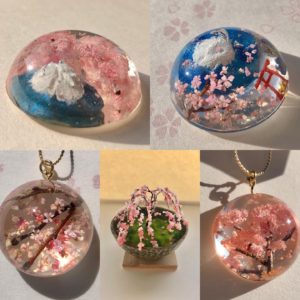
 

Our Japanese painting art Sakura cherry blossoms series

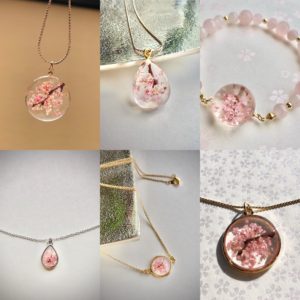
Our Sakura cherry blossoms jewelry series

Our Sakura cherry blossoms jewelry series

Our Sakura cherry blossoms jewelry series

Our Japanese painting art Sakura cherry blossoms series

Japanese beauty – Japanese calligraphy

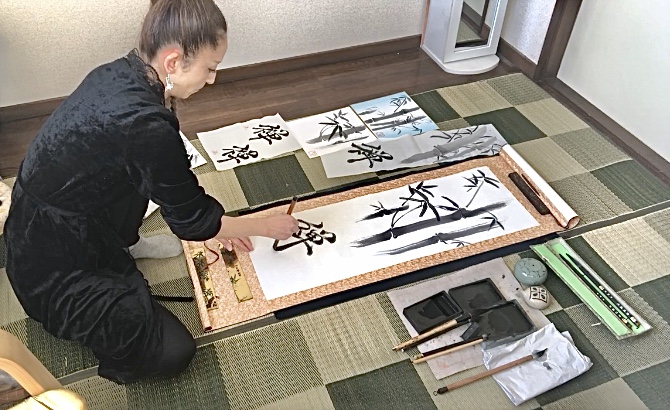
making calligraphy art painting
calligraphy art painting
We have learned calligraphy since we were small kids. This is not unusual, as all kids learn calligraphy at elementary school. Calligraphy is a part of our culture. Calligraphy comes from China, same as Chinese characters “Kanji(漢字). Now we have not just “Kanji(漢字)”, but “Katakana(カタカナ)” and “Hiragana(平仮名)”. And learning calligraphy is to learn Japanese words and meaning. Our history is a little bit different and a little more. Our grandfather who lived next door, was a master of Calligrapher and both our grandfather and grandmother were calligraphy teachers. They used to have calligraphy class at home and so many kids came to learn calligraphy on weekends. We, of course, used to go to the next door every weekend, and learned calligraphy from our grandparents. When we grew up, we stopped writing calligraphy and almost forgot about calligraphy for long time. And this calligraphy came back into my life all of sudden 2 years ago. We received many calligraphy tools from our grandparents. They are almost 100 years old, and cannot do calligraphy anymore, and decided to give up all the tools they used for long long time. Very valuable calligraphy brushes, special paperweight, inkstones, came to our house. When I smelled the calligraphy ink, I had nostalgic feeling and remembered 40 years ago. I started enjoying calligraphy again. Calligraphy became a part of my life again. This is the great way to express Japanese culture. That was the beginning of our calligraphy art. And I start realizing Japanese beauty from calligraphy.