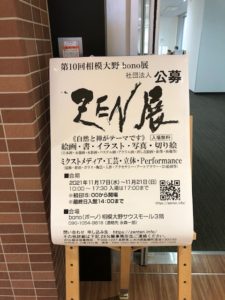
ZEN art exhibition Sagami Ono finished!
We are grateful that we had this opportunity to exhibit.
Thank you for everyone who came to this exhibition!
Connect Japan and the world through Japanese spirituality| Japan Cross Bridge|Tokyo
Express Japanese art and culture to the world
ZEN art exhibition Sagami Ono finished!
We are grateful that we had this opportunity to exhibit.
Thank you for everyone who came to this exhibition!
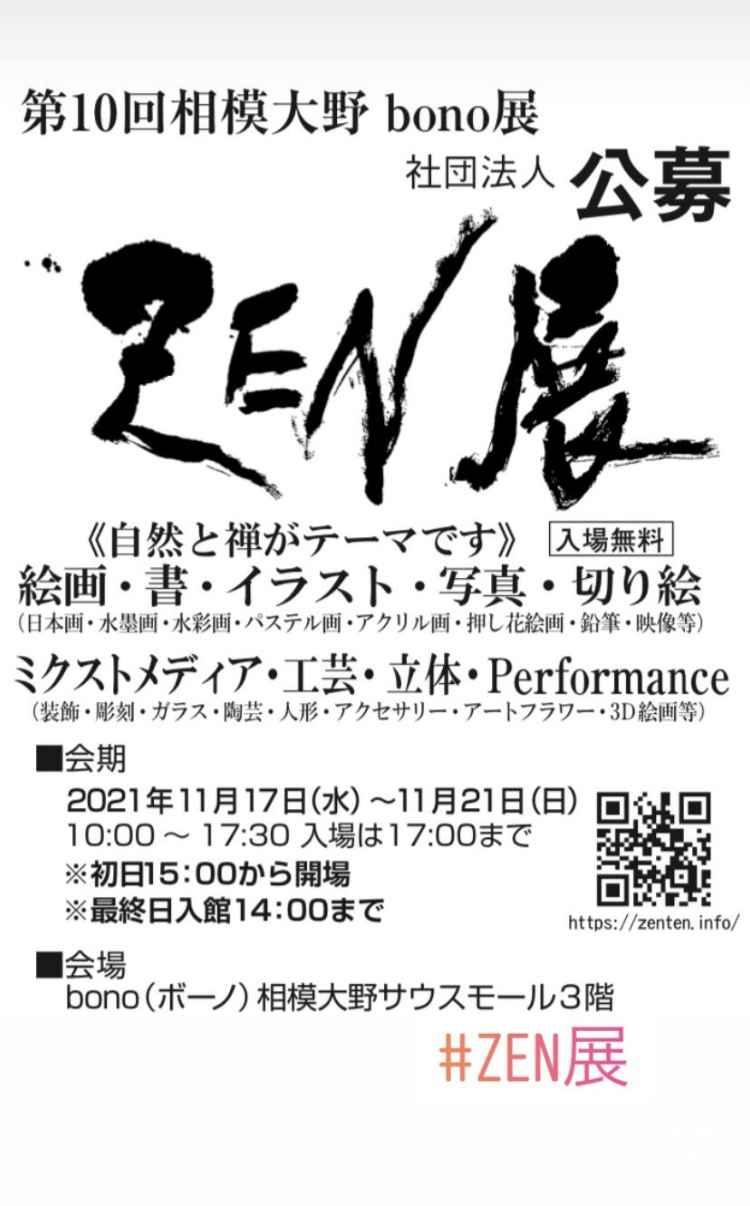
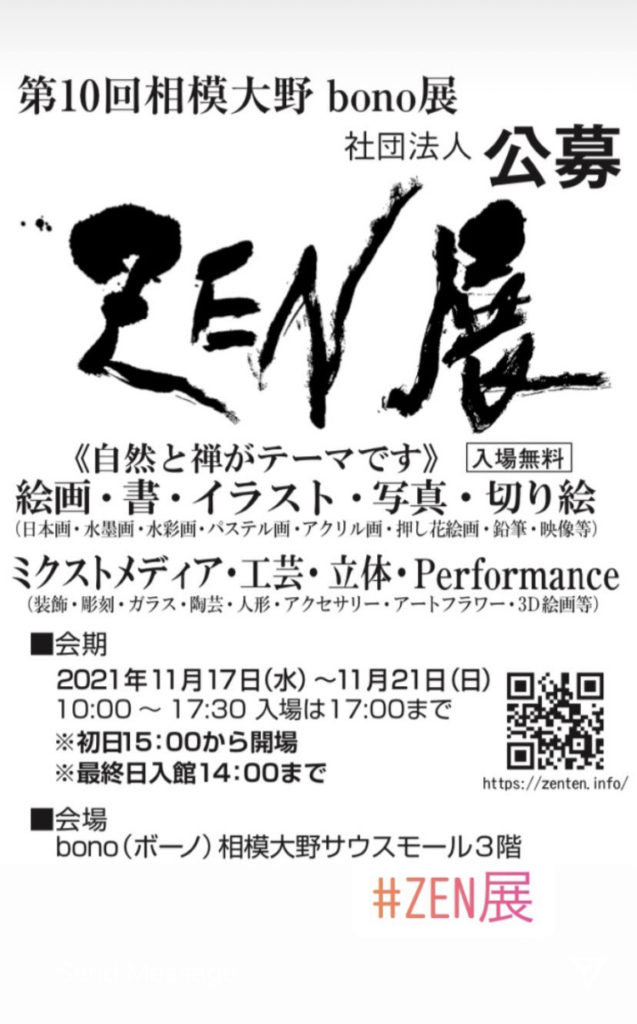
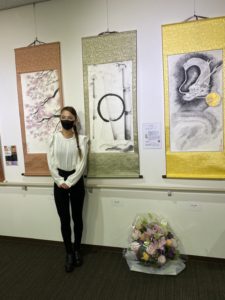
We are participating in ZEN art exhibition, coming November 17th~21st, 2021.
It is held at bono Sagami-Ono, South mall 3rd floor, (beside Sagami-Ono station)
Sagamihara city, Kanagawa prefecture : about 30 mins by Odakyu-line rapid-express from Shinjuku station
November 17, 15:00-17:30
November 18~20, 10:00-17:30
November 21, 10:00-14:30
Free admission
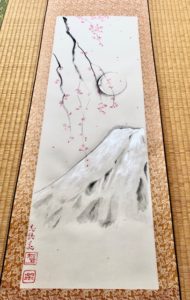
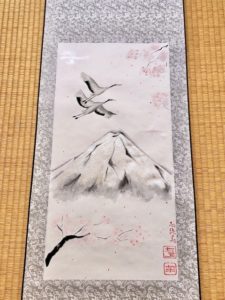
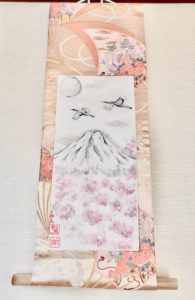
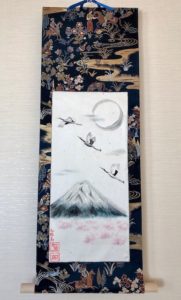
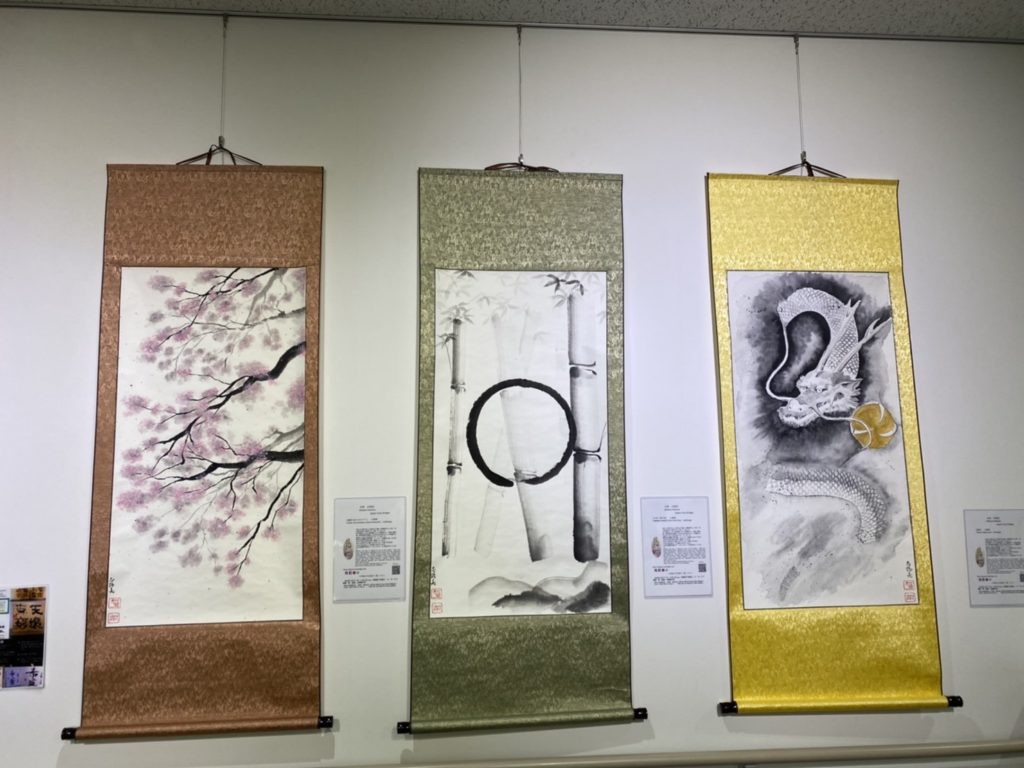
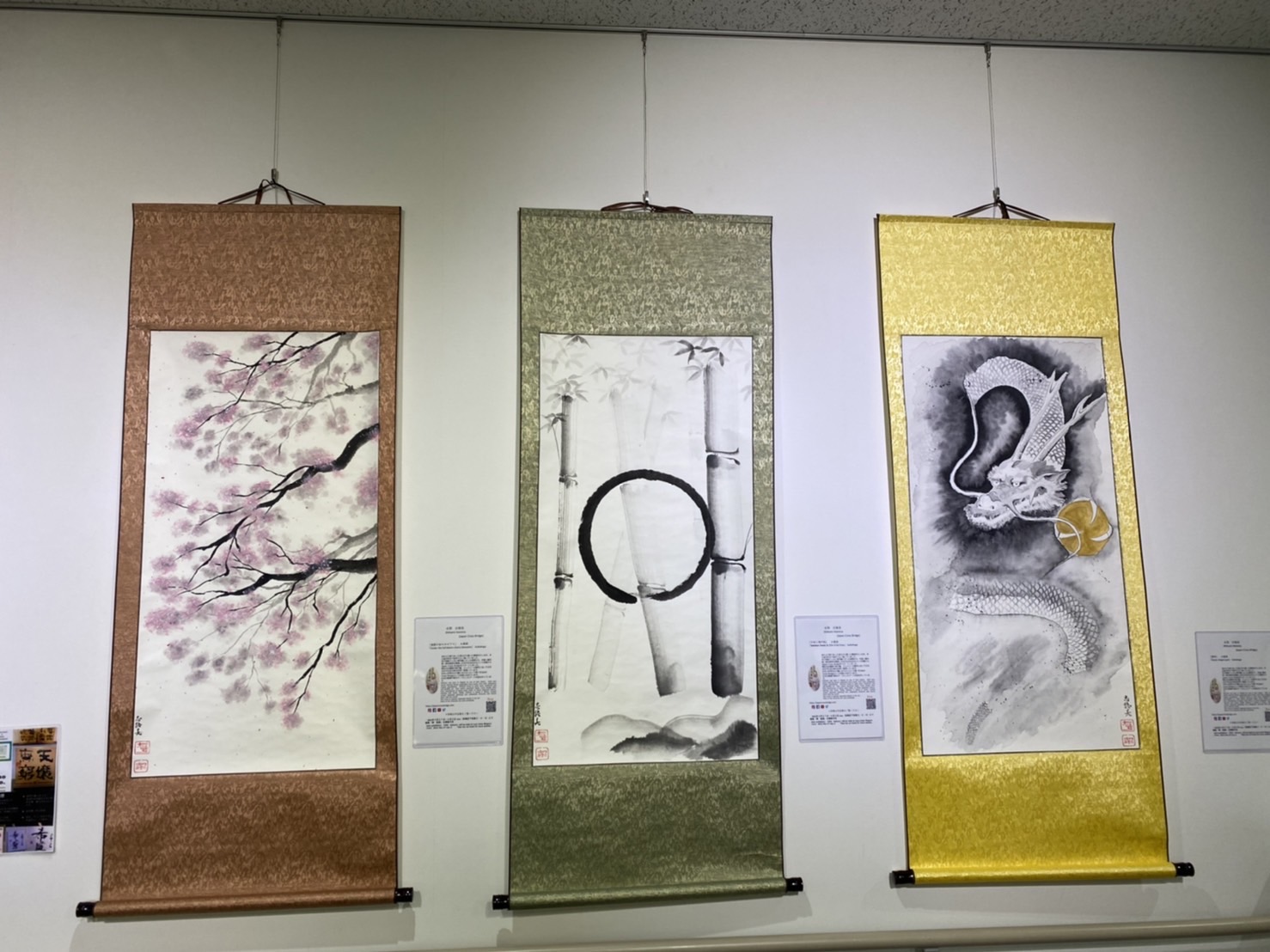
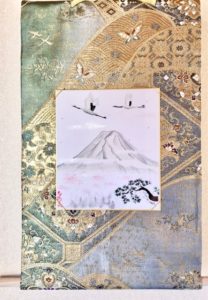
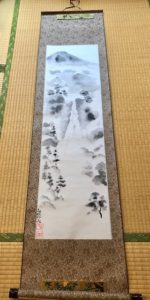
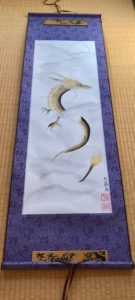
Our artwork will be 3 Kakejiku hanging scroll Suibokuga Japanese paintings, with my name Shihomi Homma (本間志穂美)(Japan Cross Bridge).
I myself will try to be at the venue. I hope to see you there!
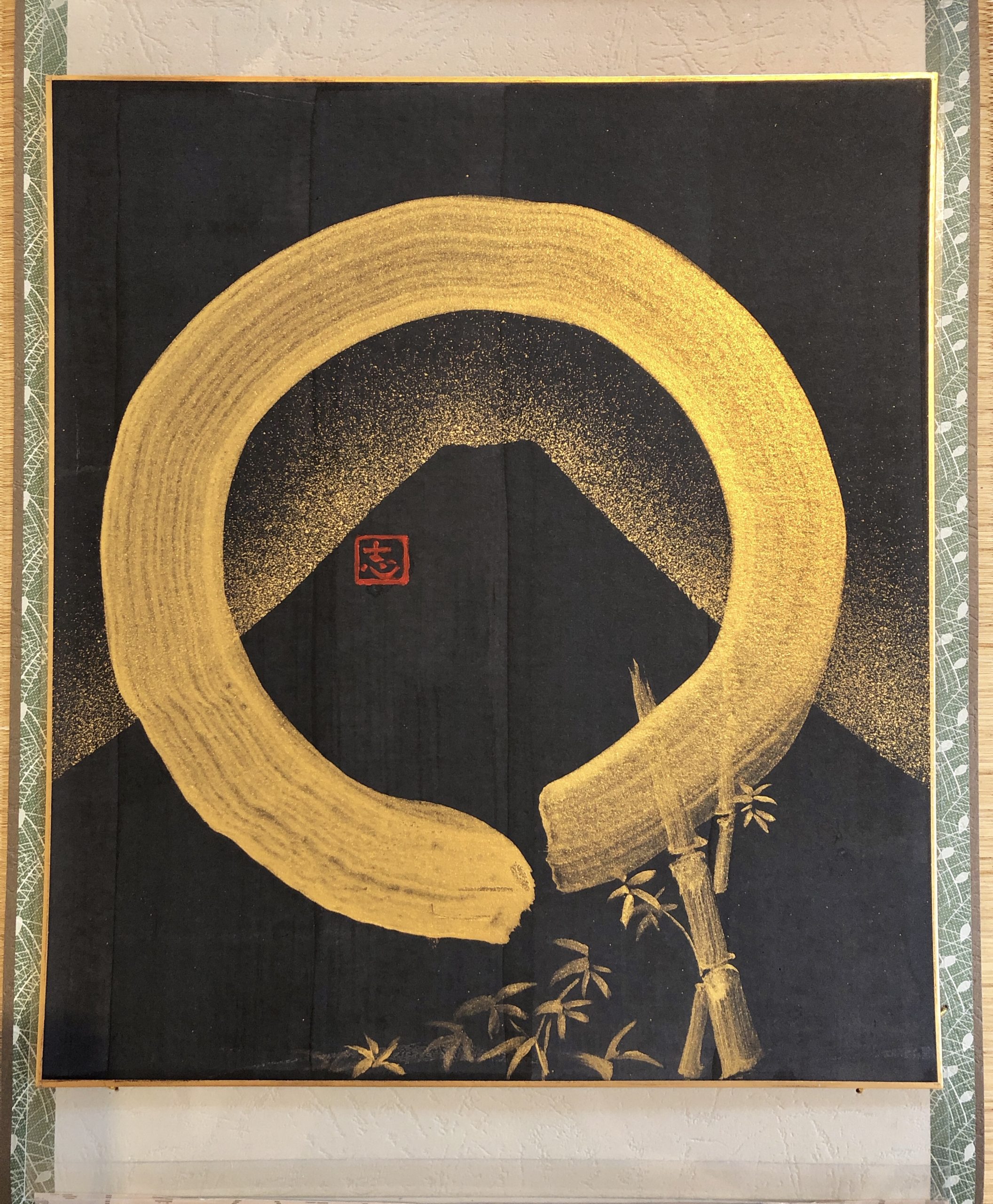
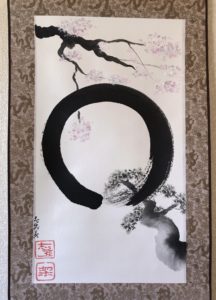
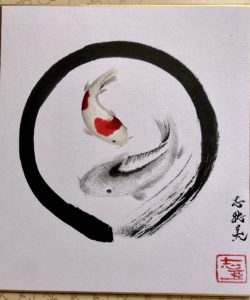
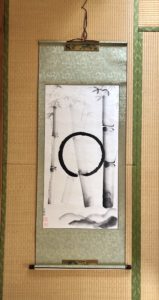
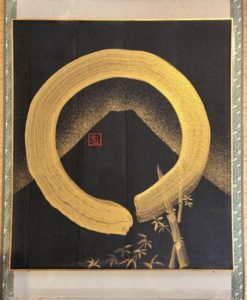
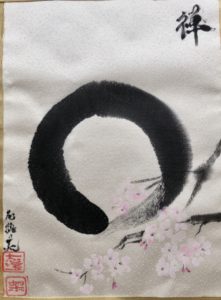
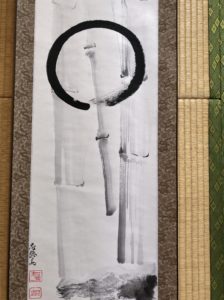
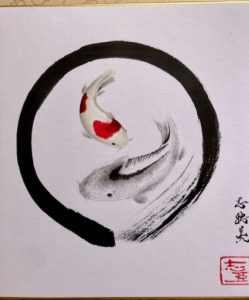
ZEN circle ENSO
Zen circle is called “Enso”.(円相)
Sometimes different “Kanji”(Chinese character) 円窓 is used for “Enso”, represents “round window”, which means our mind’s window.
Enso is one of Sumi ink painting (Japanese calligraphy) in Zen.
Usually it is drawn in one brushstroke, and is sometimes called “Ichienzu”(一円図)、”Ichienso”(一円相).
~Enso symbolizes absolute enlightenment, strength, elegance, the universe and “mu”(無)(meaning void). It is characterized by a minimalism born of Japanese aesthetics.~
*Quaoted from Wikipedia
Japanese aesthetics seeking for simplicity is called Wabi-sabi.
Wabi expresses the happiness and mental abundance in the imperfect (hard) circumstances.
Sabi expresses the beauty we can find in imperfection.
So Wabi can be a symbol of inner abundance, and Sabi can be a symbol of outer beauty(simplicity).
When you draw Enso, you have to draw it in one brushstroke, meaning there is no time to stop, no chance to fix.
It is the moment when the mind should be free, and let go of everything.
This is ZEN meditation practice.
In other words, this spiritual practice of drawing Enso is the practice of self-realization.
Sometimes Enso circle is open, which means incomplete.
This incomplete allows more movement, development and practice.
When Enso circle is closed, which represents perfection.
However, how you look at Enso circle and what you have in your mind by looking at it, is totally up to you.
Enso circle is simple, yet really profound and teaches us a lot.
It never stops attracting us, because our entire life is a long trip of self-realization.
I love to draw Enso circle, but at the same time, I love to look at Enso.
Looking at Enso circle is a good meditation.
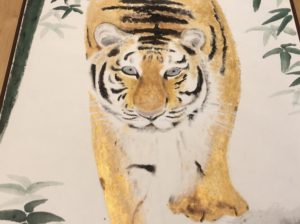
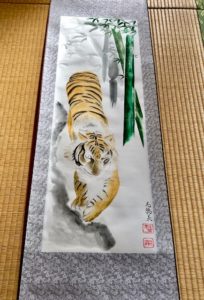
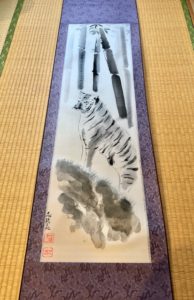
Tiger on Kakejiku art
Tigers are one of the very popular subjects on Japanese Kakejiku art.
Kakejiku is Japanese traditional hanging scroll.
It is hung on the wall in Japanese style room, especially on alcove “Tokonoma”, since ancient time.
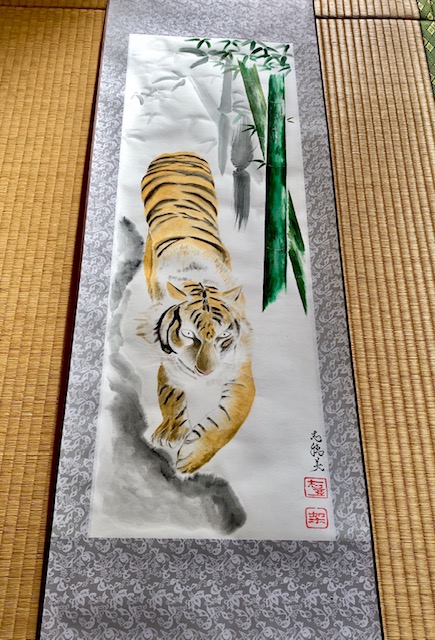
Tiger is a powerful animal, and Tiger painting on kakejiku has an important meaning.
When tiger is glaring at this way, that means tiger is glaring at the evil in your place.
Tiger’s powerful eyes are believed to have the power to beat the evil.
So tiger’s scary expression is protecting your place and the people living in your place.
Tiger painting Kakejiku has a strong good luck power.
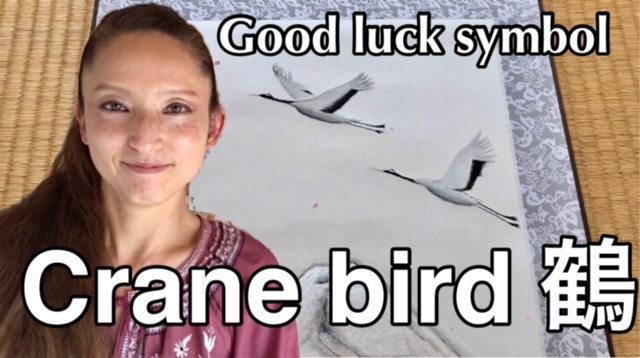
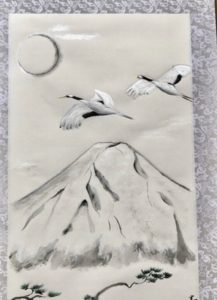
Crane birds – Japanese good luck symbol
We, Japanese have a deep connection with crane birds since ancient times.
The beautiful crane birds can be seen in many occasions, such as Japanese old stories, music, paintings, and so on.
Crane birds are not just beautiful but also thankful, as they are symbols of long life, prosperity and a good luck.
In Japanese phrases, we have “crane birds live a thousand years, turtles live a ten thousand years”
Also crane bird’s voice is said to reach to the heaven, as they cry loudly.
When crane birds make a couple, they stay forever and never separate.
So we symbolize crane bird couple as “good married couple”.
Especially at weddings, we use crane birds in many situations, for special wedding kimono pattern, for wedding venue decorations, or on celebratory statement.
As crane birds are grateful good luck symbols, we believe that owning something with crane bird motif will bring us a good luck and a healthy long life.
I love to paint these beautiful birds, crane birds on my hanging scrolls too.
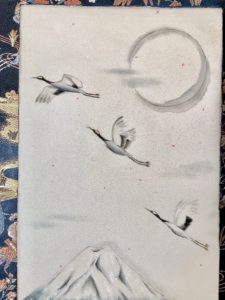
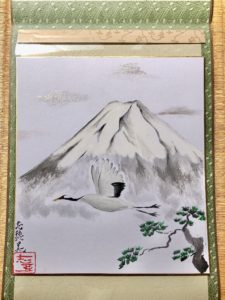
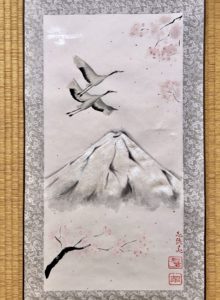
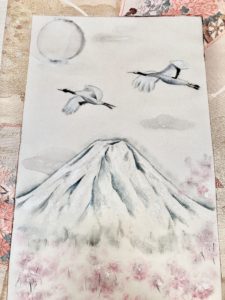
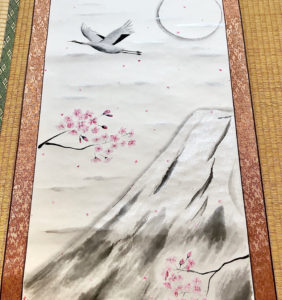
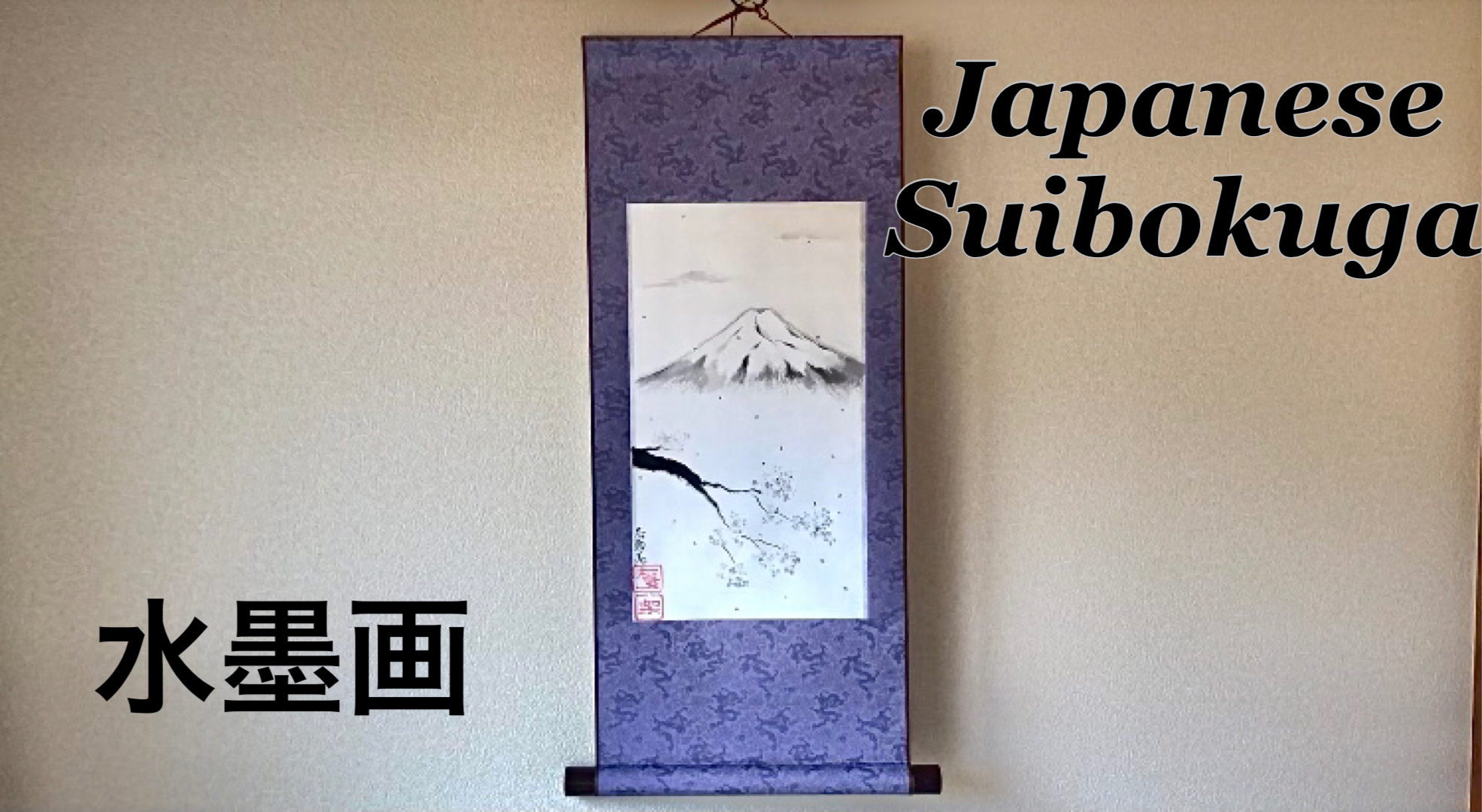
Suibokuga (水墨画)- Japanese traditional painting art
Suibokuga is sometimes called Zen Painting.
Sumie is painting with ink.
And Suibokuga is one of Sumie painting, with the gradation of dark black to light black.
Main tool for Suibokuga, “Sumi ink” is made from mainly soot, animal glue, and perfume.
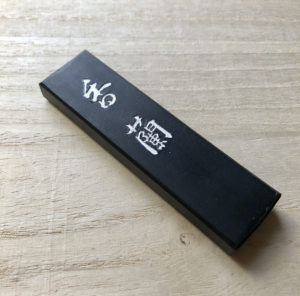
We add a little water into an inkstone (suzuri) and rub sumi ink, it becomes dark black color.
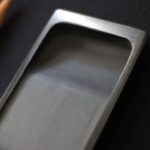
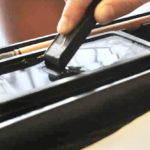
By mixing this black ink with water, we can create the gradation color of black to light grey.
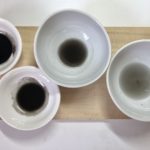
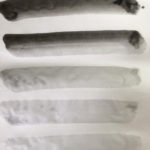
In Japan, Suibokuga is not just about paintings drawn with only ink, but we include some colored paintings drawn with mainly ink and some pigments also.
Sumie: The way of painting with ink was already in Japan since Nara period (710 – 794).
And Suibokuga style was brought in Japan at around Kamakura period (1185 – 1333), then became very popular especially at around Muromachi period (1336 – 1573), as Suibokuga style paintings were deeply connected with ZEN temples.
Until 14C, the subjects of Suibokuga were humans called “Jinbutsu ga” (人物画) , and flowers and birds called “Kacho ga” (花鳥画).
In 15C, “Sansuiga”(山水画) , meaning “mountains and water paintings” became popular.
Subjects of this Sansuiga is nature, such as mountains and water falls, rocks, trees etc.
I love to paint Japanese nature and symbols in Suibokuga.
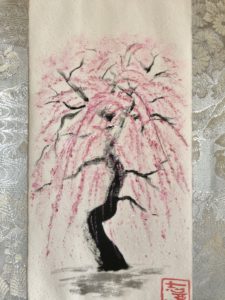
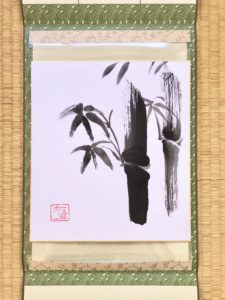
Sakura cherry trees, bamboo tees, pine trees, Mt. Fuji, crane birds, and koi fish.
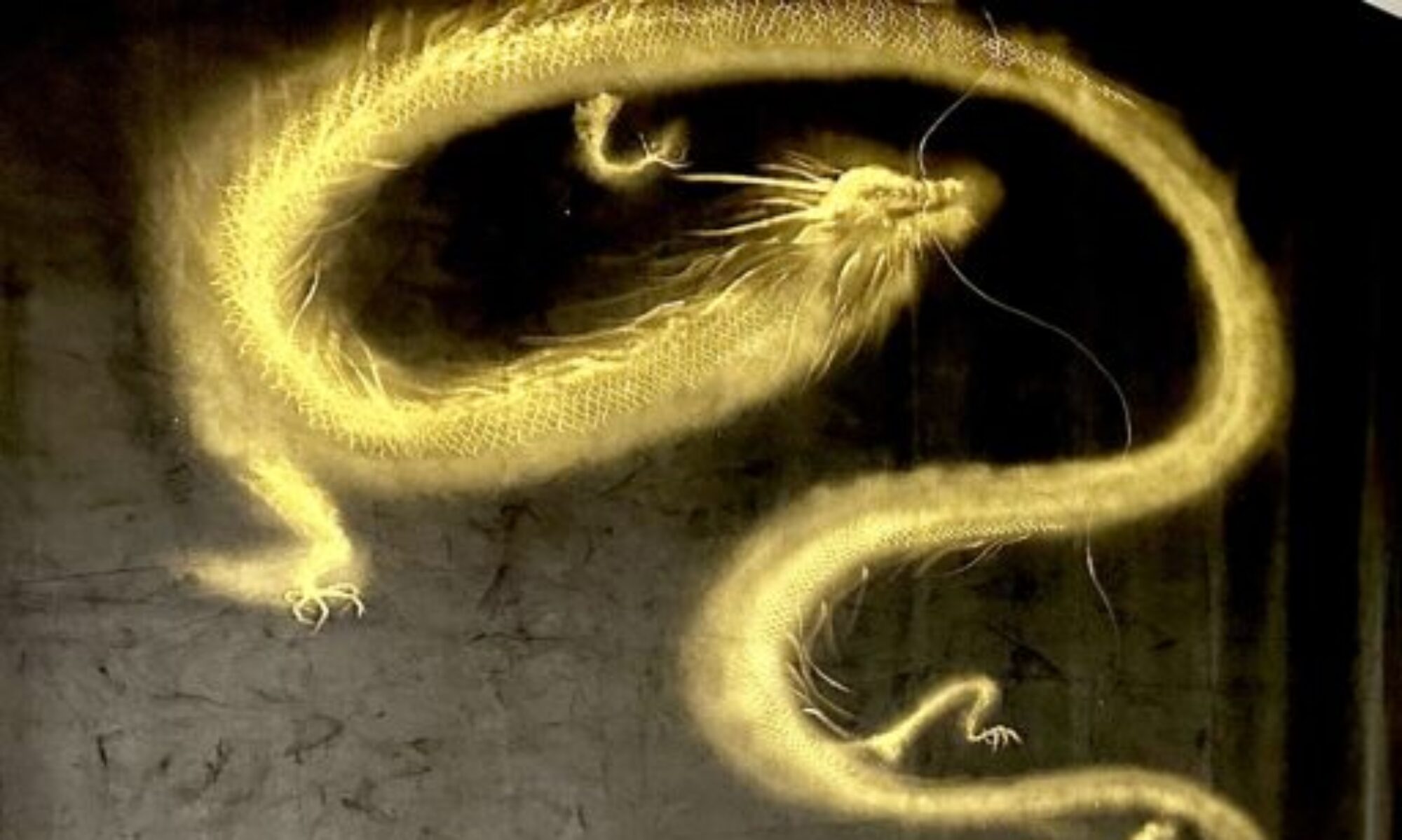
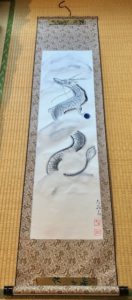
Sometimes tigers and Ryujin dragon god as well.
Tigers and Ryujin dragon god are also very popular subjects for Suibokuga.
I love to express Japanese beauty with the amazing gradation of ink with some colors.
That is my Suibokuga.
y
Japanese EMAKIMONO style hanging scroll
First of all, what is EMAKIMONO??
Emakimono – “E” means “pictures”, “makimono” means “scroll” in Japanese.
Emakimono is a Japanese traditional horizontal scroll which tells stories with pictures.
From right side, we unroll the scroll to the left, and illustrations tell you Japanese narrative.
So Emakimono usually is a few meters long, sometimes even 20 meters long!
The oldest Emakimono that still exists is believed to made in Nara period, AD 710 to 794.
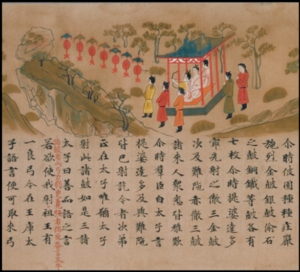
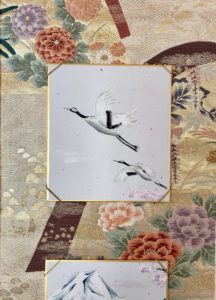
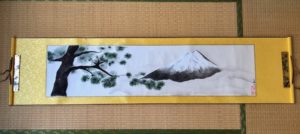
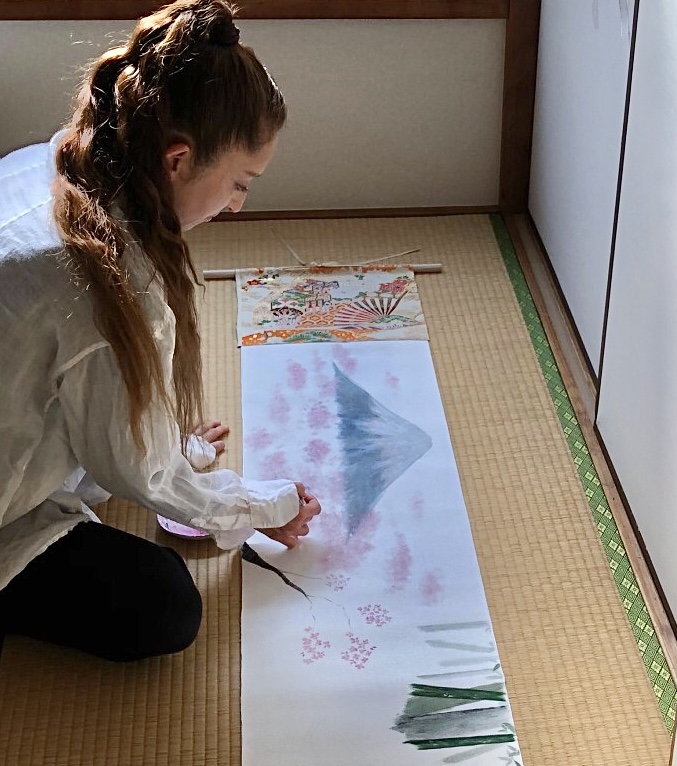
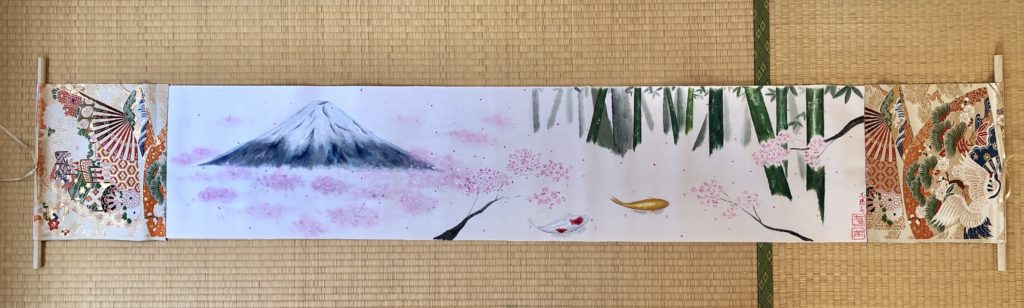
I made Emakimono style scroll with Japanese scenery painting.
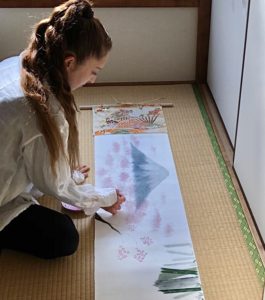
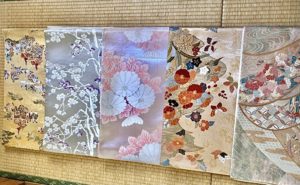
To make this unique scroll, I used Precious Kimono silk obi belt for both ends.
It is woven with silk and making gorgeous patterns.
In the center painting area, I used white silk kimono fabric.
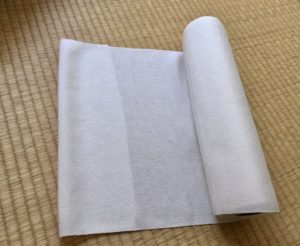
This white silk fabric is thin and soft, so I attached Special Japanese paper called “urauchi youshi”, on the back to make it stronger and harder.
This special paper has glue on one side and by ironing, I can attach this paper to the silk fabric.
I made this scroll with 2 meters long, so this can be hung on the wall in the rooms easily.
This Emakimono style horizontal scroll allows me to draw Japanese landscape scenery.
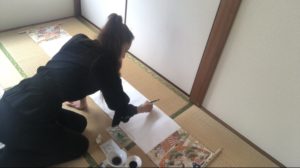
I really love to draw Japanese symbols, especially Mt. Fuji, Sakura cherry blossoms, Bamboo, and Koi fish.
Those symbols express Japanese beauty, and every time I draw them, I find myself being in love with them more and more.
In the past, I painted these symbols a lot on Usual Kakejiku hanging scrolls (Vertical scroll), but especially this horizontal scroll has enough space for me to draw all in here.
That’s what I wanted to make.
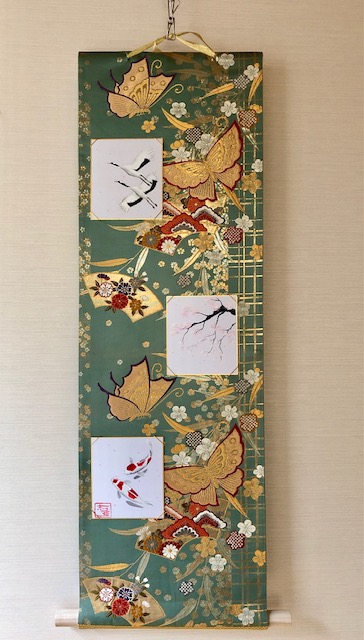
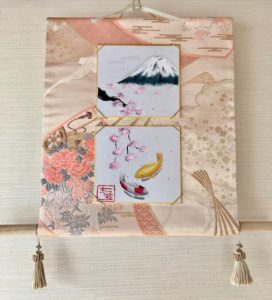
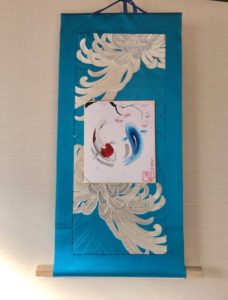
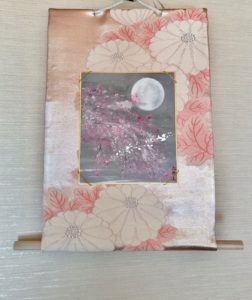
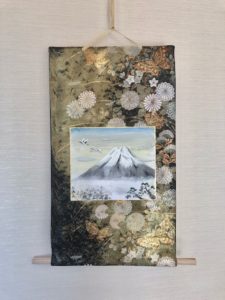
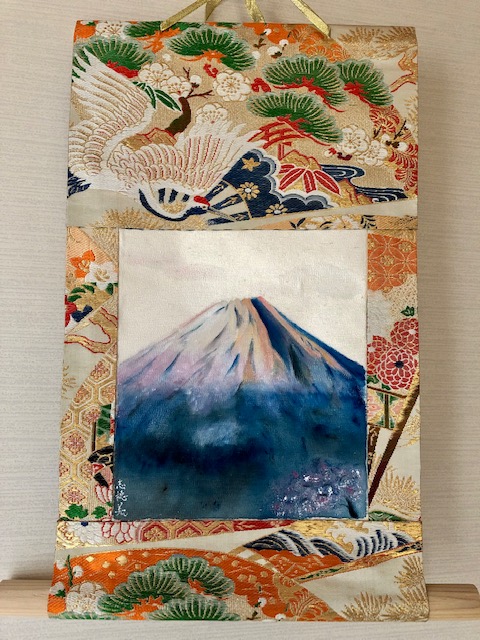
Fukuro Obi belts are precious obi belts for Japanese Kimono.
They are usually made with silk, having Japanese patterns.
Shiny silk threads create beautiful and gorgeous looks.
These obi belts can become gorgeous decorations by themselves.
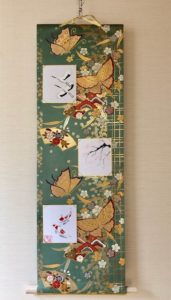
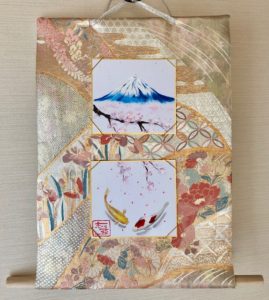
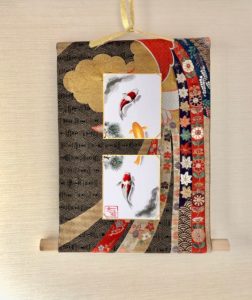
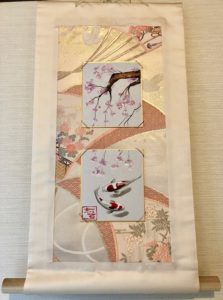
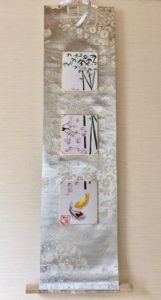
Kakejiku style wall decorations using these Fukuro obi are made to enjoy their own beauty.
Small Japanese paintings are not the main stars here.
Gorgeous Fukuro obi belts are the main stars.
This Kakejiku style wall decorations have their uniqueness- with the combination of Fukuro obi and Japanese painting.
“Japanese Kakejiku (Kakemono)“ -good luck item
“Japanese Kakejiku (Kakemono)” is a hanging scroll used to display and exhibit paintings and calligraphy art.
Traditional Japanese rooms usually have a “Tokonoma”- a special space (alcove) to display “Kakejiku”.
Most traditional houses used to have at least one Kakejiku to hang in Tokonoma.
Kakejiku has been a well-known cultural item in Japan for long time.
There are a lot of themes for Kakejiku.
Especially paintings have good luck meanings are popular.
“Sunsui ga” – Nature/ Japanese scenery of mountains, river, water fall, trees, rocks
These nature items have important meanings based on ZEN, giving us a relaxing ideal ZEN world.
“Seasonal flowers/plants” – To enjoy four seasons even inside the house, we choose seasonal flowers/plants.
“Tiger” – Tiger is believed to protect against misfortune and brings a good luck. Tiger’s eyes with glares are toward evil.
“Dragon Ryujin” – Dragon is called “Ryujin” and is a god in Japan. It is a symbol of promotion, and Dragon Ryujin going up to the sky has the positive and good luck power.
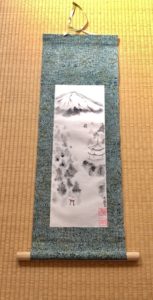
Mt. Fuji – the highest symbolic mountain in Japan, and being registered as a world heritage.
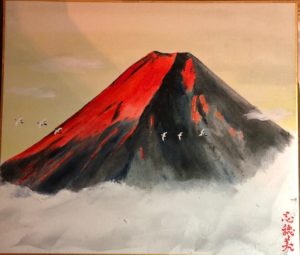
Mt. Fuji is well known as a sacred mountain. Especially red color Mt. Fuji in the red sunrise is believed to have the strong good luck power.
There are more themes for Kakejiku, and all have special meanings.
By hanging these good luck Kakejiku, the house and the people living there are protected against evil.
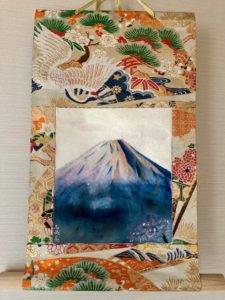
Japanese cultural icon – Mt. Fuji
If you have an interest in Japan, you must have heard this name “Mt. Fuji”.
Mt. Fuji is the highest mountain in Japan.
It’s 3,776.24m (12,389ft), located on Honshu.
Mt. Fuji is an active volcano, last erupted over 300 years ago.
The reason Mt. Fuji is very famous as cultural icon is because of its beautiful shape as well.
It stands on the flat wide area “Kanto plain” with symmetrical cone, and snow-capped on its top with the contrast of white and blue.
Because of its unique shape and height, it is very easy to be seen from even far away.
On a clear day in winter time, Mt. Fuji can be seen from greater Tokyo.
Even a glance of Mt. Fuji makes many Japanese people very happy.
I think that is because Mt. Fuji has been believed to be a symbol of god from its serene appearance.
Looking at Mt. Fuji is a very lucky thing.
Since long time ago, Japanese people loved Mt. Fuji, and Mt. Fuji has been depicted in art and photography.
We find Mt. Fuji in many Japanese paintings, Kakejiku hanging scrolls, ink paintings ”Sumie”, etc.
I love to paint Mt. Fuji as well.
Mt. Fuji has different attractions in different seasons and time.
This simple, yet perfect cone-shaped mountain never stops attracting many people.