Connect Japan and the world through Japanese spirituality| Japan Cross Bridge|Tokyo
Express Japanese art and culture to the world
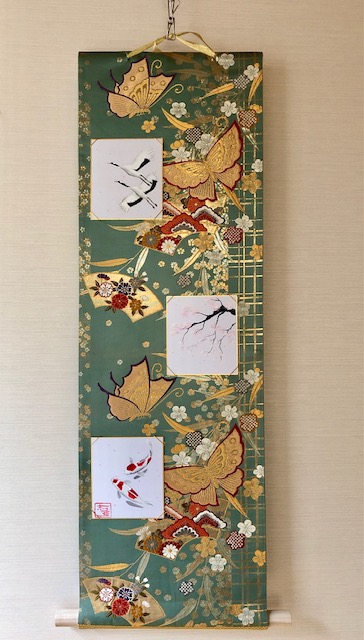
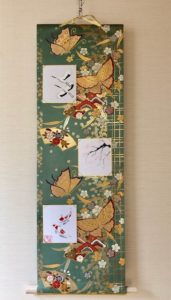
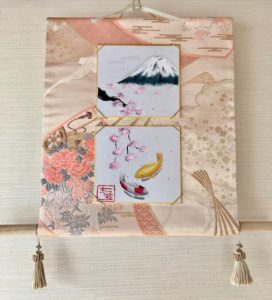
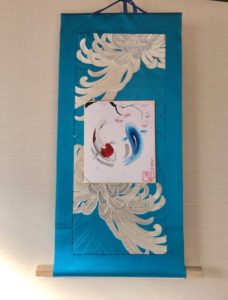
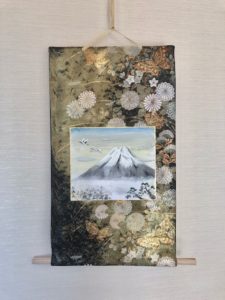
Fukuro Obi belts are precious obi belts for Japanese Kimono.
They are usually made with silk, having Japanese patterns.
Shiny silk threads create beautiful and gorgeous looks.
These obi belts can become gorgeous decorations by themselves.
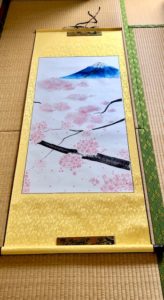
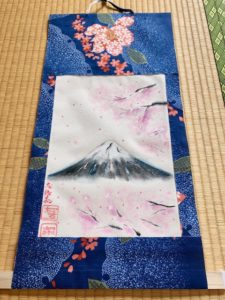
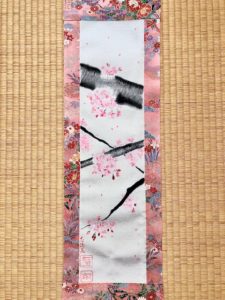
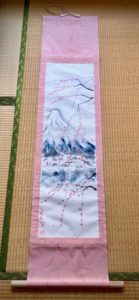
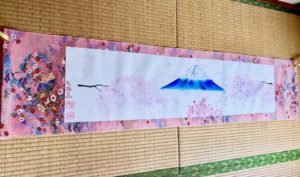
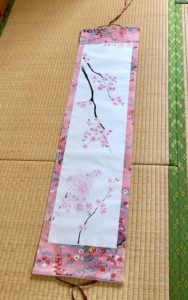
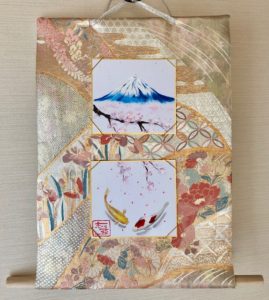
Kakejiku style wall decorations using these Fukuro obi are made to enjoy their own beauty.
Small Japanese paintings are not the main stars here.
Gorgeous Fukuro obi belts are the main stars.
This Kakejiku style wall decorations have their uniqueness- with the combination of Fukuro obi and Japanese painting.
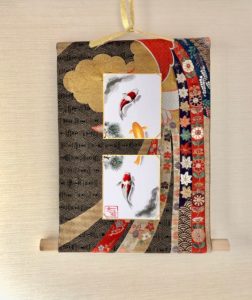
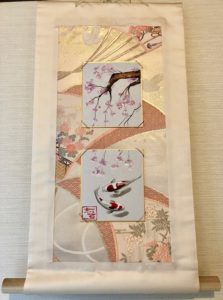
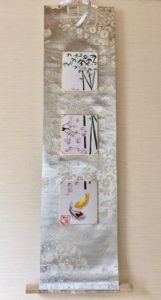
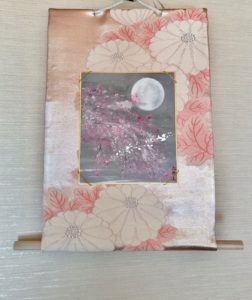
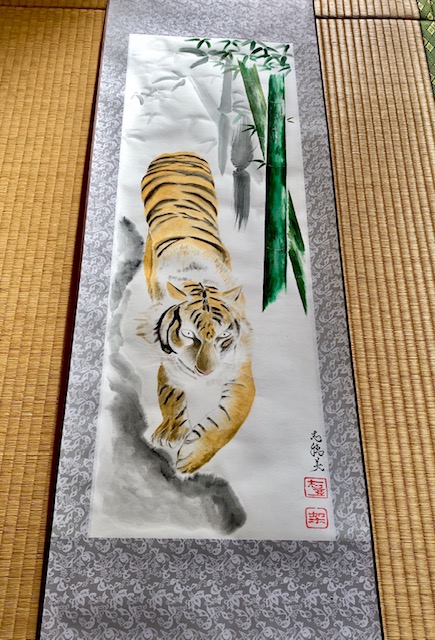
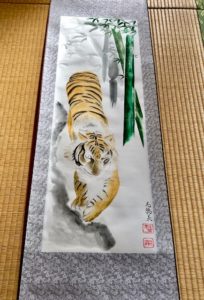
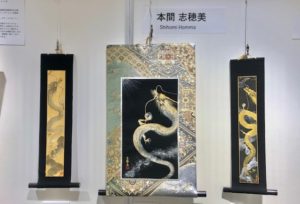
“Japanese Kakejiku (Kakemono)“ -good luck item
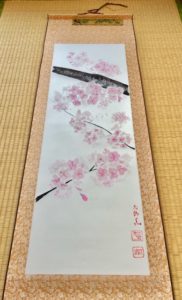
“Japanese Kakejiku (Kakemono)” is a hanging scroll used to display and exhibit paintings and calligraphy art.
Traditional Japanese rooms usually have a “Tokonoma”- a special space (alcove) to display “Kakejiku”.
Most traditional houses used to have at least one Kakejiku to hang in Tokonoma.
Kakejiku has been a well-known cultural item in Japan for long time.
There are a lot of themes for Kakejiku.
Especially paintings have good luck meanings are popular.
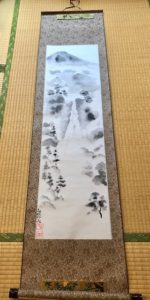
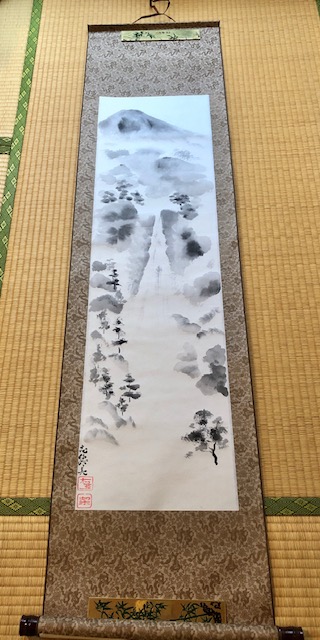
“Sunsui ga” – Nature/ Japanese scenery of mountains, river, water fall, trees, rocks
These nature items have important meanings based on ZEN, giving us a relaxing ideal ZEN world.
“Seasonal flowers/plants” – To enjoy four seasons even inside the house, we choose seasonal flowers/plants.
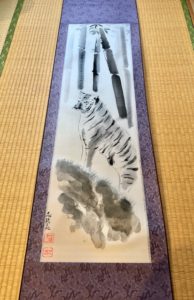
“Tiger” – Tiger is believed to protect against misfortune and brings a good luck. Tiger’s eyes with glares are toward evil.
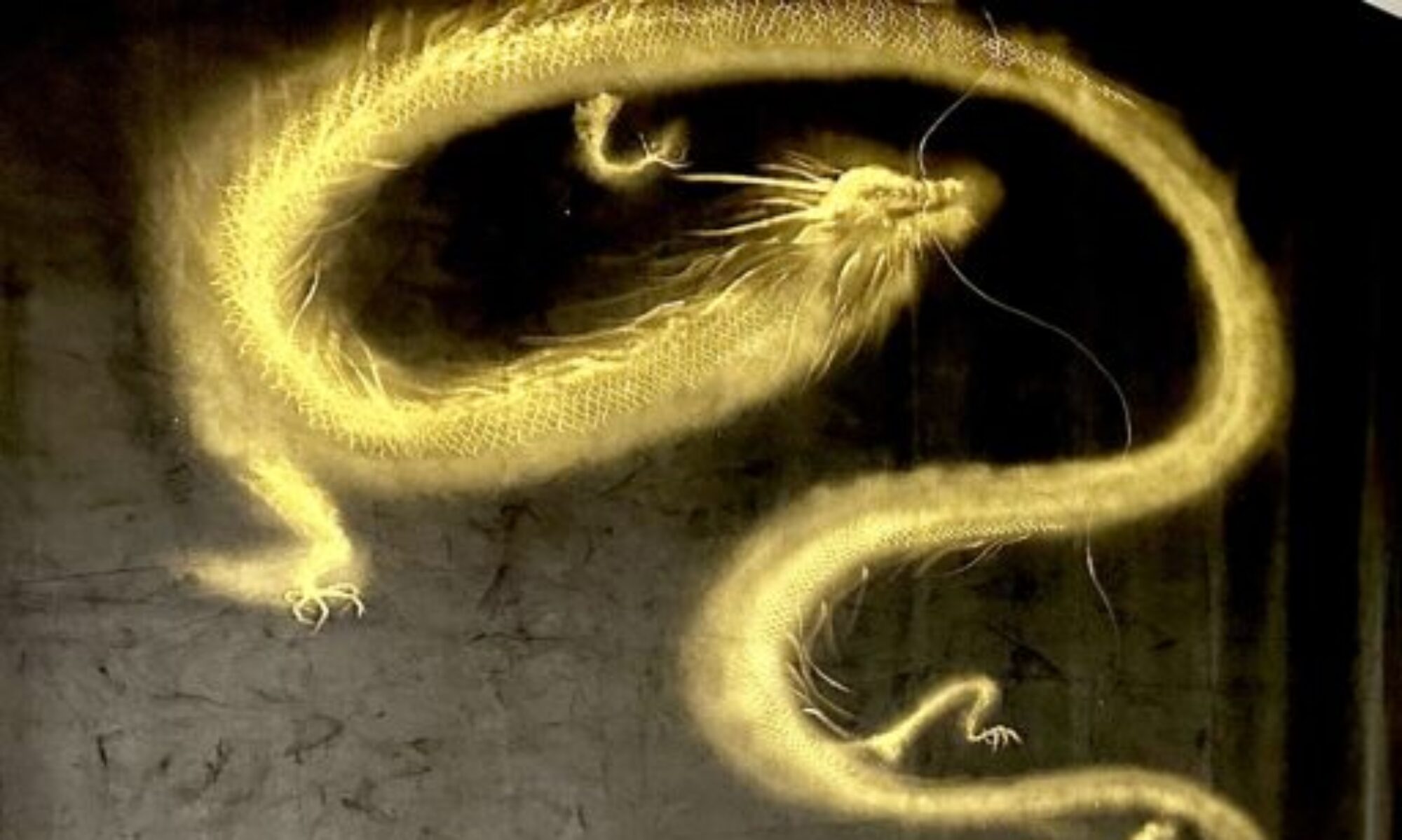
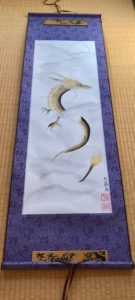
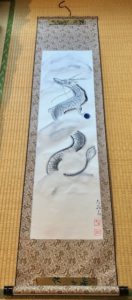
“Dragon Ryujin” – Dragon is called “Ryujin” and is a god in Japan. It is a symbol of promotion, and Dragon Ryujin going up to the sky has the positive and good luck power.
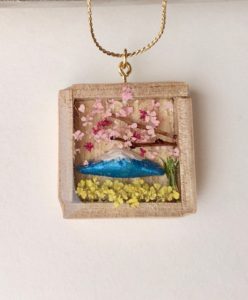
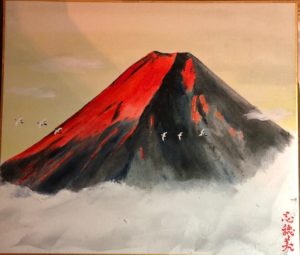
Mt. Fuji – the highest symbolic mountain in Japan, and being registered as a world heritage.
Mt. Fuji is well known as a sacred mountain. Especially red color Mt. Fuji in the red sunrise is believed to have the strong good luck power.
There are more themes for Kakejiku, and all have special meanings.
By hanging these good luck Kakejiku, the house and the people living there are protected against evil.
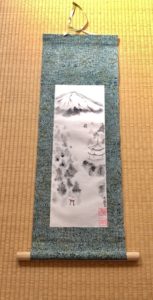
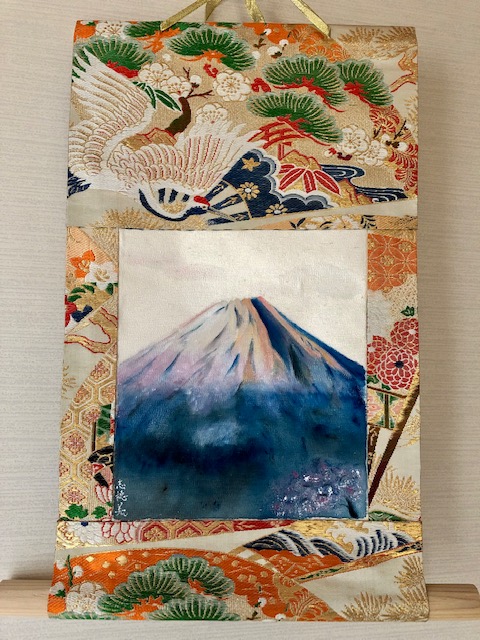
Japanese cultural icon – Mt. Fuji
If you have an interest in Japan, you must have heard this name “Mt. Fuji”.
Mt. Fuji is the highest mountain in Japan.
It’s 3,776.24m (12,389ft), located on Honshu.
Mt. Fuji is an active volcano, last erupted over 300 years ago.
The reason Mt. Fuji is very famous as cultural icon is because of its beautiful shape as well.
It stands on the flat wide area “Kanto plain” with symmetrical cone, and snow-capped on its top with the contrast of white and blue.
Because of its unique shape and height, it is very easy to be seen from even far away.
On a clear day in winter time, Mt. Fuji can be seen from greater Tokyo.
Even a glance of Mt. Fuji makes many Japanese people very happy.
I think that is because Mt. Fuji has been believed to be a symbol of god from its serene appearance.
Looking at Mt. Fuji is a very lucky thing.
Since long time ago, Japanese people loved Mt. Fuji, and Mt. Fuji has been depicted in art and photography.
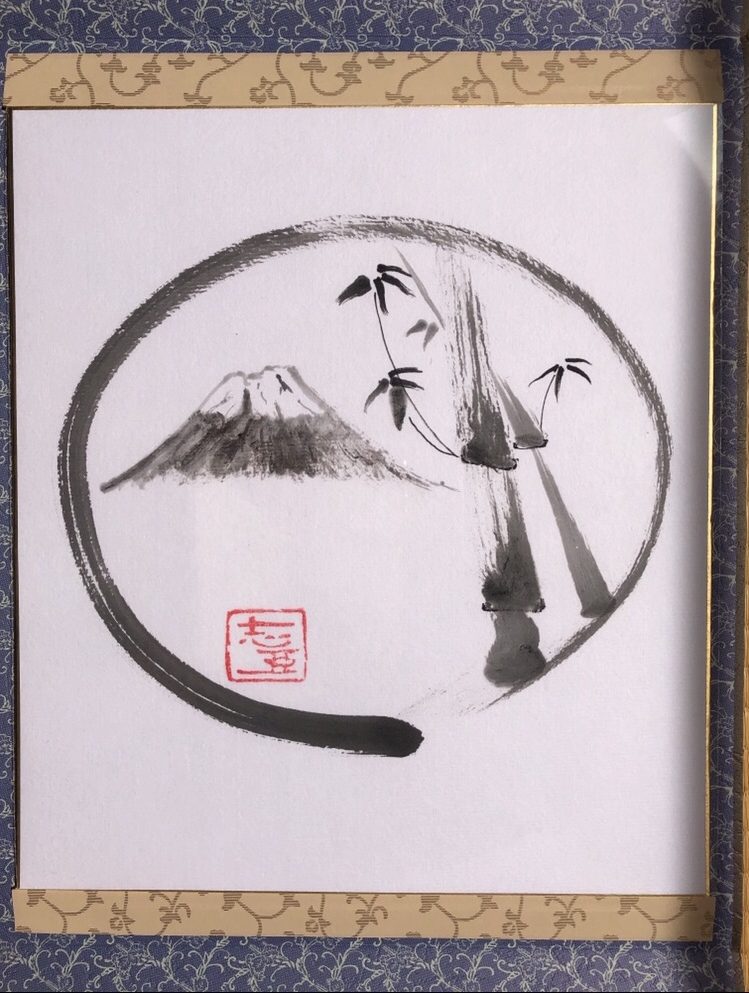
We find Mt. Fuji in many Japanese paintings, Kakejiku hanging scrolls, ink paintings ”Sumie”, etc.
I love to paint Mt. Fuji as well.
Mt. Fuji has different attractions in different seasons and time.
This simple, yet perfect cone-shaped mountain never stops attracting many people.

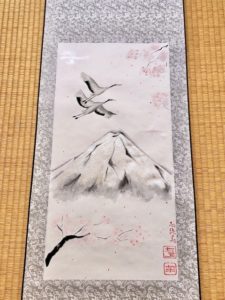
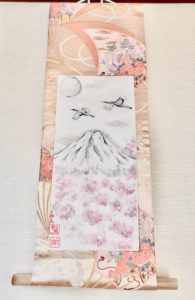
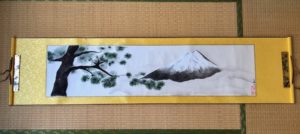
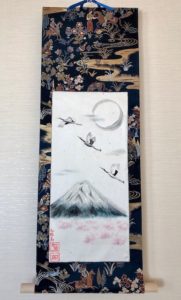
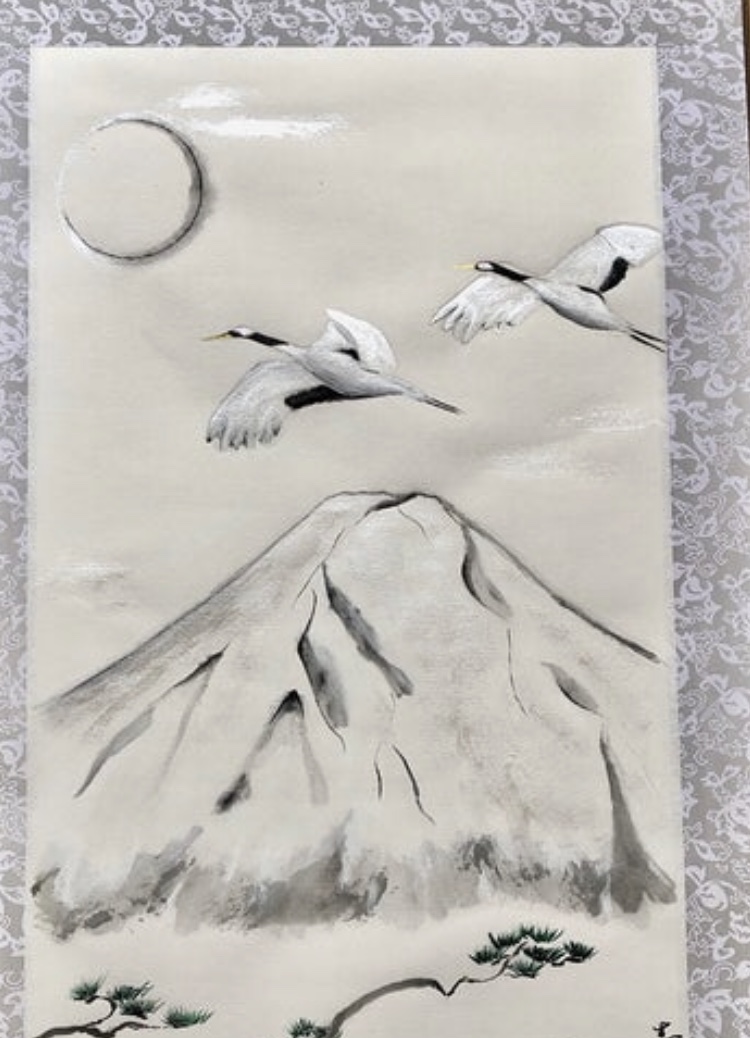
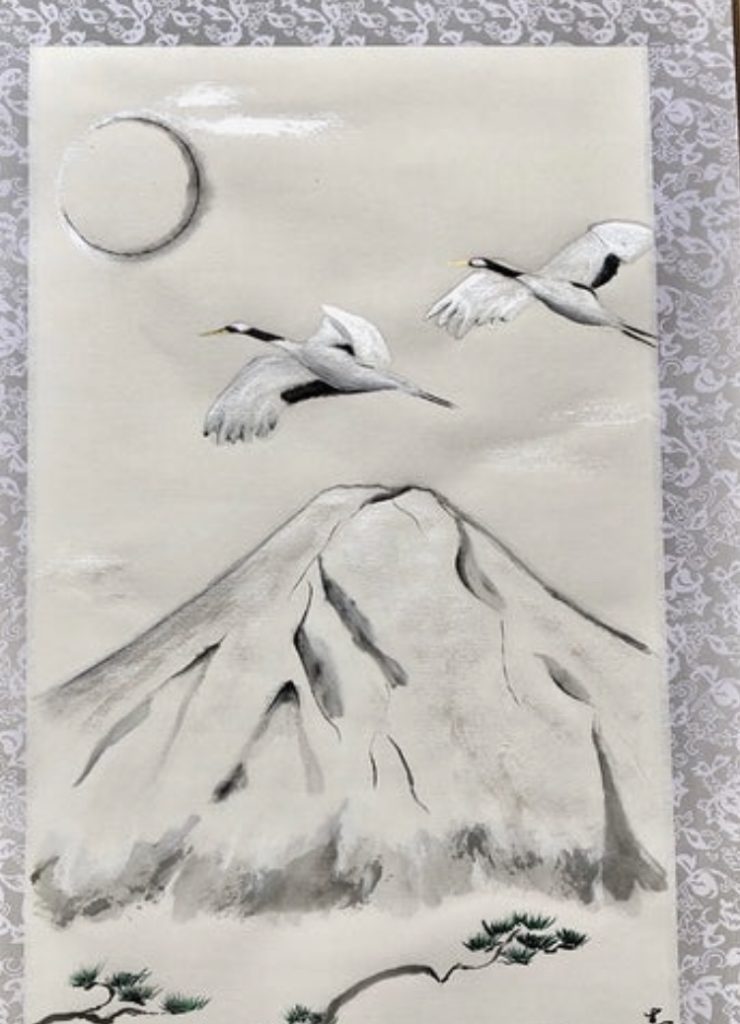
Crane bird - Japanese healthy long life symbol
Crane birds are beautiful big white birds with a little bit of black color on wings and necks.
Even though we don’t get to see them often, crane birds are very familiar for many of Japanese people.
Crane birds are often used as a symbol of good luck and healthy long life.
Especially at the cerebration occasions, we see crane bird pictures and decorations.
On new year day, we use items with crane bird pictures, such as kimono, special black box for special new year food called “osechi”, new year cards called “nengajo”.
We turn on TV on a new year day, we see many CMs using crane birds fling toward Mt. Fuji.
On wedding, brides wear special wedding kimono with beautiful crane bird embroidery.
Crane birds are often be seen with Mt. Fuji on these occasions, as Mt. Fuji is also another good luck symbol.
It is funny that I have never seen actual crane birds, but they have been very familiar birds to me since I was small.
They are beautiful and my favorite birds.
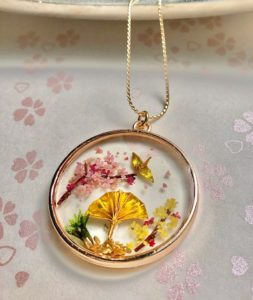
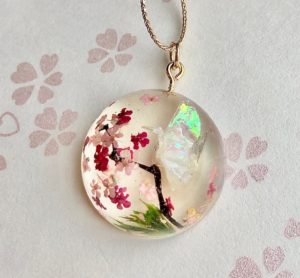
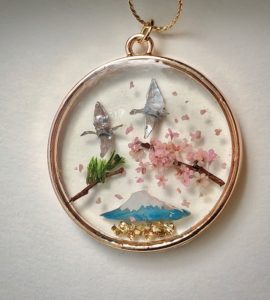
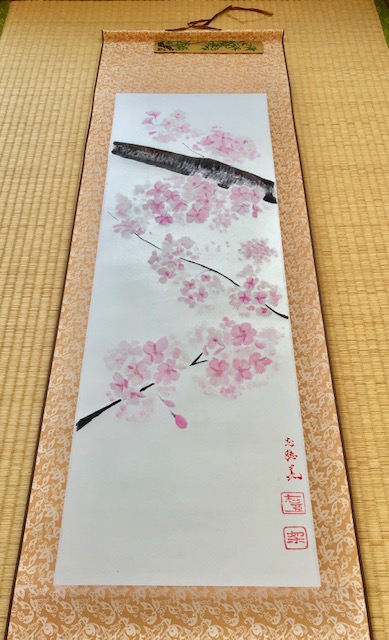
I was making calligraphy artworks for a while, and soon after, I started using color in my paintings.
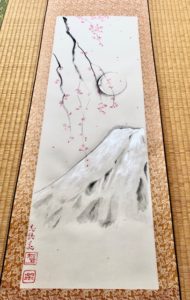
I love the simplicity of Ink art, just black and white and its gradation color.
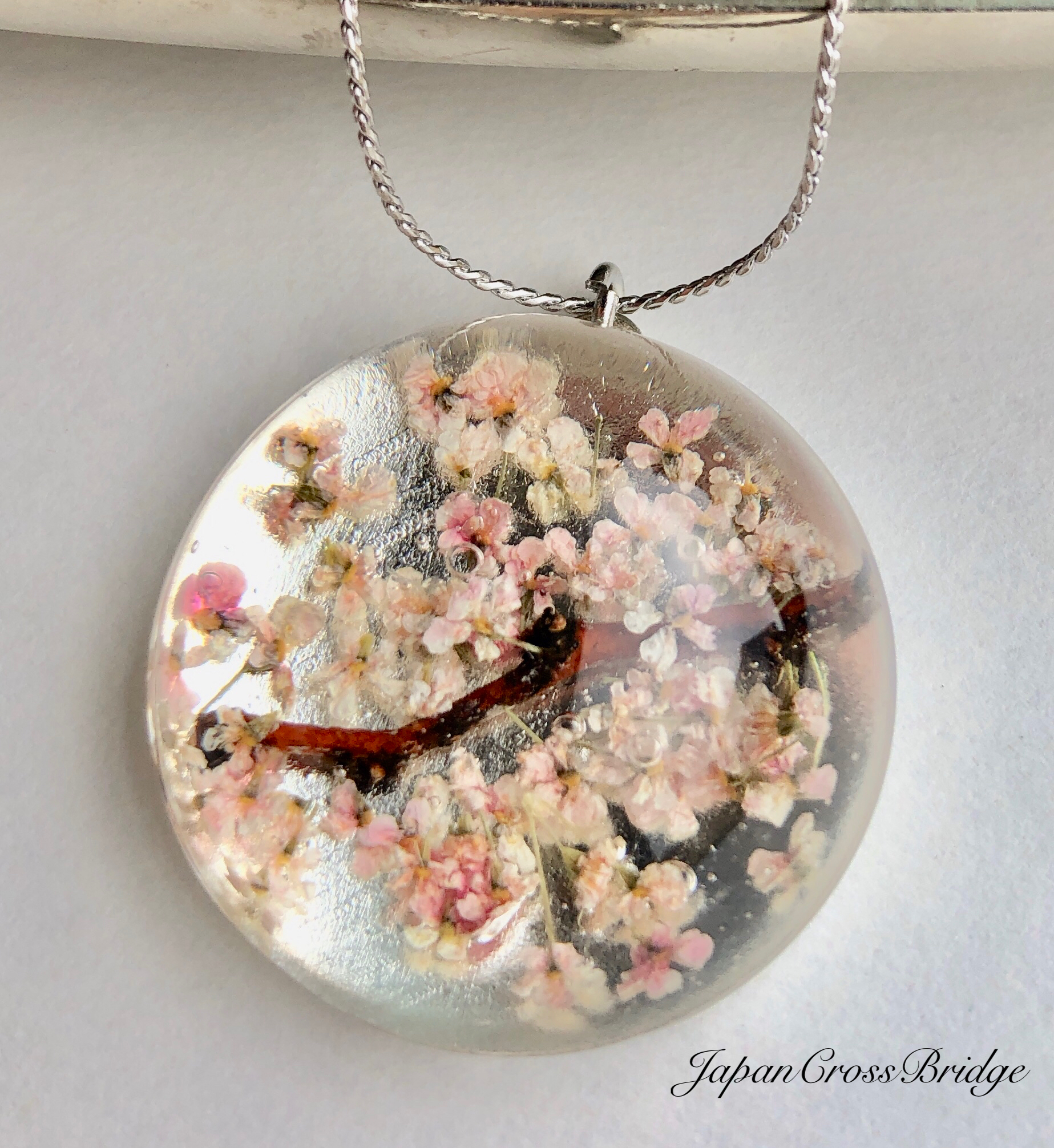
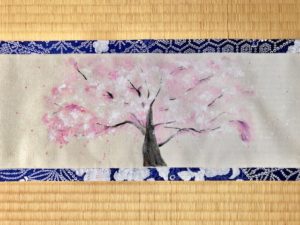
However, Sakura cherry blossoms should also look great with Sakura pink color, and I began using Japanese pigment and whitewash, as well as watercolor.
Using color expanded my painting world.
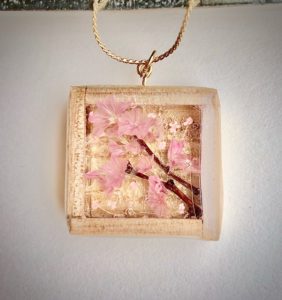
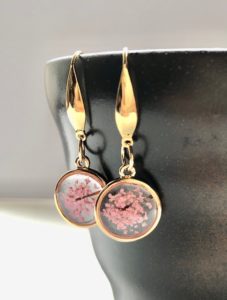
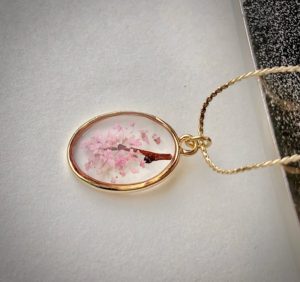
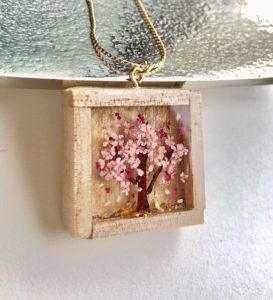
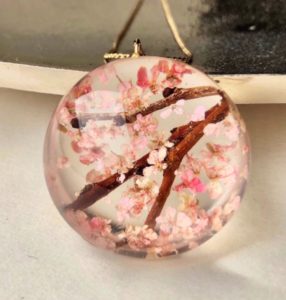
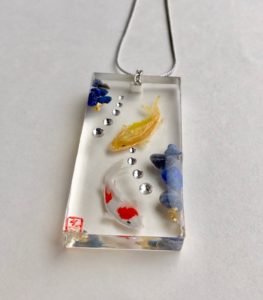
I can even paint in jewelry, using acrylic paint.
I can also create imaginary things in my painting world.
I knew I liked making jewelry, as I like miniature things and like to make small things.
But I realized I love painting so much as well.
My creation is now from 3D painting jewelry to Japanese painting mixed with calligraphy art.
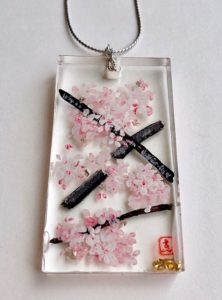
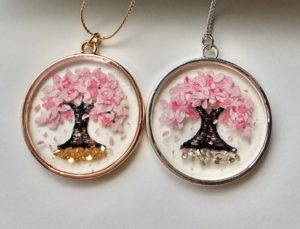
When I started doing calligraphy again, I did not think about painting.
Ink painting (墨絵 Sumie) is well known in Japan, and my grandmother used to do Ink painting art, so it was familiar to me too.
Plus I liked painting since I was small.
But my experience was only oil painting, and no Ink painting art experience.
When I started painting using ink, I realized how deep and intricate Ink painting art was.
Only using water and ink, gradation of black color to thin grey color can create amazing picture.
I was amazed by its simplicity yet, beauty and sensitivity.
The smell of ink is relaxing too.
I started drawing bamboo first.
Bamboo is the Japanese symbolic trees and great theme for meditation.
Then I received the request from customers.
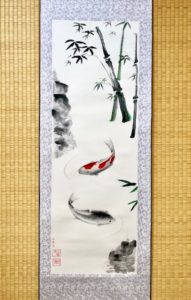
“Can you draw Koi fish?”
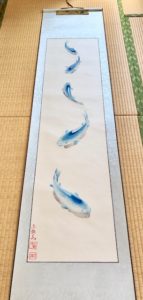
I started drawing Koi fish, and found out this was more fun.
Koi fish is the symbol of Japanese beauty, and is believed to bring us a good luck.
I really love painting Koi fish.
Now my drawing themes are more.
Mt. Fuji, Sakura cherry blossoms, Pine trees, crane birds, etc., all expressing Japanese beauty.
When I draw more of these themes, I find more of Japanese beauty.
And I realize how grateful I am, as being a Japanese, being connected with Japanese culture and beauty.