Connect Japan and the world through Japanese spirituality| Japan Cross Bridge|Tokyo
Express Japanese art and culture to the world


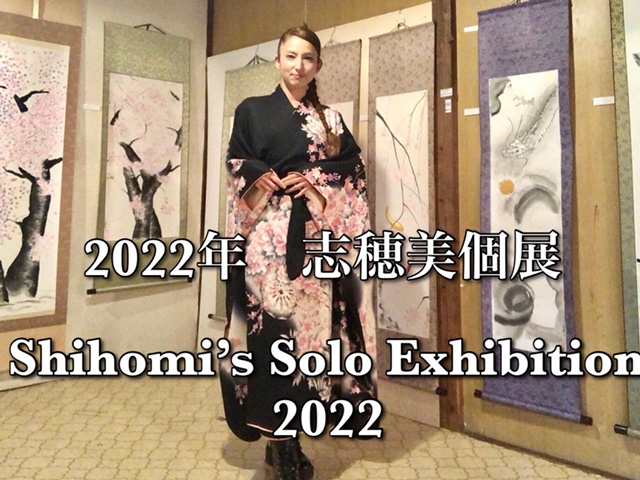
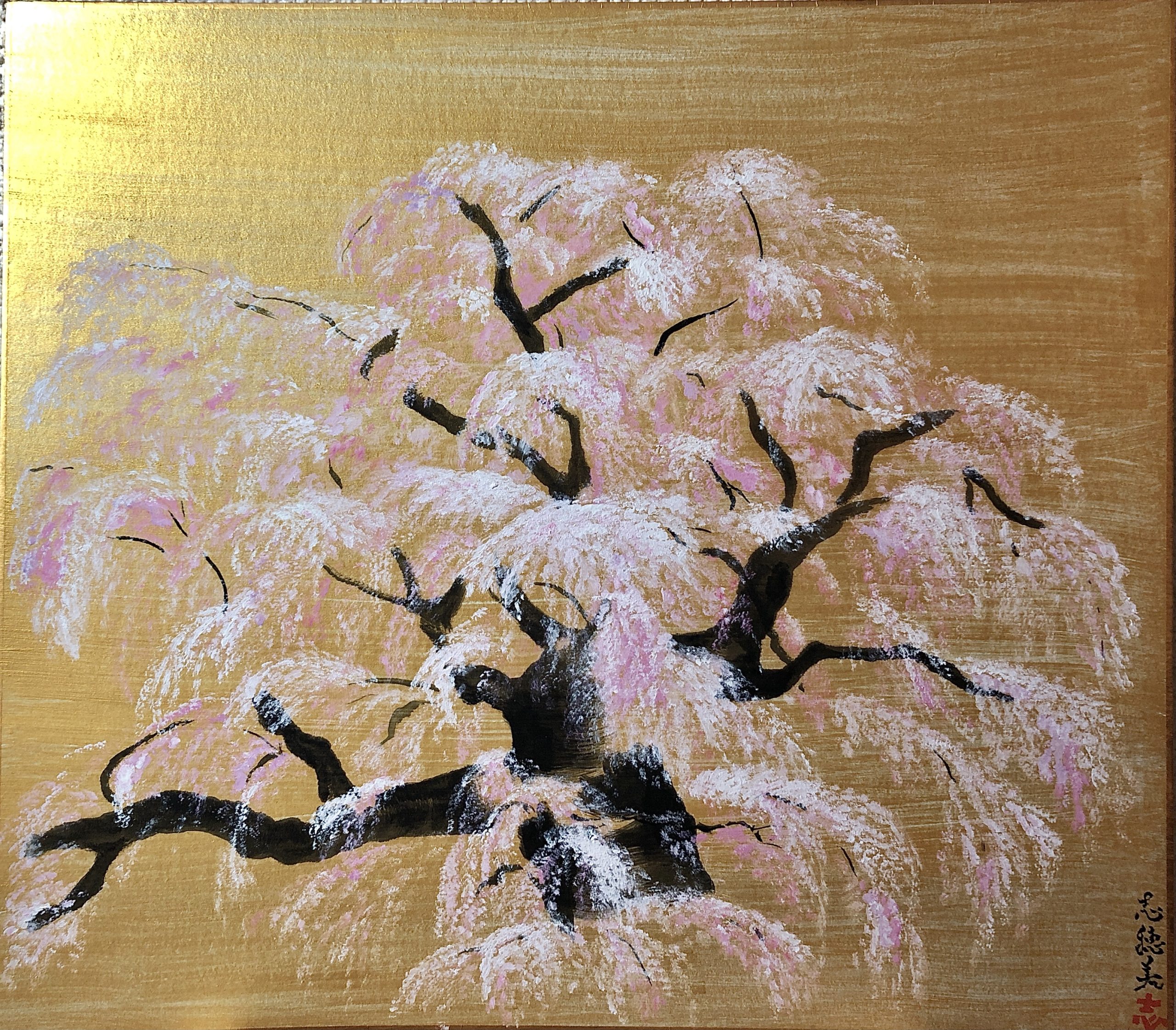
I love to make cherry blossom themed artworks, so I wanted to hold my solo exhibition during the cherry blossom season. I am really grateful that I could hold my first solo exhibition in a nostalgic Japanese old house near Meguro river, Tokyo, where cherry blossoms are really famous. This exhibition is already one of my best memories.


The difference between 龍(Ryu) and Dragon
I started painting 龍(Ryu) and now I am attracted to 龍(Ryu).
When we try to translate 龍(Ryu) into English, it is often said “dragon”.
However, dragons in European countries and 龍(Ryu) in Eastern countries like Japan are totally different.
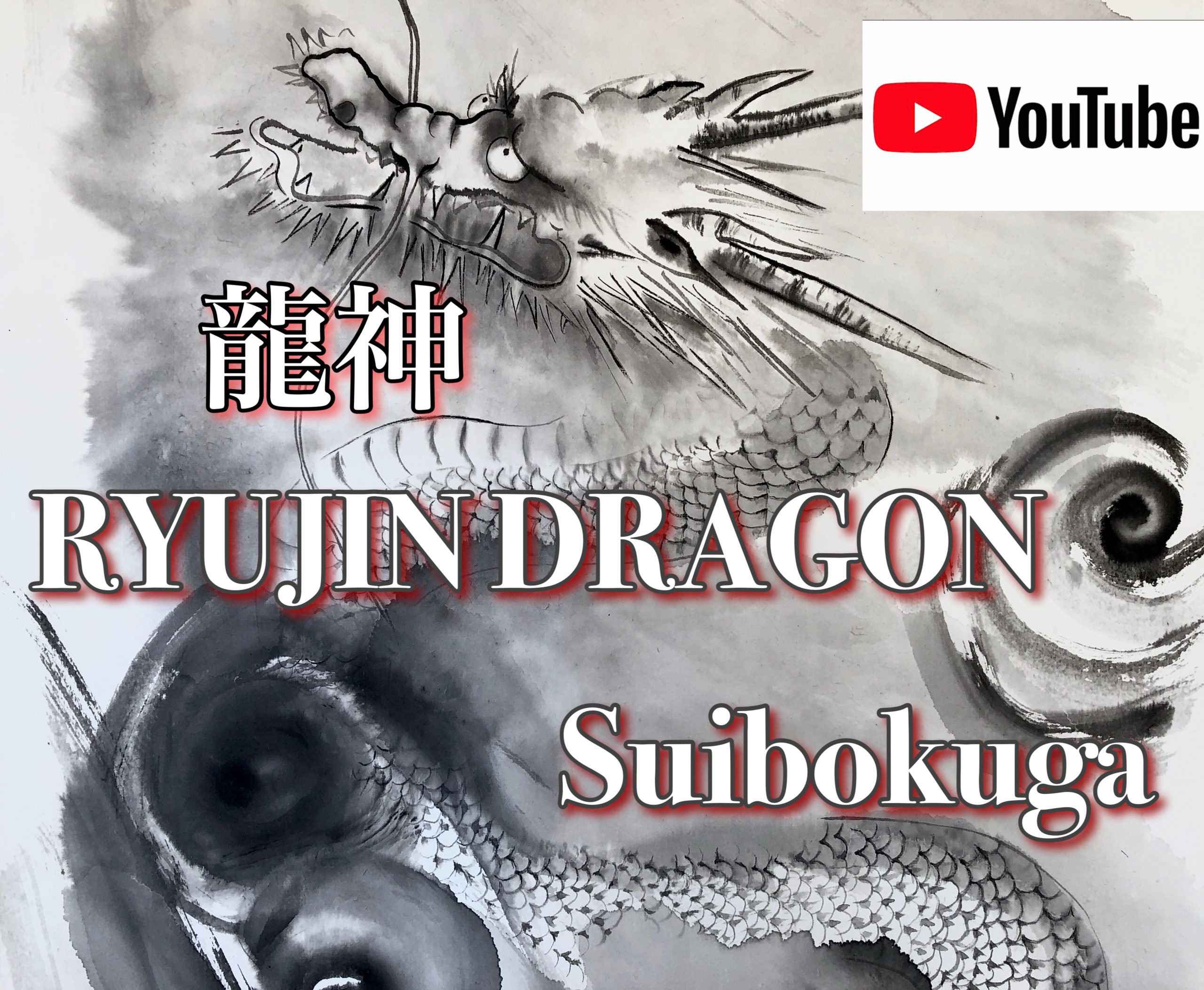
In eastern countries and Japan, 龍(Ryu) is called “RYUJIN” and it is a god.
On the other hand, in European countries, dragon is a bad evil creature.
They look alike but they are not the same.
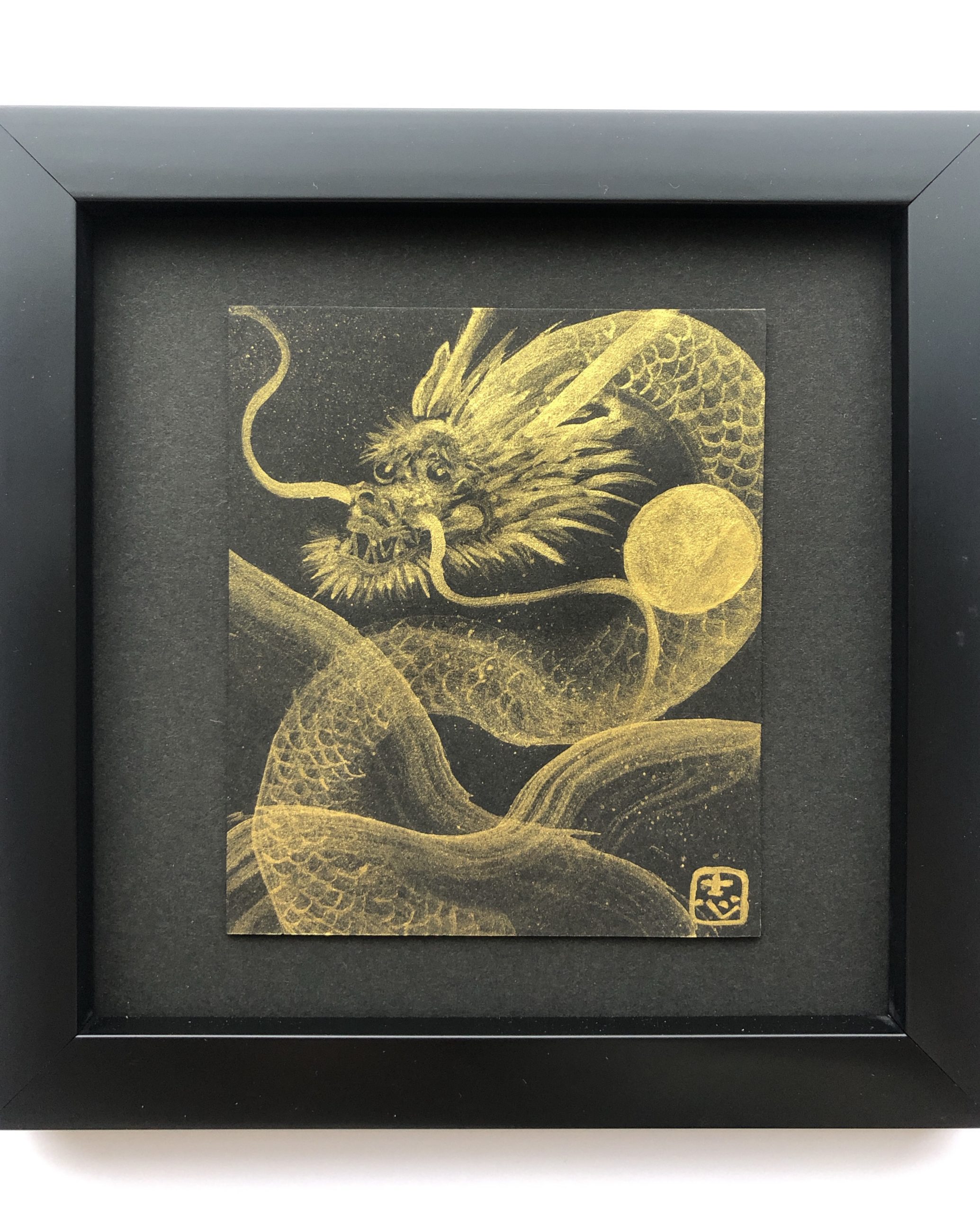
Dragon has wings and its face is more like a lizard, on the other hand, RYUJIN’s face is more like a snake.
What is in common is, they are both imaginary reptile creatures.
Personally, I like Japanese RYUJIN better, as RYUJIN has a longer body and looks cool.
Japanese RYUJIN can often be seen at temples or shrines.
At the entrance of temples and shrines, there is a water running spot, called “Temizusha”(手水舎).
This is a place to cleanse our hands and mouth before entering temples and shrines.
There, you can see water is running from RYUJIN’s mouth.

RYUJIN has been believed to be a god which brings rain and brings good harvest.
We see many Kakejiku paintings of RYUJIN going up to the sky, surrounded with rain clouds which RYUJIN created by itself.
There is also a sacred ball which RYUJIN holds.
It is called “Cintamani stone”, which makes your dream come true.
RYUJIN god is a very precious, good luck symbol.
That is why we have RYUJIN god Kakejiku hanging scrolls hung in the house since ancient times.
By the way, why does good luck god have that scary face…?
Hanging RYUJIN Kakejiku hanging scroll doesn’t make kids get scared at night…?
But there is a reasonable reason.
In order to fight and get away the evil spirit, RYUJIN has such a scary face.
Same as Tiger Kakejiku.
We often see Tiger glared at us with its powerful scary eyes on Kakejiku.
That is to fight and get away the evil spirit.
Anyway, I am attracted to RYUJIN,
and my RYUJIN art is increasing little by little…
“RYUJIN god is a god of water. Human beings cannot live without water. That means we human cannot live without RYUJIN god.”
Drawing RYUJIN god is a great practice of life for me.


Tiger on Kakejiku art
Tigers are one of the very popular subjects on Japanese Kakejiku art.
Kakejiku is Japanese traditional hanging scroll.
It is hung on the wall in Japanese style room, especially on alcove “Tokonoma”, since ancient time.
Tiger is a powerful animal, and Tiger painting on kakejiku has an important meaning.
When tiger is glaring at this way, that means tiger is glaring at the evil in your place.
Tiger’s powerful eyes are believed to have the power to beat the evil.
So tiger’s scary expression is protecting your place and the people living in your place.
Tiger painting Kakejiku has a strong good luck power.


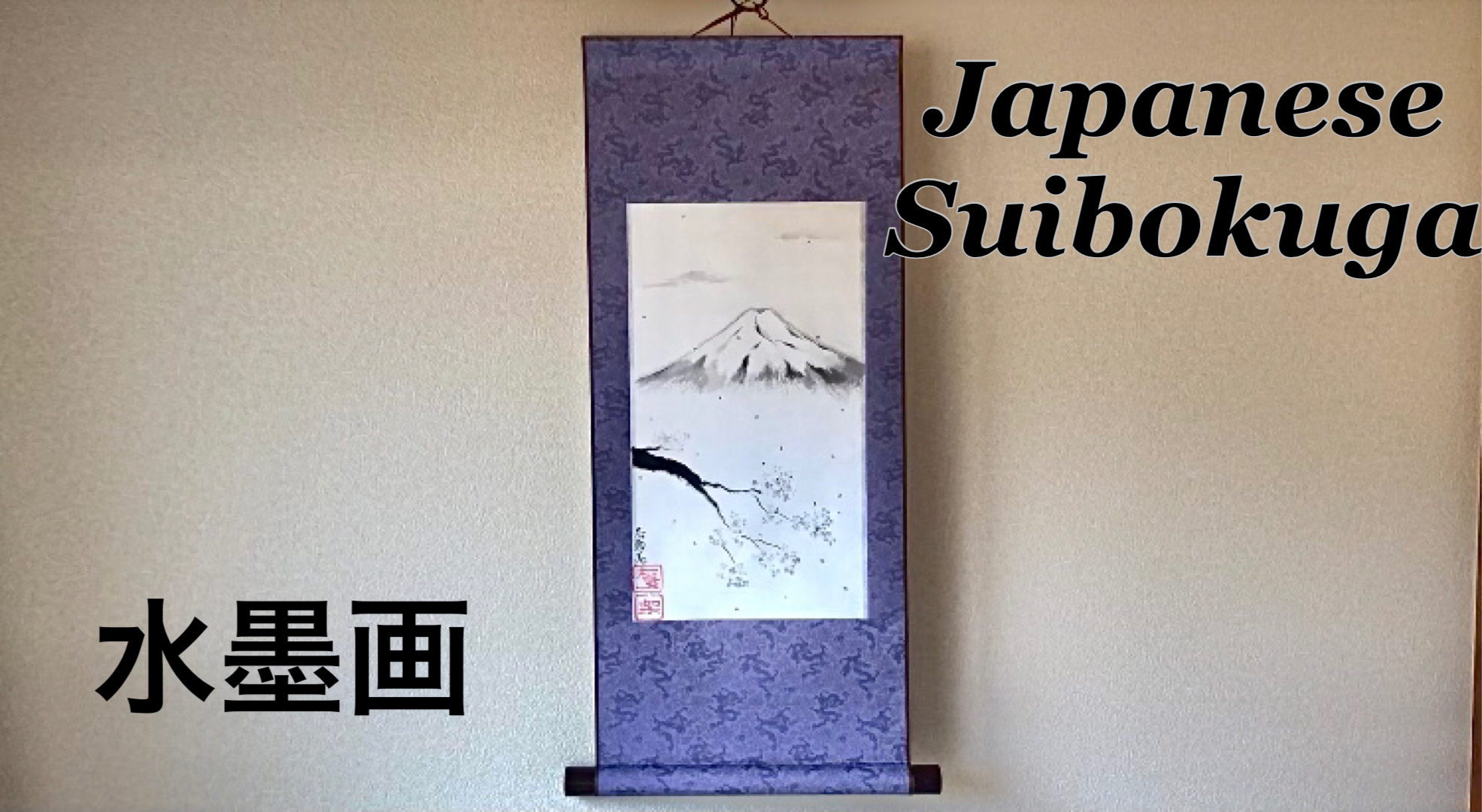
Suibokuga (水墨画)- Japanese traditional painting art
Suibokuga is sometimes called Zen Painting.
Sumie is painting with ink.
And Suibokuga is one of Sumie painting, with the gradation of dark black to light black.
Main tool for Suibokuga, “Sumi ink” is made from mainly soot, animal glue, and perfume.

We add a little water into an inkstone (suzuri) and rub sumi ink, it becomes dark black color.


By mixing this black ink with water, we can create the gradation color of black to light grey.


In Japan, Suibokuga is not just about paintings drawn with only ink, but we include some colored paintings drawn with mainly ink and some pigments also.
Sumie: The way of painting with ink was already in Japan since Nara period (710 – 794).
And Suibokuga style was brought in Japan at around Kamakura period (1185 – 1333), then became very popular especially at around Muromachi period (1336 – 1573), as Suibokuga style paintings were deeply connected with ZEN temples.
Until 14C, the subjects of Suibokuga were humans called “Jinbutsu ga” (人物画) , and flowers and birds called “Kacho ga” (花鳥画).
In 15C, “Sansuiga”(山水画) , meaning “mountains and water paintings” became popular.
Subjects of this Sansuiga is nature, such as mountains and water falls, rocks, trees etc.
I love to paint Japanese nature and symbols in Suibokuga.
Sakura cherry trees, bamboo tees, pine trees, Mt. Fuji, crane birds, and koi fish.
Sometimes tigers and Ryujin dragon god as well.
Tigers and Ryujin dragon god are also very popular subjects for Suibokuga.
I love to express Japanese beauty with the amazing gradation of ink with some colors.
That is my Suibokuga.


y

Japanese EMAKIMONO style hanging scroll
First of all, what is EMAKIMONO??
Emakimono – “E” means “pictures”, “makimono” means “scroll” in Japanese.
Emakimono is a Japanese traditional horizontal scroll which tells stories with pictures.


From right side, we unroll the scroll to the left, and illustrations tell you Japanese narrative.
So Emakimono usually is a few meters long, sometimes even 20 meters long!
The oldest Emakimono that still exists is believed to made in Nara period, AD 710 to 794.

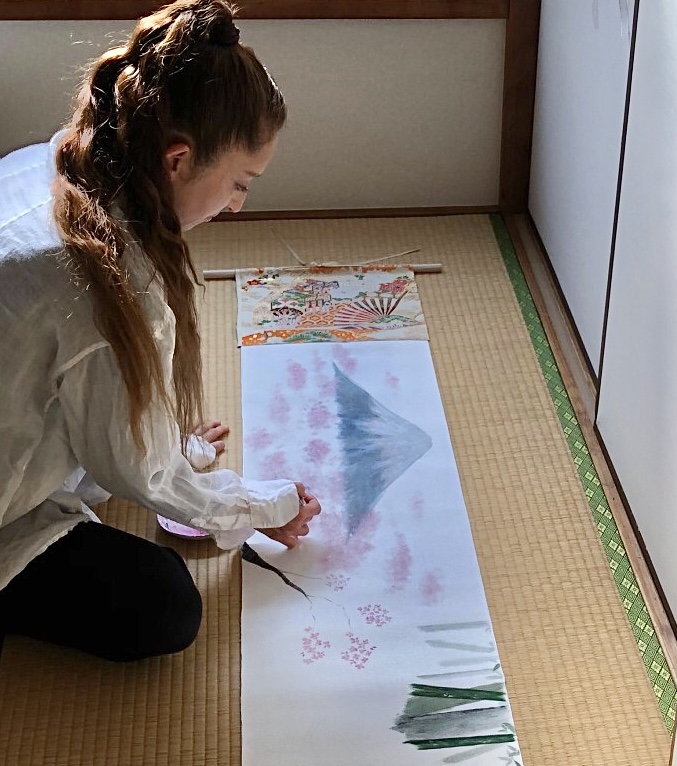
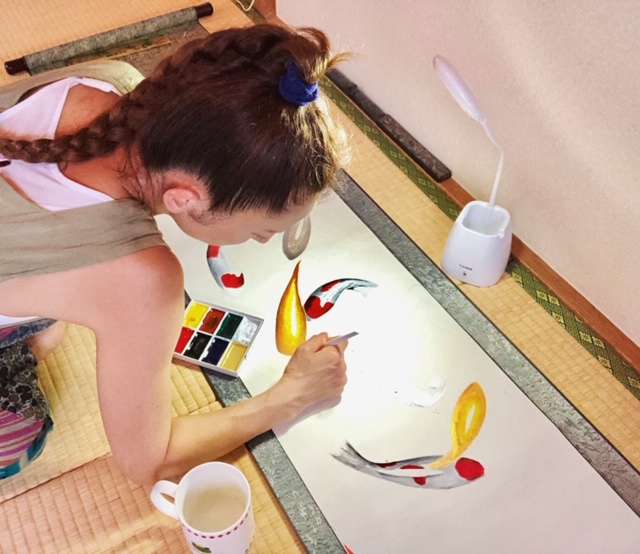
I made Emakimono style scroll with Japanese scenery painting.

To make this unique scroll, I used Precious Kimono silk obi belt for both ends.
It is woven with silk and making gorgeous patterns.

In the center painting area, I used white silk kimono fabric.

This white silk fabric is thin and soft, so I attached Special Japanese paper called “urauchi youshi”, on the back to make it stronger and harder.
This special paper has glue on one side and by ironing, I can attach this paper to the silk fabric.
I made this scroll with 2 meters long, so this can be hung on the wall in the rooms easily.
This Emakimono style horizontal scroll allows me to draw Japanese landscape scenery.

I really love to draw Japanese symbols, especially Mt. Fuji, Sakura cherry blossoms, Bamboo, and Koi fish.
Those symbols express Japanese beauty, and every time I draw them, I find myself being in love with them more and more.
In the past, I painted these symbols a lot on Usual Kakejiku hanging scrolls (Vertical scroll), but especially this horizontal scroll has enough space for me to draw all in here.
That’s what I wanted to make.

The reason why cherry trees were planted.
Have you ever thought about the reason why cherry trees were planted?
In Japan, we can see so many cherry trees in everywhere.
Many of them are really old, few hundred years old.
An interesting point is, many cherry trees are planted by rivers.
This has a reasonable reason.
Ancient Japanese people planted cherry trees by rivers, so that many people would come and see the beautiful cherry blossoms.
They knew that many people visiting and walking there, would help make the soil harden, and help make the solid river bank.
So cherry trees were planted as a flood control measures.
Another interesting point is, that many cherry trees are in shrines and temples as well.
Shrines are Shintoism, and originally have deep relations with pine trees, but not with cherry trees.
However, people thought cherry blossoms’ gracefulness symbolizes the samurai spirit, and many shrines preferred to plant cherry trees as well.
Temples are Buddhism which has the deep relations with flowers.
They admired cherry blossoms as well as plum blossoms.
We cannot talk about Japanese history without the relations with temples.
Muromachi era, Sengoku era, around 13C to 16C, many temples already had cherry trees.
Famous Samurai and shogun enjoyed Sakura viewing “Ohanami” since then.
In Japan, people enjoy Sakura viewing “Ohanami” since ancient time, and this is a Japanese culture.
Many famous Sakura spots in Kyoto and Nara are in temples and shrines.
In Tokyo too, many famous Sakura spots are in temples and shrines, as well as by rivers, or near the water.
Ueno park, where many people visit for Sakura viewing, was once a temple.
Imperial palace is surrounded with moat.
Meguro river, Kanda river, Sumida river, Tamagawa river, Arakawa river, are all famous Sakura spots.


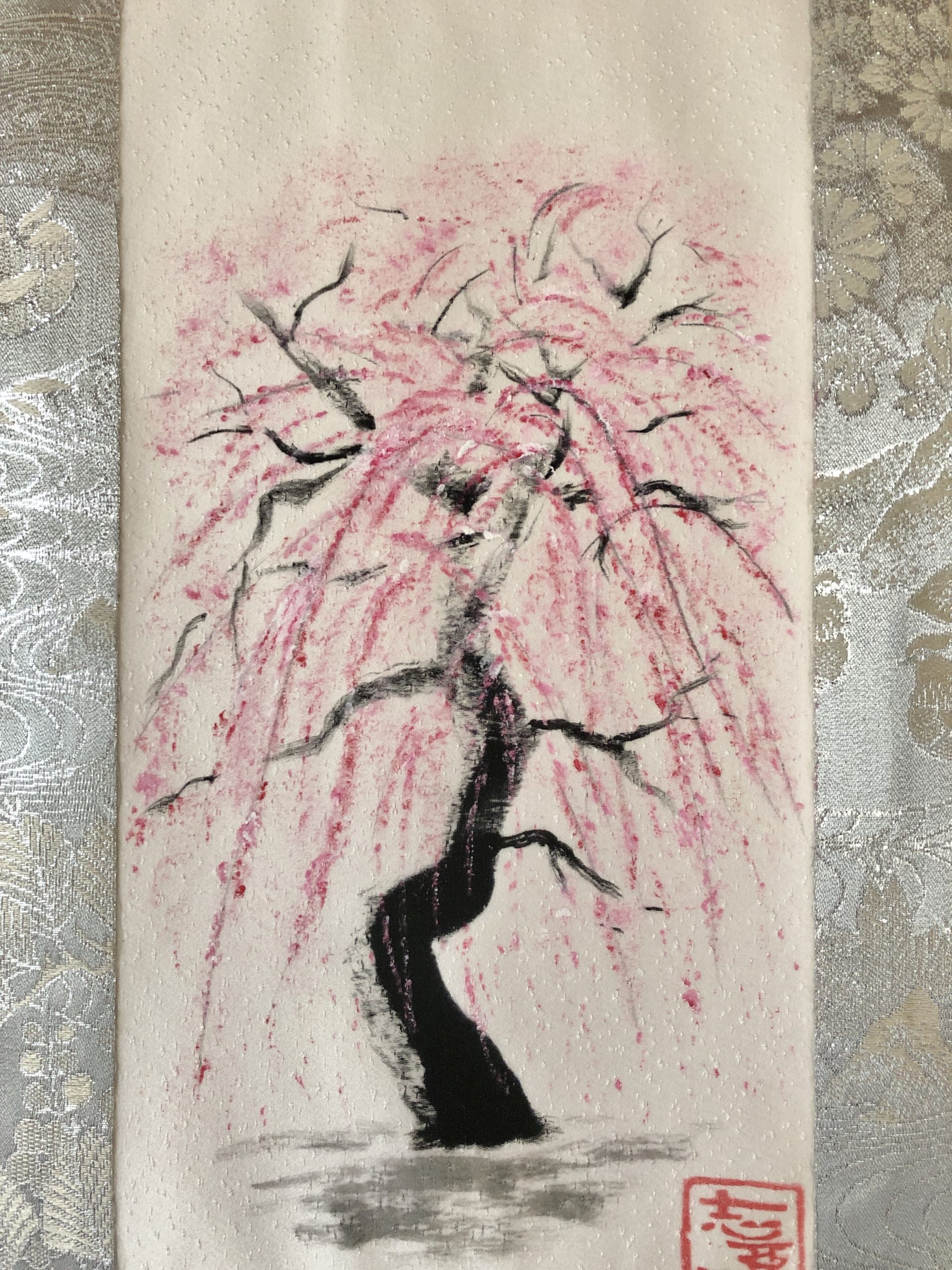
I am obsessed with Sakura cherry blossoms.
Sakura is Japanese symbol.
We admire Sakura cherry blossoms in many ways.
Sakura is connected to our Japanese culture deeply.
Since ancient time, Japanese people enjoyed watching Sakura, called “Ohanami” (meaning “watch flowers”)
Spring time, under Sakura trees were full of people, sitting and having picnic.
This “Ohanami” habit is still very popular in Japan.
We see “Sakura forecast” (when cherry blossom start to bloom) on the TV news.
When Sakura starts to bloom, people start going out to have picnic under the Sakura trees.
This is our major Spring event.
We also eat Sakura flowers and leaves.
Pickled Sakura flowers and leaves are used for sweets or tea.
Tea leaf container or other tools are made using Sakura trees.
We have music about Sakura, called “SAKURA”, and all Japanese should know this song.
We have color called “SAKURA color”, which is light sensitive pink.
Sakura is used as Japanese symbol in many situations.
Sakura is very familiar flower for Japanese people.
Sakura cherry blossom time is very short, about one week.
When it starts blooming, it goes very quick to be full bloom, and as soon as it becomes full bloom, leaves start to come out and flowers start falling.
So the short period in full bloom and the beauty of Sakura flowers are often likened to the fragility of human life.
That is why cherry blossoms are symbol of beauty and transience.
I love Sakura, and cherry blossom time makes me excited.
Painting Sakura makes me happy and this is a good meditation for me.
That is why I keep painting Sakura.


Crane bird - Japanese healthy long life symbol
Crane birds are beautiful big white birds with a little bit of black color on wings and necks.
Even though we don’t get to see them often, crane birds are very familiar for many of Japanese people.
Crane birds are often used as a symbol of good luck and healthy long life.
Especially at the cerebration occasions, we see crane bird pictures and decorations.
On new year day, we use items with crane bird pictures, such as kimono, special black box for special new year food called “osechi”, new year cards called “nengajo”.
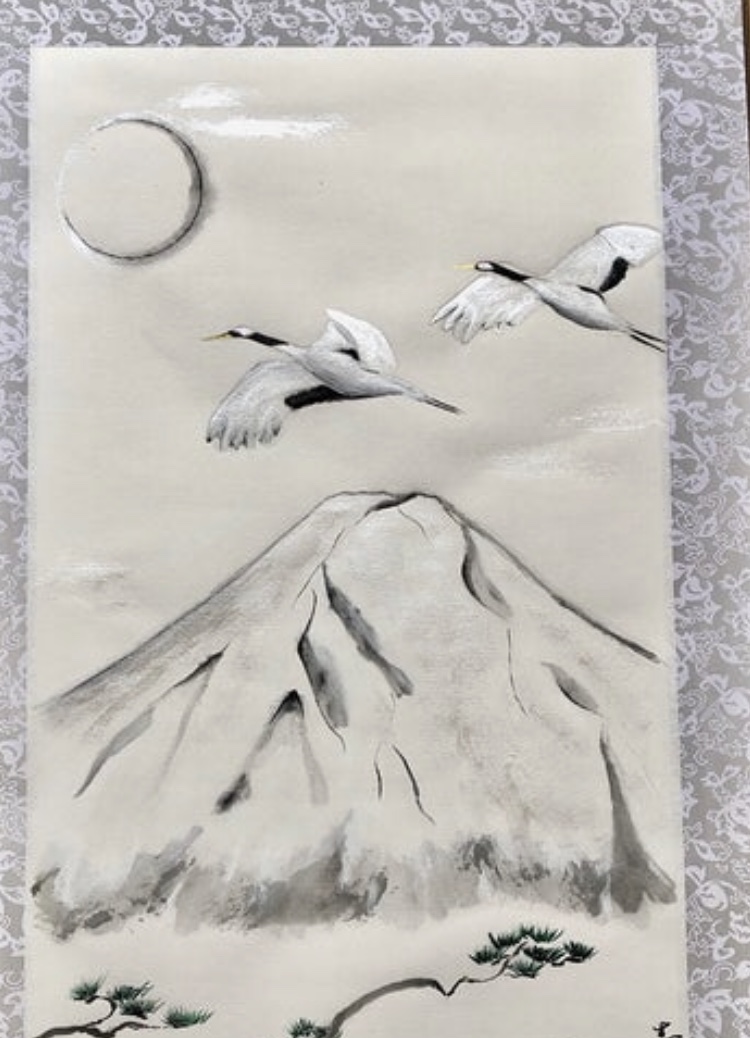
We turn on TV on a new year day, we see many CMs using crane birds fling toward Mt. Fuji.
On wedding, brides wear special wedding kimono with beautiful crane bird embroidery.
Crane birds are often be seen with Mt. Fuji on these occasions, as Mt. Fuji is also another good luck symbol.
It is funny that I have never seen actual crane birds, but they have been very familiar birds to me since I was small.
They are beautiful and my favorite birds.