World heritage Mt. Fuji

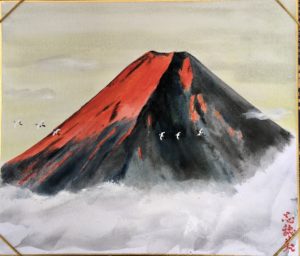
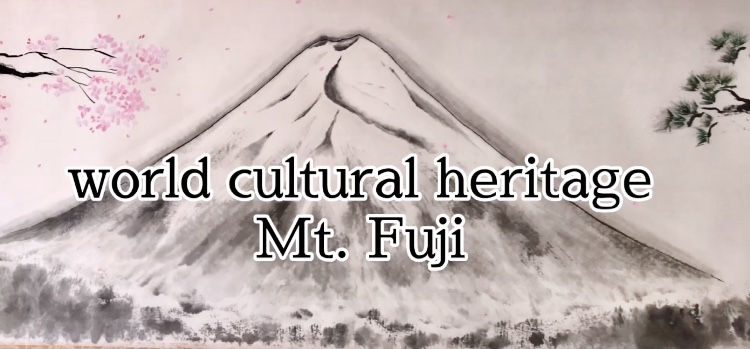
World heritage Mt. Fuji picture in Suibokuga

World heritage -Mt. Fuji

Mt. Fuji is the highest mountain in Japan, the altitude of 3,776m.

It is well known not just in Japan but in the world as the world heritage site.

The reason Mt. Fuji was selected as a World Heritage Site, is not only for its value as a famous mountain of nature and beauty, but also for the faith held by the Japanese in the existence of Mt. Fuji and its value as a source of art born through Mt. Fuji.

Since ancient times, Japanese people felt divinity in Mt. Fuji and admired it as the symbol of spirituality.

They looked up Mt. Fuji and prayed.

How did Mt. Fuji become a mountain of prayer?

Mt. Fuji is the symbol of “mountain worship”.

“Sangaku-shinko ” 山岳信仰”  is a faith worshipping mountains as being sacred.

So what is “Sangaku- shinko” -mountain worship?

Japan is an island country, of around 75% of the land being occupied with mountains and forests.

This fact already made people have strong connections with mountains.

In the old days, the souls of the dead who left their bodies were thought to climb mountains.

When Buddhism was transmitted, people started to believe the souls of the dead climbed the mountain and they would become Buddhas at the summit. As a result, the mountain has come to be regarded as the most sacred place where God and Buddha live together.

There are many shrines in and around mountains, and of course Mt. Fuji also has shrines called “asama shrine”浅間神社“ on its summit and around it as well.
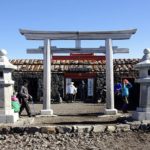
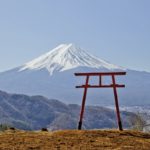
asama shrine
asama shrine
asama shrine
asama shrine

That is because Mt.Fuji is God himself.

On the other hand, Mt. Fuji is a beautiful active volcano.

There has not been a major eruption in the last 300 years since the last eruption of 1707, but it has a history of being feared not only as beautiful but also as a scary mountain.

Asama Shrine, which is scattered throughout the Mt. Fuji area, also has a deep desire to calm the terrible disaster.

In Western Europe, nature, including mountains, should be conquered by the power of God. There is a big difference from Japan, which feels the sign of God and Buddha from rich nature and thinks that the mountain is a god.

That is the reason that Mt. Fuji is very special mountain for Japanese people.

And as a source of art, famous painters and artists left behind their works that were in some way in connection with Mt. Fuji, especially since Edo period.

From folding screen paintings, fusuma paintings, hanging scrolls, the pilgrimage mandala, which is the object of faith, and as well as the decoration of crafts such as costume patterns, daily fixtures, and furnishings, countless figures of Mt. Fuji were drawn.

I myself, love to draw beautiful Mt. Fuji.

Mt. Fuji has the power to captivate a person from a first look.
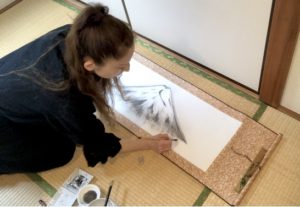
drawing Mt. Fuji in Suibokuga
Mt.Fuji in the sunrise painting
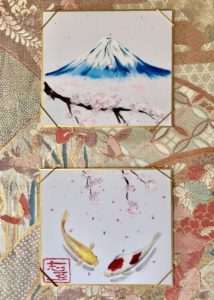
Mt. Fuji with sakura and Koi fish painting hanging scroll
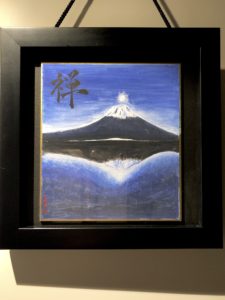
Mt. Fuji at night on the lake
Japanese painting ZEN禅 with Mt. Fuji
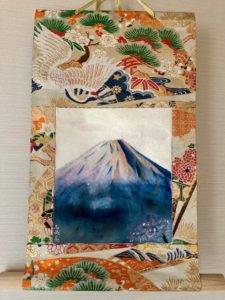
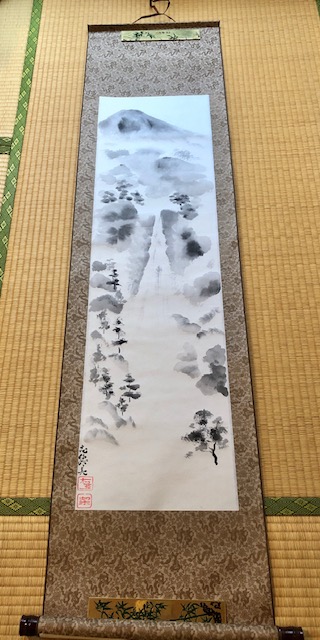
Japanese painting hanging scroll Mt. Fuji Kakejiku art
Gorgeous kimono silk obi belt Japanese painting hanging scroll Mt. Fuji Kakejiku art


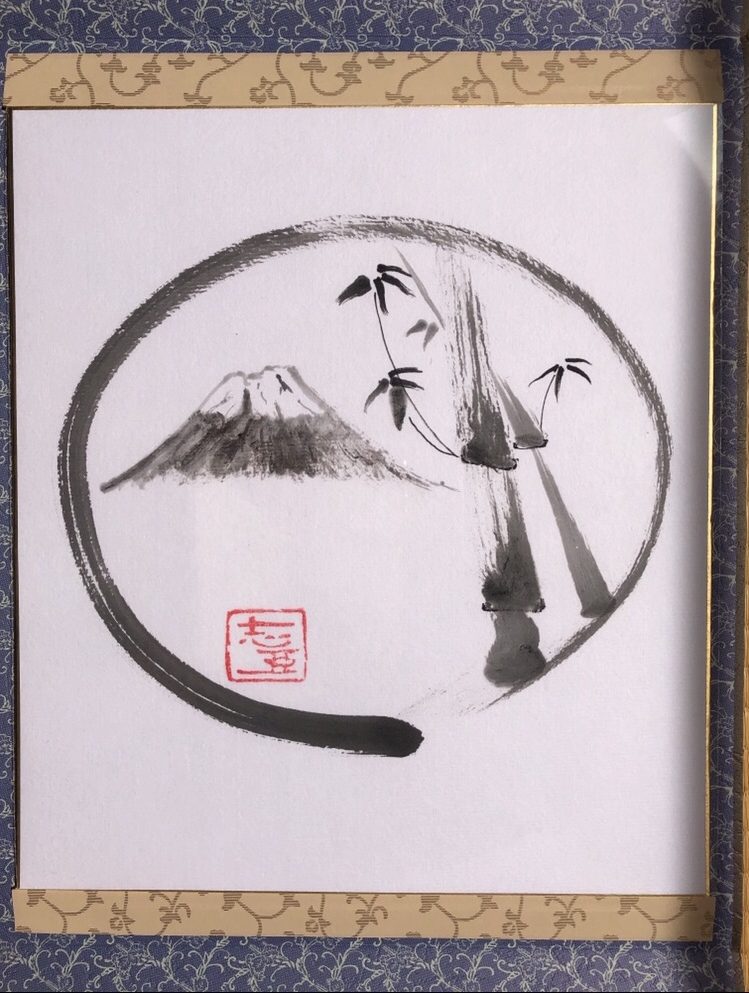
Sensitivity of Japanese painting, Ink painting art “墨絵(Sumie)”

Japanese painting calligraphy Ink art Kakejiku wall decor ZEN circle with Mt Fuji and bamboo
Japanese painting calligraphy art hanging scroll Kakejiku wall decor

When I started doing calligraphy again, I did not think about painting.

Ink painting (墨絵 Sumie) is well known in Japan, and my grandmother used to do Ink painting art, so it was familiar to me too.

Plus I liked painting since I was small.

But my experience was only oil painting, and no Ink painting art experience.

When I started painting using ink, I realized how deep and intricate Ink painting art was.

Only using water and ink, gradation of black color to thin grey color can create amazing picture.

I was amazed by its simplicity yet, beauty and sensitivity.

The smell of ink is relaxing too.

I started drawing bamboo first.

Bamboo is the Japanese symbolic trees and great theme for meditation.

Then I received the request from customers.

“Can you draw Koi fish?”

I started drawing Koi fish, and found out this was more fun.

Koi fish is the symbol of Japanese beauty, and is believed to bring us a good luck.

I really love painting Koi fish.

Now my drawing themes are more.

Mt. Fuji, Sakura cherry blossoms, Pine trees, crane birds, etc.,  all expressing Japanese beauty.

When I draw more of these themes, I find more of Japanese beauty.

And I realize how grateful I am, as being a Japanese, being connected with Japanese culture and beauty.

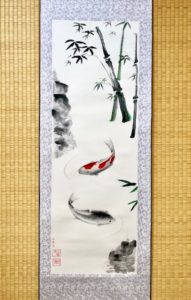
Japanese painting calligraphy art hanging scroll Kakejiku wall decor Koi fish and bamboo art

Japanese beauty – Japanese calligraphy

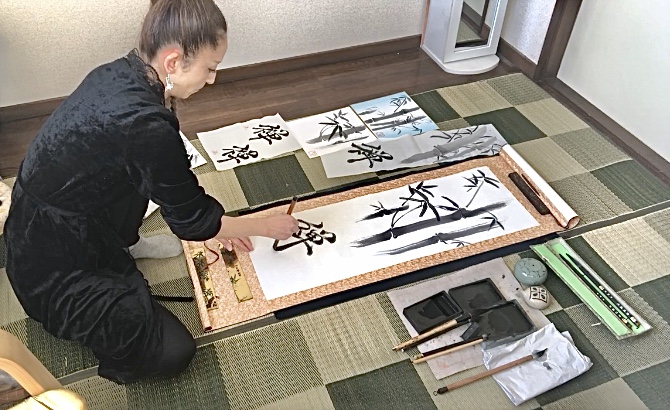
making calligraphy art painting
calligraphy art painting
We have learned calligraphy since we were small kids. This is not unusual, as all kids learn calligraphy at elementary school. Calligraphy is a part of our culture. Calligraphy comes from China, same as Chinese characters “Kanji(漢字). Now we have not just “Kanji(漢字)”, but “Katakana(カタカナ)” and “Hiragana(平仮名)”. And learning calligraphy is to learn Japanese words and meaning. Our history is a little bit different and a little more. Our grandfather who lived next door, was a master of Calligrapher and both our grandfather and grandmother were calligraphy teachers. They used to have calligraphy class at home and so many kids came to learn calligraphy on weekends. We, of course, used to go to the next door every weekend, and learned calligraphy from our grandparents. When we grew up, we stopped writing calligraphy and almost forgot about calligraphy for long time. And this calligraphy came back into my life all of sudden 2 years ago. We received many calligraphy tools from our grandparents. They are almost 100 years old, and cannot do calligraphy anymore, and decided to give up all the tools they used for long long time. Very valuable calligraphy brushes, special paperweight, inkstones, came to our house. When I smelled the calligraphy ink, I had nostalgic feeling and remembered 40 years ago. I started enjoying calligraphy again. Calligraphy became a part of my life again. This is the great way to express Japanese culture. That was the beginning of our calligraphy art. And I start realizing Japanese beauty from calligraphy.